Ep44 Josh Santeramo—What Nobody Tells You About Voting for Judges: Inside Nevada's District Court System



Learn more about Josh Santeramo: https://www.santeramo4judge.com
Don't forget to SUBSCRIBE to the HendersonHQ Newsletter: https://hendersonhq.com/Subscribe
Check out our website for all our local stories & community updates: https://hendersonhq.com/
Follow our Instagram for deals and cash drops: https://www.instagram.com/TheHendersonHQ/
Interested in advertising in our newsletter to 25,000 local Henderson residents? Let's book a call: https://calendly.com/scottgrovesteam/catchingup
______________________________
Scott Groves sits down with Josh Santeramo, an attorney who lives in Henderson and is running for Eighth Judicial District Court judge in Department 30, to talk about what a district court judge does and how voters can sort through a long ballot with very little information about the people on it.
Josh grew up in San Francisco, graduated from UNLV's Boyd School of Law in 2010, and has practiced in Clark County for 16 years. He spent 10 years in private practice, including about five years of criminal defense, then moved to Nevada Attorneys for Injured Workers, a state agency where he is a senior deputy attorney representing people whose workers' compensation benefits were denied.
In this episode, you'll learn:
• What district court handles in Clark County, how it sits above the justice and city courts, and where the Nevada Court of Appeals and Supreme Court fit in
• Why Josh says 70 to 75% of the cases in district court are civil while most of the judges on the bench came from the DA's office or the public defender's office
• How judges use discretion at sentencing, where sentencing guidelines set a minimum, and how specialty courts like Veterans Court and felony DUI court work, including the roughly 60% of participants Josh says stay out of the system.
• Why a judge or a judicial candidate can't say how they would rule on a ballot question and what the judicial canon of ethics requires instead
• How decriminalizing most traffic offenses changed things for people who used to end up with a warrant and extra fees over a minor speeding ticket
• Why Josh says AI can't replace a lawyer, and what he sees when he checks its answers
• What Josh says to look for in a judge, from a willingness to make decisions to temperament
• How a first-time candidate runs a grassroots campaign on small-dollar donations in a race where, as Josh puts it, money plays an outsized role
Josh also explains why he left private practice for public service at about a third of the pay after becoming a minority partner within five years of law school, and he traces that choice back to something he saw outside a Safeway in San Francisco when he was four years old. Scott asks how a judge sets personal views aside, and Josh walks through what the canon of ethics allows a judicial candidate to say.
Josh Santeramo 0:00
Vote for people that are willing to make decisions. Okay, there's this concept in the legal community called punting. The artful way of saying it is, it's making a decision without making a decision. You want people that are willing to make a tough decision, stand by it. You know, if you get challenged on that decision, so be it. That's part of the process, but don't be afraid to make decisions.
Scott Groves 0:26
Welcome to Henderson HQ. This is the podcast where you get all the stories behind the businesses that make our community tick. Don't forget to subscribe to our weekly newsletter. Hey, ladies and gentlemen, it is Scott Groves here with the Henderson HQ podcast newsletter website. Don't forget to go subscribe@hendersonhq.com. And today we've got my new friend here, Josh Santaramo. He's running for district court judge here in Clark County, so we'll definitely get this out to our West Vegas HQ newsletter as well because we have the the Henderson the West Side and have about 50,000 people on the email list, but you know it's funny because we met at John Novak's Trunk or Tree. You came up, you are like, "Hey, I'd love to be on the podcast running for judge." I am like, "Oh, funny story. I've interviewed a couple, and I know the position you are running for as the challenger is a little bit different." But first of all, tell us your background, and then why anybody would want to be a judge because it feels like a very difficult job that I would not want to have.
Josh Santeramo 1:23
It is, and I'll tell you a little bit about my background first. Personal history: I grew up in San Francisco, California. I've been living out here in Clark County, in Las Vegas, but mostly Henderson for the past 20 years. Took me like five minutes to get here. I'm just on the other side of the 95 there, so this is cool. This was an easy one to get to. I didn't have to drive around town to make this interview, and it was great also meeting you at the Spooktacular. I was on the Living in Henderson Facebook group. It's got like 97,000 people, and I was talking to John Novak and went out to the Spooktacular. He said we we had 1200 people last year, and I went really, yeah. And then I go out there, and he was not joking. I mean, it was it was crazy out there the amount of people and the outreach, and it was a really cool event to be a part of. But I got to meet you there. He told me go talk to that guy. That's the guy you want to talk to because he can platform you. And and when you're talking about running for judge and how nobody knows us. Right, things like this are so important because it's a huge ballot. There's 58 district court departments. Not all of them are challenged, but we got 58 departments on the ballot plus their municipal court stuff and asking people to research and figure out all those people. That's a tall task. So, so this is cool.
Scott Groves 2:46
Is judge a partisan or not partisan?
Josh Santeramo 2:48
They're nonpartisan positions.
Scott Groves 2:51
So that's even harder, right? Because a lot of people will go in and just vote blue, no matter who, or red no matter who. And then you get to the judges, and you're like, well, I don't really know from the ballot what their politics or their stance on crime is so like other than doing this, how do you get the word out of like how Josh views crime? Right there's no there's no like judge debates or anything like that. It just seems like such an important position that we know so little about as a public. It's a
Josh Santeramo 3:15
low information race, so being able to come out here explain. Look, I've been here for 20 years. I've been an attorney for the past 16. I went to the Boyd School of Law at UNLV. I graduated in 2010, and and I actually thought I was going to go back to the Bay Area because that's where my family was, and I fell in love with this city. The Bay Area is so expensive, right? You know, and and my mother was out there. She could never afford a home, and so I moved her out here. My family lives here now. I got married out here. I have a five-year-old daughter that I think you got to meet briefly when we were at the Spooktacular. She was dressed up as a devil. My daughter was very excited as a as a vampire. They
Scott Groves 4:00
were a little simpatico there. Yeah,
Josh Santeramo 4:01
they were. Yeah, yeah, they were. They were hitting both sides of it. You know, I've made a home out here, both as a family man, as and as an attorney. I was in private practice for 10 years, which gave me great litigation experience. That's courtroom experience, going in, doing the normal hearings and doing trials. I actually did my first trial two weeks out of not law school, but passing the bar. I had been clerking with the firm I was at since my first year, my 1l year, and I was working on this case since I was a 2l. And I passed the bar, and it was like this moment. If you've ever watched The Christmas Story, yeah, you know, and he's he meets Santa, and he's got to tell him about how he wants the Red Rider, right? And he like freaks out and pauses, and then they go to put him down the slide, and he stops, and he crawls back up. I really want a Red Rider, and the guy's like, "You can shoot your eye out," and Santa goes ho ho ho, and puts his foot on his face and pushes him down the slide. That's what I felt like as a new attorney. Like two weeks out, the partner's like, you know what? I don't want to do this. How you've been working on it since a 2l. You know this better than me. You go do it. So I got great experience in private practice. I did civil law, and then I did criminal defense for about five years. My wife is a team chief over at the public defender's office, and and knows Catherine Worsch, who you interviewed. Oh yeah, prior to the primaries, and she taught me how to do the criminal stuff, and I got pretty good at that too. So I have a broad range of experience, but for the past five years, I've actually been working for the state as a public servant. I did private practice. I love the experience I got, but I was burned out because I wasn't doing the thing that made me want to be a lawyer, which was to help people. And so I'm a senior deputy attorney now for an agency called Nevada Attorneys for Injured Workers. It's a state agency that helps people in the work comp system who have had their benefits denied, but can't get private representation. And there's a whole system, administrative court system, that goes up into the district court where I'm currently running, and to the court of appeals and up to the Supreme Court, where you got to go through this process to fight for medical benefits, for fight for wage loss benefits for disability benefits. A lot of private attorneys don't litigate in that arena, so there was this need, and and the state recognized it, and they created our agency to represent people on a pro bono basis. We call ourselves public defenders of the work comp system. Get court appointed to represent you, we do the litigation. We fight for your benefits, and it's all free on a pro bono basis. And then we also have this information line that you can call into because we don't get involved getting court-appointed until you reach a certain point of the litigation process. But prior to that, you can call our agency, and they can give you procedural advice on how to go about appealing benefit denial determinations, so it's this great program, and I've been able to do it for five years now, and and just focus on helping people get out of the business of private practice. I
Scott Groves 7:14
was just going to say that must be a turn off because in in my mind, of course, in my mind, it's like you have your public defender, you know, like I don't know, I can't even think of the movie with Jimmy Stewart where he's just like fighting for the man and whatnot. But it to me, I would think it's like lower paid kind of thankless work, right? And then in my mind, everybody who's a private attorney just prints money, which I know is not true because I have some friends that are private attorneys. Why is it appealing to you to move from like the private side to the public side, and then go into the government side. Like, what's what's interesting to you about that?
Josh Santeramo 7:46
So it's personal for me, and and I'll I'll I'll try to bring it full circle without dragging on too long here. But you know, I grew up in San Francisco, and when I grew up there, I didn't know my dad. He was in the military. He was a Green Beret, served for 20 years, stationed out of Fort Bragg, first sergeant in Seventh Group, and he spent almost his entire military career a little bit early on in in South America, but mostly in Panama. And he went down in '89 when they overthrew Noriega, and then he spent the next 10 years there training the security forces in Panama, and it's why he wasn't a part of my life. For I didn't meet him until my 20s. It was actually my motivation for coming out here to Las Vegas, because when he was done with his service, he joined the air marshals after the air marshals were established, and he was a weapons instructor for the air marshals. Helped develop and train use of force procedures inside of a cockpit, which is crazy, by the way. He was stationed here in Las Vegas, and I decided I wanted to come to law school here to meet him. And I had brothers I had never known about, so it was an interesting experience. But I grew up in San Francisco, and my mom was a single mom for a while, and she she didn't graduate high school. I grew up in what at the time was a low income area, and I was surrounded by a lot of unhoused people. And the way the area I lived in, like you go around the corner, there was a liquor store there, and the unhoused population extended from like the liquor store down to Ocean Beach, where I was living off of 46th and Balboa and Fulton. For anyone that's familiar with the Bay Area and Golden Gate Park down there, and and the the whole population was like right at my corner down there, and that's that's what I lived around, and and I tell people some of the stories and experiences I had growing up in an environment like that, and not having a lot early on in my life. And I say, you know, when you're born into that, it's normalized for you. And I didn't look at it like a nuisance. I looked at it like these are people that need help. And I was at a an event, a Red Rock Democratic Club event. They do a speed dating thing. I was at Temple Sinai a couple days ago, and a guy came up to me who's from the Bay Area and grew up on 41st Street. And I was like, no way! And he was a lot older than me. He and so we had a little bit different experience, but he was mentioned in the Safeway, right near my house, and and I wait. You know, that's like my origin story for everything that I've wanted to do now up until becoming a judge. Because I was four years old outside that Safeway when I watched a guy run out of the Safeway. He was homeless, and two security guards and two cashiers with their smocks on came out. They caught him 10 feet out the door, and I mean, they just beat the crap out of the guy, wailed on him. And I'm sitting there in my car, and and my stepdad, who he wasn't my stepdad yet, but just started dating my mom. He was sitting out there watching this thing, and I'm looking on the ground, and it was Wonder Bread. That's what the guy stole from the Safeway, and he's getting the crap beat out of him by four guys that that don't know how to put handcuffs on, and and at four years old, I was conceptualizing there's something really wrong about that, and it motivated everything I did in my life as a teenager and in college, getting involved with initiatives that focused on getting land and building affordable housing and subsidized housing going out into areas like the Tenderloin and with organizations like St.
Josh Santeramo 11:30
Anthony's Foundation signing people up for housing vouchers that became a big part of my life and wanting to help that part of my city because I didn't view it as a nuisance problem, I viewed it as a problem that it's it's a civic responsibility to to engage in that stuff. So when I was in college, you know, I'm thinking like, what do I do with my life? You know, you go and you get a bachelor of arts, then you're like, well, how do you get a job like that? You know, Starbucks is waiting, right? Starbucks is waiting, and and if you don't know math or and physics and didn't become an engineer, you're in trouble. So, I I was decent at math, but I didn't like math, and so I went. You know what? I want to help people, and I think I could do that as an attorney. And then I went to this thing called the King Hall Boot Camp at UC Davis, which is where I went to college, and that's what turned me on to okay. I want to be a lawyer and apply to law school, and then I ended up here at UNLV. You know, things happen the way they happen. I worked two jobs in law school. I did my job at the law firm, and I would get out of school at like 330. I go to the law firm. I'd work there till 730, and then I had a security gig I would do afterwards at 8pm. And I got that through my dad because he did security work on the side too. And so I hustled all through law school, and and I was working at this private firm, and they gave me an offer, and it was it was a really great opportunity to get experience, but it wasn't the reason why I went to law school. Right, and so you ask the question like, what makes me go from what I was doing? Like, I may I became a minority partner within five years out of law school. I was making great money, and I took a third of the money to do what I do now, and I don't regret it. A day since I didn't like the business side of running a private practice. I love litigating and getting into court and fighting it out and fighting for people. And I'm civically oriented, so yeah, I took a lot less money. But I love what I do now, and and it is at times very challenging work because the stigma is if you're the free attorney, right?
Scott Groves 13:45
Yeah.
Josh Santeramo 13:46
Did you graduate from law school?
Scott Groves 13:48
You must not be so good. Are
Josh Santeramo 13:49
you working here because you're terrible? Like there's there's that stigma to it. Yeah. But mostly, what I encounter is it's all the people that no one else wanted to help. Yeah. You know, and most people are really grateful for that help. If they're frustrated, they're taking anything out on you. It's not you; it's the system that they've been put into. It's the fact that they've had their benefits denied, and no one's willing to help them. They've been sitting there, maybe going through this process on their own for a little while, and they don't know what they're doing, you know. Imagine you're not an attorney and you're walking into court trying to follow all these procedures, file all these things at the time they need to be filed. You have no idea what you're doing. Maybe you're Spanish speaking. You don't read English. You have limited English speaking skills. How are you supposed to function without an attorney? And so by the time they get to me. Some of them can be really frustrated, but you learn that that it's what you need to do is you need to earn their respect. All right, having Esquire at the end of your name doesn't make you someone that immediately deserves respect.
Scott Groves 14:54
All right, I've met several that I don't. Several that I do, but several I don't.
Josh Santeramo 14:56
Right. So you got to put in the work. You got to give people space to tell their. Stories you gotta show them that you have a passion for this, and people that get involved in government work and become public servants as attorneys, I think they all share that same thing. That you know, money's nice, but we get paid all right as public attorneys. But at the end of the day, we do it because we care about helping people, and somebody's got to step up and do it. And right now, across the board, it's really difficult to get people to want to do government work. There was a point in time, like at the public defender's office, for for instance, where they would have their hiring rounds. They'd have hundreds of applicants. They'd be taking like the top six, and the last time out, I was talking to the guy that that does outreach. I think they got 20 people, and that was with them going out to like Georgetown to try and recruit people from the East Coast to come here and work on the West Coast. And in the state, we were talking to the head of business and industry, this guy Chris Sanchez, and he was saying, "Yeah, across the board, it is difficult to fill spots right now, working in government work, and so it's really important that we get people in that that have the passion for it, so that they don't get burned out by it, but also that they're just willing to do it and look beyond, you know, the potential high payday you could have in private practice, and what the value of public work is. And so, I came out, and I wanted to be a judge this time around because in 2020, the last time we had this many seats up, 136 people came out to apply to be judges. Two thirds of that amount applied this time in 2026. The caseloads at the district court level they just did a study on. We need 14 more departments to be able to handle the amount of cases we have in Clark County. And when you have two thirds less people trying to come out and be a judge at a time when we're supposed to be adding 14 more seats to the bench, that doesn't add up. And so I had already thought about transitioning into the judiciary. the The administrative court system has their own admin law judges that get appointed by the governor, and I was looking into that, but then I looked at the district court races through candidate filing in January earlier this year, and leading up to the final day, you know, 58 district court seats are up, plus the municipal court seats. Only about 70 people, including the people that were just running to continue their seats, they're going to go unopposed. It was only like about 70-something people.
Scott Groves 17:43
Hey guys, just a quick ad from our sponsors here that make this podcast and our newsletter possible. Want to give a shout out to Ethereal Med Spa, a gym for your skin. So doesn't matter whether you're doing anything proactive, all the way up to spot removal, all the way up to beautification, right or vanity ethereal med spa, they got you covered. Scott Wright over at Wright Auto Body, love them. So anything from a scratch and dent to a big insurance job, all the way up to a custom rebuild of a classic car, they got you covered. And shout out to my buddy Casey Halstead, owner of 10th Planet Jujitsu, which now has three locations. They just opened new location on the west side, so they got our Henderson location, they got a Mid City location, and they've got a West Side location. So anywhere in the Valley where you're looking to train jujitsu,
Josh Santeramo 18:30
check out 10th Planet Las Vegas. Now back to the show. Can you explain? Because I think most people like they see on the news about the Supreme Court, and then maybe they've been to like traffic court or just the window at the courthouse to pay their traffic flow, but there's a lot of there's a lot of layers in between. Can you explain to people district court, which is what you're running for? That's obviously Clark County. Everybody in the county can vote for you. Can you explain what district court does? Yeah, sure. District court, and and I was explaining this to a friend who's not a lawyer once. So I'm going to do it this way. I tried to give her the technical explanation, and she looked at me, and she went, eyes just glossed right over. Yeah. So what you're saying is, district court is the Supreme Court of Clark County, and I went, my lawyer brain went, nah, that that that ain't right. I need to fix that, and I went, you know what? I'm gonna go with that because that makes the most sense. It's the biggest court in Clark County, not just in terms of the number of seats we have, but it's the highest court. There's city courts, there's justice courts. Some people have heard of that, which is county court. But everything funnels up to district court, you know. And beyond that, we have the court of appeals and supreme court. But district court is kind of where it's all happening. Where the
Scott Groves 19:39
court of appeals? What do we fall under the Third Circuit here, or who do we fall under for appeals?
Josh Santeramo 19:43
So those are two different things, which you're referring. You're talking about federal oh Circuit Ninth Circuit. That's it, federal Ninth Circuit. But we have our own state court of appeals, which by the way only started in the past like 12 years. Oh, for that we just had a Supreme Court, and one of the things lawyers complain about. In the state is we don't have any case law, and it's because we didn't have a court of appeals, and we just had the Supreme Court for a while, and they can only hear so many cases a year. So that's why it's so wild, wild west sometimes with the law here in Nevada. We're looking because
Scott Groves 20:13
there's not a lot of precedent,
Josh Santeramo 20:14
right? Right. We got to look at California and Arizona and other stuff like that, and then it's been changing in the past 12 years, but district court here in Clark County, the eighth judicial district, we hear all the things. Okay, so there's 32 departments. I'm running in department 30. The number doesn't mean anything. It's just the number of departments that do the office address, huh? Right, just the office address. And then you have these lettered departments. You'll see on your ballot. Those are family court department, so they deal with divorce, they deal with child custody. The juvenile justice system is part of that. District court, though, we do everything else. Everything that you wouldn't go to federal court for, we do in state district court. And so the departments are split between criminal departments, civil departments, and then a lot of departments do what's called split dockets, where they handle a combination of criminal and civil matters, and within that we hear all the things. So, so that's what district court is.
Scott Groves 21:11
So, is like your seat the number 30? Is that criminal? Is it civil? Is it a mix of the two?
Josh Santeramo 21:17
So, right now it's a civil court, but that doesn't mean anything. After this election, the chief judge Tierra Jones will see what the roster is at that point, and then would be responsible for assigning what each department is going to be doing. And so, I have experience both as a civil attorney and a criminal attorney. I would think they could put me on a split docket where I would do civil and criminal, but the interesting thing about district court is about 70 to 75% of the cases filed in district court are civil matters. Right, but the makeup of the bench is almost completely flip-flopped to where it's mostly criminal attorneys, either from the DA's office or PD's office at a clip of almost the exact flip flop. There's there's there's very few civil judges on the bench, and and that's one of my pitches for why I'm good for the bench. Is I've got this diversity of experience. I've done civil, I've done criminal, even within the civil realm, I did a lot of employment work, and I'm obviously doing workers' compensation now. I think there is one judge sitting on the bench who has done any sort of significant employment cases. I don't know any judges on the bench or challengers that have any real experience in the work comp system. And
Scott Groves 22:41
I imagine all those those employment suits has to be a massive workload of the civil docket at any court, right? Like I mean,
Josh Santeramo 22:50
well, I would say employment's probably more heavily focused at the federal level. Oh, because federal law governs so much of of the employment related statutes, but there are state-specific statutes. If you have a workers' compensation claim and you think you've been fired because you made that claim, that's a state claim that goes into state court. There is Nevada Equal Rights Commission, which is the employment administrative body that investigates state employment claims here, and you'll go through them. And if you have to go through a lawsuit, you go through that process, and then you go and you can file in state or federal court. So there are employment cases, and I've litigated employment cases both at the federal and the state level. So I think even within the civil realm, you need diversity of experience. When you're running for a bench that hears all the things, you need to have judges that have that kind of diversity. If 70% of the bench is criminal, and then they got to sit in there and hear a $21 million sex harassment, retaliation, hostile work environment case that's going to take three weeks at trial, which is something I've done. That's a tall order for someone who spent their entire career doing just criminal work. Yeah, so it's a benefit not to not only to my department, but judges talk to each other. You know, and that's an important thing. There's no person on the bench. There's no lawyer out there that knows all of the law. Okay, they they have you do the bar exam and tell you to know all of the law, and then forget it all right after the bar exam, and then you you you know the thing you did. I
Scott Groves 24:33
heard from a friend of mine who's a lawyer down in L. A. She's like, even ChatGPT and Claude can't figure out the law. That's how confusing it is. Where it's just like people are writing briefs with like fake case law and whatnot because the the machines are just hallucinating. Oh, it
Josh Santeramo 24:46
happened out here.
Scott Groves 24:46
Oh, I'm sure. Yeah, either
Josh Santeramo 24:48
it's someone's gotten in trouble for it and called out for it. And then to any lawyers out there using AI, all right, it's it's it's a tool that I think will get integrated into. Legal practice more and more as it gets better. In fact, it's already starting to get integrated. One of the the case research systems that a lot of lawyers use it's LexisNexis, and they're starting to get AI integrated into their their thing. But it's great for like organizing documents and quickly summarizing information. But for people out there that think AI can replace a lawyer, one, it can't go to court for you, okay. Two, AI kind of tells you what you want to hear, right? Okay, right. And so I'll put something into AI just because it's like a quick shortcut and it's really quick. It goes thinking, thinking, thinking, and then boom, it gives you all this information, and I read some of it, and I go, "Wow, that looks pretty persuasive." And if I wasn't a lawyer, I might believe everything here, but I am a lawyer, and I can tell you that's wrong, that's wrong, that's wrong, that's wrong.
Scott Groves 25:52
Chat GPT thinks I'm brilliant. Yeah, yeah, yes. It's like a neophyte that just tells me everything I want to hear, and
Josh Santeramo 25:57
it's bad. And then you go in and you have to fix the prompt, and I'll tell the AI like you got that one wrong. That's not what it is. And then it'll go thinking, thinking, thinking, thinking. You were right, and then it'll recalibrate the answer. So, so it's it's a resource, but it's one you got to be careful of, and you definitely don't want it writing your brief so that you get ghost case law, and then you end up in front of a judge with the judge going, you know, I got to refer you to the bar for that, right? So embarrassing is embarrassing, and it's happening all over the country. I've seen some of the videos that have gone viral.
Scott Groves 26:30
You know, you mentioned you get a case, and it could be three weeks, right? It could be three months theoretically, or a murder case, or whatever. How how does that even get workload balanced, right? Because like in my mind, judges are another one of these positions that are like habitually overworked and like underappreciated. So, is it like the you mentioned there's a a chief judge there? Do they like workload balance the files, or if you become a judge, they're like great, you got to see 1000 cases this year. How does it work once you get in there? Because I'm thinking every case is unique, right? Like you said, some of the judges doing split civil, which might have a tendency to settle quicker, criminal that might have a tendency to settle quicker. Like I'm just wondering logistically, like how does a court even work?
Josh Santeramo 27:10
Part of this is if I win, I'll be able to figure that out first. This is my first time running for office. I run a grassroots campaign. It's all small dollar donations, but I've been around this system for 16 years, and I can tell you, even up until recently, there were a lot of complaints about the way the workloads were being distributed. I think you can even read some news articles about it, and that report that came out saying we probably need 14 more seats on the bench just to handle competently what we have is that going to happen? That is a whole other financial question that is way beyond me. Hopefully, we are able to distribute the cases in a way that are consummate with people's experience. But if you're a district court judge, you need to be prepared to handle whatever comes in front of you, whether you have that experience or not, and and I guarantee I'm gonna get cases that I didn't do in private practice. That's why it's important to have a diverse bench and judges talk to one another. It's it's a good thing to be able to go in and be like, hey, this is something I didn't do in private practice. I'm gonna go next door because I know that guy did it though, and ask him. You know, what do you think about this case? And that's important. That's why you don't want the same small pools of people being elected to these positions, so that you you just have this sort of uniform experience instead of the diversity that the court needs to be able to get through this stuff competently.
Scott Groves 28:36
Yeah, that's interesting, right? Because like, if if everybody at the district court level is coming from either the prosecutor's office or the defense office, we're all human. We have our biases. We do we do what we do. Like you obviously sound like a very compassionate guy. How does a judge attempt, or how will you attempt? I guess more accurately to like, hey, these are my personal biases. This is how I feel about workers' compensation law, or about the homeless slash unhoused population, or whatever, like we're all human, right? We all have certain feelings. How do you take that and be like, well, no, I have to apply the law, right? Or like, where does your discretion end, and where does the law be? Like, man, I, I'd love to give you a break here, but here's the letter of the law. Like, I, I would not be able to do that, that job. You know, somebody would come in front of me, and I'd hear him talk for five minutes. I'd be like, I've already made up my mind on this shit. I don't. I don't need to hear any of the evidence. Like I just. I'm a big gut instinct guy. So how how does a human being do that? I love that you ask that question because
Josh Santeramo 29:30
I was at an event last night at UNLV. It's put on by the Gen Z Coalition, and it's like a town hall event across the aisle. They bring in a lot of local candidates, and it's it's nonpartisan, multi-party, you know, left, right, middle, third, up, down, whatever, you know, bring everyone out there and it's it's for Gen Z, you know, this is a big voting block now. They're all in here as voters. They're going to be the big voting block here for the future, and so they did kind of a town hall in person. Slash live stream thing, and and I love the the question you answered because I I got to the end and and all the other judges left. It was like a three plus hour event. It was it was rough there. You hung a little bit. You hung in there, and then I was sitting there, and they were walking out, and they're like, "Why are you staying?" And I was like, "I've been here for three hours. I might as well wait to see how this finishes up because they were going to do a Q and A at the end, and I had been to the virtual event that they did earlier this this month. There weren't any real judicial questions, and then boom, I stayed, and the last question was a judicial question, and then the moderator was like, "I'm really sorry, all our judges left," and I was just hi, Wolf. Are you here? Let me go up. What's your question? And the question was about question six on our ballot. And the question was along the lines of if this becomes law.
Scott Groves 30:55
Tell us what question six is for those.
Josh Santeramo 30:57
Question six is about enshrining in our constitution the right to abortion. We already have the right to abortion constitutionally. It was passed in the early '90s, but this is going to expand it. I'm not going to go in depth into question six, right? And and this leads into the point I was going to make in the question you were you were. I get asked from her, you know, how are you going to interpret question six in in different factual scenarios, like if a child is in or a child is in the ninth month of of the pregnancy process? How do you interpret it? What I had to tell her is, what we do as judges is we follow the law. It's not my job here to put politics into it. It's not my job to put my personal feelings into it. It's my job to do what the law says. We look at the statute first, and it's plain language. We look at the legislative notes and the legislative intent. We look at case law from the Supreme Court, which helps us to apply these laws in different factual scenarios that might come up, where you look at the law and then you look at the scenario and you're like, I don't know how to reconcile those two things. That's what the Supreme Court does, and they create case law, and then it gets funneled down to us at the district court level, and that's the stuff we followed. So I had to tell her, you know what? The judicial canon of ethics here says, I can't answer that question for you. One, it's not the law. Two, I'd be giving you a hypothetical answer. And three, as a district court judge, that's not my job. I can't put my politics into it. I can't put my personal feelings into it. Go talk to the people that wrote question six and ask them what the intent was. If it gets to the Supreme Court, the Supreme Court will hear briefing on it. We'll look at whatever factual case puts that up in front of them, and they will give us guidance and case law on how to interpret it. And then that's what we have to do. We have to follow it. We have to put our biases aside because everyone has their biases. Like you said, we're human, but that that canon of ethics that governs current sitting judges and also candidates like myself, we have to follow that to be fair and to be impartial and to apply the law in a neutral manner, and so then to the next part is discretion. Okay, there are parts of this where we just have to follow the law. There are other parts of the law where we get discretion. Let's say in the criminal setting with sentencing, there's sentencing guidelines that we have to follow, but there's also discretion. Like if if someone is looking at prison time, but they're also potentially open to probation, or this is a person maybe who might be better for a specialty court program. If you're aware of those, like veterans court, a felony DUI court, there's there's I want to say like 12 or 13 different specialty court programs at the district court level that are alternatives to traditional sentencing. That's where we can use our discretion, and and I think my experience in public service, and also my life experience, gives me the ability to make those decisions. And so, number one, I came from a community that you know was unhoused, didn't have a lot of money, was low income. I understand what it's like to live on that side of the track, so to speak. When I was older, and because my mom had me young, and then she got remarried later, I was able to move out to the East Bay, and I lived a very different life at that point. It was like two sides of a different coin. Right. I went to the school called De La Salle out there, which is kind of like a Bishop Gorman of of very old California. Yeah, I was there when they were doing the win streak stuff and and and the documentary and the movie. Um. So I've seen both sides of it.
Josh Santeramo 35:03
I come from a background with my stepdad was in the Navy. I met my biological father, obviously in my 20s. He was he was a green beret. My uncle worked for San Francisco Police Department his entire career, under undercover narcotics in the Mission District initially, and then he was a detective for over 20 years, and now he's a contractor screening new applicants, and then I did criminal defense work, and I've been a public servant now.
Scott Groves 35:27
Yeah, seen it all.
Josh Santeramo 35:29
I've seen it all, man. And and so that holistic experience, I think, puts me in a good position to sit here if I'm doing a criminal case, for instance, and say, all right, this might be a person who is a danger to our community, and incarceration in that pathway is the appropriate thing that needs to be done. I also recognize that the the population within our criminal justice system largely correlates with poverty, substance abuse, mental health issues. I've had members of my family with substance abuse issues. I've had members of my family who are neurodivergent and autistic, and have run into issues with law enforcement because they were autistic and ended up in the system Because they they just they were having problems struggling and functioning, and so you're going to see stuff like that in court, and you need to be able to have the eye and and to be able to evaluate all the information in front of you to make that differentiation between someone who needs to go to prison, and someone who needs to be in maybe a different kind of program, whether it's following the negotiation of the parties, which is an important thing because the lawyers are really going to know it better than the judges what's going on in the background and all the facts of the case, or looking at other specialty court programs like veterans court, like substance abuse court, felony DUI, and and some people think those things are kind of like an easy way of getting off. And what I want to tell people is, no, they're harder a lot of the times. I mean, I've had clients where I've sat down with them, like you know, you you could go into the moderate offenders program, which is a justice court program for people that are on their second time DUI, you know, or you can just like you know take this normal deal or other situations where a person's like you know I'd rather go to jail for like 30 days or or I'll do I'll do that than sit through one of these programs, and and what I want to put out there and say is these programs are fantastic. I mean, I want to say the the number out of municipal court. I don't know. I would assume it's similar in district and justice court. Is about 60% of the participants that go into specialty court programs don't end up in the system again. Considering the recidivism rate, I'm sure that's a huge success. It's fantastic. So when you look at someone who's like, you know, I'll go to jail for 30 days, and rather than do that, probably not going to do it again. They're probably going to end up there again, right? And the people that go into the programs and fail out, they fail out pretty quick. Like you, you recognize early on that they're not here to do this, and and the programs can be intense. I mean, you could be in it for a year or two years. There's social services provided, medical treatment provided. You're doing check-ins with the judge, which I've had clients. They're like, they feel almost like that's punitive. Like I got to keep going and seeing this guy over and over again. And I'm like, we're checking up on you. We're making sure you're doing the thing you're supposed to do. It's about accountability, and then you graduate out of these programs, and it's it's celebrated.
Josh Santeramo 38:47
And then one of the cool things running for judge is I've had clients who I've represented in the past, like I haven't seen them in eight or 10 years or something like that, and then they saw that I was running, and they've come out of the woodwork and been messaging me like I went through that program where you helped me with that case and and and I don't know what the the language restrictions are on this but I posted one message from a former client I said is it cool if I post our text message conversation he was like hell yeah and then literally he goes thank you for for helping me not be an asshole and to become another asshole because instead I became someone good for the community and since that day I have not been in trouble since yeah and and so having that kind of life experience and professional experience that's what you want out of someone on the bench to be able to make those kind of tough decisions. Yeah,
Scott Groves 39:45
not as much in Nevada, but maybe more in California and some other states. This is really big in the news right now, right? Of you hear these people that are on their 20th offense or something and get released back into society, and then they they commit some type of heinous. So, speaking specifically about the laws in Las Vegas, where do judges have discretion, and where do they have like minimum sentences if people start to be repeat offenders and show up in the system over and over again? Like, just maybe compared nationally, is Vegas a little bit or Nevada a little bit more prone to be tough on crime, easy on crime. Like where do we where do we sit on the spectrum? Not you necessarily, but just kind of our court our court system. I don't know if there's a real gage for where we sit
Josh Santeramo 40:30
on the spectrum. What I would say is that it really depends what we're talking about. Recently, one of the things that happened is we decriminalized traffic, for the most part. There's still some traffic offenses that go to criminal court, but it's mostly a civil issue now. And one of the things I did a lot when I was in criminal defense, I had a full docket of criminal cases, but I would do 300 to 350 traffic tickets every single month.
Scott Groves 41:03
Wait, what?
Josh Santeramo 41:04
Yeah, yeah, which was insane. It's like I spent half my time just in traffic court with all these traffic cases, and what I would see is
Scott Groves 41:15
that why would it be worth somebody getting a lawyer for a traffic case versus paying $100 fine or $200 fine or something like that.
Josh Santeramo 41:21
Well, that's where I'm going with this. Now it's not we've it's decriminalized. It's all streamlined on on the internet. You you go to the website. You you say guilty, not guilty, no contest. Always pick no contest. Okay, and then um you know they give you your options on what you can do. But back then that didn't exist, and so people got to make it to their court date. All right, if they miss their court date, what happens? You go into warrant. You could have a one to 10 over. You're in warrant now. What happens when you went into warrant? You got warrant fees on top of it. Okay, let's say you go and you get that quashed, which is why you would get an attorney because you don't want to get picked up by a police officer driving around with a warrant for one to 10 speeding ticket. So now you go get your attorney.
Scott Groves 42:10
So this used to happen in Vegas. Somebody gets a ticket for going 10 miles over the speed limit. They miss their court date because of whatever they had to work. They forgot. They lost the
Josh Santeramo 42:17
ticket. Now they
Scott Groves 42:18
now they have a warrant out for their arrest. So yes. Oh my goodness.
Josh Santeramo 42:22
And you got extra fees on top for the warrant. Then you got to go get the attorney to go down and quash the warrant before you go get picked up by a police officer. Because if a police officer does bring you in, and I wouldn't say they would bring you in on a one to 10 warrant. I think most police officers would be like, "Hey, you got this thing. You you better you know, go take care of it. But in other cases, you do get picked up, and then you're sitting in jail. You know, if you got picked up on a Thursday, you might not see the judge till the Monday. You had to work that weekend.
Scott Groves 42:53
I'm sure I've told the story of this podcast before, but I could tell it again because I had this happen to me. I'm driving down the freeway or whatever, and I was probably speeding. I get pulled over. Cop checks my ID, pulls me out of the car, puts me on the side of the road in handcuffs. And I'm like, I mean, dude, I was going like 1015 miles over the speed limit. He comes back from the police cruiser laughing. He's like, Hey, man, you have a warrant out for your for your arrest for an unpaid jaywalking ticket in Long Beach from like seven years ago, he's like, if it was some cop that was having a bad night, they'd be impounding your car right now. You'd be sitting in jail over the weekend. Like Monday morning, you have to get to the Long Beach court and fix this because it it looked bad on you know whatever system he was reading. Scott Groves warned for his arrest. You know, he didn't know if it's for murder or whatever. And he let me go with a giggle and a laugh, and I ended up not even getting a speeding ticket because he felt so bad for me that I was sitting on the side of the freeway in handcuffs. And yeah, I mean, this is you know, luckily I had the 300 bucks or whatever to pay the fine. But I could see how you could get trapped in that system, and then yeah, and
Josh Santeramo 43:52
that's what happens. I've had a lot of clients, and at one point, the firm I was working at, we were like, "We're just going to do the traffic tickets for free." It was it was a nice little marketing gimmick because people come in for the free traffic tickets, and then hey, we're your lawyers if other stuff happens. But yeah, we're doing like 300, 350 a month on these things, and I had so many clients who were like, I went in a warrant, and now I'm paying like double the fine, and then I went on a payment plan, and something happened, and I couldn't make the payment. What happens? I go back in the warrant. They throw another warrant fine on it, and then like I had one guy who like for four or five years was just stuck in this pattern on a traffic ticket, and so you know decriminalizing that
Scott Groves 44:37
that makes a lot of sense to me.
Josh Santeramo 44:38
Yeah, you know, yeah, there's no reason to be filling up the local jail with people with traffic tickets like that. Yeah, clogging up court docs. You run something over the DUI. I want you in jail. Right. You get you forget to pay a parking ticket or a speeding ticket or something. I don't want to waste your time and the judge's time and the the the exactly's time and the. I mean, it's just so bad. So, trying to figure out ways to structure the law to try and limit poverty being a reason that we're dealing with so many people in the criminal justice system, that's good. And then going back to the question of discretion, looking at, I mean, we're bound by sentencing guidelines. If if and who writes that is that the legislators okay yeah so if they say some type of violent assault or whatever carries a minimum of two years in jail right you have no choice right and then there are going to be a lot of other situations where we have choice and then we look at parole and probation they do pre sentencing reports they'll go through the history, interview the people, look at their stability issues, job history, look at the nature of the crime. Also consider what the jails and the prisons' needs are at the time too. Whether or not it may be more appropriate to do an alternative to incarceration for a particular individual, the DA will have their argument. PMP will have their report. They're not always even on the same page. The defense attorneys are obviously going to have their position on it, and then I'm here as the judge, and I got to sit here and maybe listen to the victims too, give testimony at the sentencing hearing, and then decide how to use that discretion appropriately to make the best decision we can to balance the needs of safety in our community, also recognizing what a lot of the criminal justice system is: people with issues of poverty, substance abuse, and we need to be ending this this pattern of re-arrest to the best that we can do it, and the justice system and judges can only go so far with it too. There are larger institutional societal pressures that create this situational.
Scott Groves 46:50
Yeah, you know, it's interesting because I'm such a like I'm such a like tactics guy. You know, I have the Eisenhower metrics in my office of like, okay, what's urgent important? What's urgent not important. You know, like I'm always looking for a tactic per se on how to solve things. And when I coach salespeople, you know, there's some mindset stuff, but there's a lot of like strategy strategies and tactics. Follow this flyer, do these checklists, do these steps. But when I think about the challenges of what it would be like to be a judge, right, where you have maybe a very sympathetic defendant, right? And then you have the victim statements, and then you're getting great information from the defense attorney, and then you're getting great information from the prosecutor. Like, how do you, as a person, like combine all of that, evaluate it, and decide? Here's here's the discretion I am going to use. Like, can you give us like kind of some insight into your head of like what little mental checklist or bar graph or whatever you have that will allow you to be like we've got to take this person into consideration we got to take this person into consideration.
Josh Santeramo 47:52
Well, I can tell you as as an attorney representing people, it was a lot easier because you get to know these people real well in most cases, and and you can get a read on people pretty quick when you represent them. As a judge, it's harder, you know, we because they might not even hear from the defendant, right? I mean, by law, they don't have to. Well, yeah, very rare that you see a defendant testify in a criminal case. They're usually just sitting there. You'll hear from victim speakers, and obviously victims will testify if the thing goes to trial. But even if it's something where it's it's it's a negotiation, maybe it's called a right to argue, or we're going into court and you're you're doing the sentencing. Victim speakers can come in, so it's harder as a judge. You know, the one thing that I hear from DAs and defense attorneys when they say what they want out of a good judge is someone that follows the negotiations in the case, because you got to remember they know the people and the facts and the background and the things better than the judge does, and so we have to be able to rely on them. And when they come to an agreement and say this is the way to do it. I'm not saying we completely abdicate our decision making process as a judge, but we do need to recognize. You know, I knew what it was like practicing and how well I got to know people in a case. And when you're a judge up there, you're now in a third party position, right? You know, and so you're trying to process the information that's being given to you. I wouldn't say I have a bar graph or a list or anything to
Scott Groves 49:27
help me. That's not my brain. I was trying. I was trying to impart my my experience out of you. But
Josh Santeramo 49:32
but I look at you know you got to give weight to everything that's in front of you. Yeah, and some things are going to be garbage. That's a terrible argument. That's not a good fact. That's that's not something that is persuasive to me. And other things are going to be stronger. And on a case by case basis, you can't. You got to be flexible. You have to to deal with each case individually, each person, each victim individually. And and you go from there, and you hope you make the best decision at the end of the day. And what I would say for anyone that's thinking about you know what makes a good judge or why should I vote for a certain judge, vote for people that are willing to make decisions. Okay, there's this concept in the legal community, called punting, you see it in criminal too, but especially in the civil world. The artful way of saying it is: it's making a decision without making a decision. You want people that are willing to make a tough decision stand by it. You know, if you get challenged on that decision, so be it. That's part of the process, but don't be afraid to make decisions. Take all the evidence and everything that's been presented to you, and and and you make that decision. You move on with it at the end of the day, and you hope you did the right thing. So along those lines, I think you just gave us some of that. Why should somebody vote for you? Going back to the diversity of experience on the bench, and and the way that we we have this flip flop of 70 to 75% civil cases, and then in terms of the judges' experience, it's almost the exact opposite. Coming from this hybrid background, that's really important in terms of the diversity of experience I bring to the bench and what I can do fitting into different kinds of dockets, whether they want me to do a split docket, whether they want me to do an exclusively civil thing, I'm prepared to do that. But the most important thing to me in terms of being a judge is your temperament and your ability to deal with people, and it's why I think public servants make the best judges, and why you see a lot of people who work in government go into wanting to be a judge. You see less people from private practice doing it. It's a lot more of a government trajectory. Right. We deal with all the people that no one else wants to deal with. Okay. You deal with some of the most marginalized people in our community. The thing I really gained from being in public service that was different from private practice, like I learned to be a good lawyer in private practice, I learned to be a good person in public service, and learning to talk to different people from all different persuasions and walks of life, and how to communicate that with that not dialect, but how do you relate to different people? That's something you learn in public service. And when you're on the bench, and especially the district court bench, you're going to deal with the entire community. You can't just ingratiate yourself to the legal community and the lawyers. It's easy to speak legalese and lawyers speak. Okay, it's a lot different to deal with someone who's coming in representing themselves. Maybe doesn't know what they're doing with this process, or even to just look at the parties when they come in for for their hearings or their trial, and to be able to communicate with them and treat them in a way that's respectfully can't be just a campaign slogan. I mean, you look at everyone's website in this race or in in these judicial races. We all kind of got the same thing, like fairness, impartiality, respect, or some kind of combination of that. Right. Um. Yeah, that's all important, but you have to have lived a life and a professional career that taught you those skills to back that statement up, and so why should you vote for me?
Josh Santeramo 53:23
That's why it's my life experience, it's my professional experience, and my work in public service that has taught me how to deal with the public, and that's the job and the people, the things that I think people remember most about a judge isn't a particular decision they've made. It's whether you've been treated really well or whether you've been treated really poorly. You remember the ones that piss you off. You remember the ones that you walked in and you went, "Wow, that was." Even if I didn't win, I got my day in court. That that person listened to me, and I walked away, and I feel pretty good. So stuff like this is important. Get to know the people that you're electing. Put the right personalities on the bench. So I hope that's you know people look at my site at Santa Romo for judge.com. I got a lot of social media stuff I do, and I love doing interviews like this because I'm running a grassroots campaign. I don't have fancy ads. Okay, I can't afford the the 10 minute curated interview that cost 500 bucks plus. Yeah, she goes out to Barrow. Just to be clear, yeah, yeah. People advise me. They're like, "How much does Michelle Romero pay to be on the podcast?" I'm like, "Zero. I just like talking to good people." Yeah, and there's a lot of people, and you can see different interviews I've done that do that. There's other things where it's like you got to pay for 8/22 spots an hour for this amount to to get on and and and get yourself out there. I don't got that kind of money. I got grassroots small donor money, and I got people like you letting me get out here and and speak to the people so that they can get to know. Me and and feel comfortable that if they had to appear in my courtroom, which I I tell everyone, I hope I never have to see you, right? But if you do best outcome, you put the right person there and someone that's going to actually treat you with respect and has that life and professional experience to do it. Thank
Scott Groves 55:16
you for being on. As we talked about before you started, we haven't had a we haven't had a good track record of people that we have interviewed that won, so I'm hoping that you turn that around.
Josh Santeramo 55:25
I'm hoping so too. Here's what I can say: when I started this, if we got just a little bit of time, I had very low expectations my first time running without big financial backing or anything like that. I was motivated to come out because I saw how few people came out, and one of the things that I find interesting about our system of voting for judges is this is a low information race. A third of voters that come out will just ignore us. A third are going to sit here and play eeny miny mo in some sort of fashion. I'll do the top one. I'll do the bottom one. I'll pick the one with the nicer name, I'll I'll close my eyes and just you know pick something on the ballot, and then a third will be informed. But what does that even mean, right? Did you see a billboard somewhere and like just subconsciously you remembered the name, and that's why you clicked it? It's such a low information race, and the judicial branch is apolitical. You know, we're not politicians, and because of that judicial canon and ethics, we have to run our our campaigns different than other politicians. Which is what I was trying to explain at that Gen Z event. Why I can't answer that question? There are rules here, and it's nonpartisan, so it's so hard to get out there and get people to get interested in your race unless you have major money to do it, and and I think money plays an outsized influence in these judicial elections. I don't like to talk about my opponent a lot, but if you go to the Secretary of State's website, we have all our campaign finance reports. You can see the way he blew $200,000 here plus dollars in the last month of this campaign to spam himself everywhere through fancy ads and and billboards and and and the stuff on the road. And what I'm doing is I'm building a coalition of grassroots support featuring I got the two biggest unions in Nevada, SEIU and the Culinary Union that back me. SEIU in particular is the Health and Public Service Workers Union that covers our courthouse staff. I have the Clark County Deputy Marshals, our courthouse security, and you can go to my website. You can see plethora of other slates I've made and and and organizations that have endorsed me, and my pitch is is don't pay attention to the money and the fancy ads and the billboards. Okay, that's that's a face. All right, try to do a little research, even if it's just watching some of the clips that'll get posted here and stopping by the website a little bit so that you can get a sense of me, I don't like the way money plays this outsized role. Like you can buy your seat, like you can drop $200,000 in October and just hope you you retain it for that reason. And I know so many lawyers who could be good judges that won't come out and do this for that exact reason because they feel it's a futile effort? And being a public servant, I'm a perennial underdog. I represent underdogs. That's all I do. So this is a familiar position for me. And with the amount of support and endorsements I've gotten, and and the people that have reached out to me, especially in the past month and a half, as everything's gotten crazy and geared up heading into the election, what I've put together in terms of support is beyond anything that I had imagined. I got all the analytics from social media and my website. We, through our donations, were able to reach out to over 80,000 people through text messaging, and then between all the endorsements, it's a coalition of over 100,000 people, and then their families, and then their networks. And so, I got a real shot here, and and I encourage people to really check out my content, look at my background, look at the website, and learn a little bit about me, and then hopefully I earn your vote, and we can turn this trend around. There you go, and you can brag that you helped put someone on the bench. So perfect,
Scott Groves 59:32
man. Well, Josh, man, I I appreciate you being on. Might not be that interesting for a lot of people because, like you said, it's a low information spot that you're that you're running for in a low information election. Quite frankly, I think most elections these days are low information elections. So I appreciate you taking the time out of your day to come tell me why people should vote for you. Because I don't fill out the bubbles for judges if I don't happen to know who they are or have a strong opinion about them. Because I just think. Eeny, mighty mo effort is ridiculous. Yeah, now I got somebody put on my ballot. So thanks, man. All right, thank you for having me. I appreciate it. Hey, it's Scott Groves with the Henderson HQ podcast. I hope you got something out of that episode. If you enjoyed it, please don't forget to like, comment, and subscribe to the podcast. It really helps the show grow. And by the way, if you are a business owner or you know a business owner who has an interesting product, service, or just an interesting backstory, please, please get in touch with us. Email us at the Henderson hq@gmail.com. We would love to interview you because that's what this show is all about. It's about building community, supporting local, individually owned businesses and just making Henderson a great place to live. And don't forget, go to hendersonhq.com and make sure you sign up for our newsletter. We send out a once a week newsletter, no spam about the most interesting local businesses, hotspots, restaurants, community events. Thanks for watching the show. Really appreciate you.
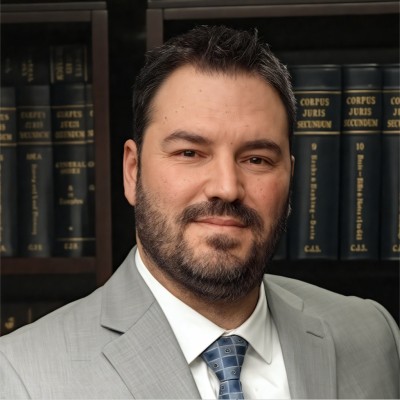
Judicial Candidate at Eighth Judicial District Court of Nevada, Department 30
I have called Las Vegas and Henderson home for almost two decades, practicing as an attorney for the past 16 years. I began my career in private practice, gaining valuable litigation experience in personal injury, employment, and criminal defense matters.
After 10 years, I made the decision to enter public service with Nevada Attorneys for Injured Workers, a state agency dedicated to serving members of the public who have had their benefits denied. I currently serve as a Senior Deputy Attorney.
Outside of work, I am a dedicated family man. My wife is a team chief with the Clark County Public Defender's Office. We are full-time dog lovers and have raised five together so far. But most importantly, our greatest achievement is our ball of charisma five-year-old daughter.