Ep43 Nate Longshore—Former Quarterback Explains How One Great Year on Film Can Turn a $250K Backup Into a $2 Million Starter


Learn more about Nate Longshore and QB Method: https://qbmethod.com
Don't forget to SUBSCRIBE to the HendersonHQ Newsletter: https://hendersonhq.com/Subscribe
Check out our website for all our local stories & community updates: https://hendersonhq.com/
Follow our Instagram for deals and cash drops: https://www.instagram.com/TheHendersonHQ/
Interested in advertising in our newsletter to 25,000 local Henderson residents? Let's book a call: https://calendly.com/scottgrovesteam/catchingup
______________________________
Scott Groves sits down with Nate Longshore, a former Cal quarterback and UNLV coach who now runs QB Method, to talk about how quarterbacks actually get developed, from a 10-year-old learning the position to a college player working for a payday.
Nate coached at UNLV for five years and ran a quarterback training facility in Southern California that got players ready for the draft and pro days. Before that, he coached a Santa Margarita Catholic team that was ranked number one in the country and had nine NFL players on its roster. Scott's 10-year-old son Gabriel now trains with him.
In this episode, you'll learn:
• Why Nate thinks young athletes are better off playing multiple sports than doing endless year-round training sessions
• How NIL and the transfer portal changed the math, including a $250,000 backup spot at Michigan versus a $180,000 starting job at Southern Utah, and why one great year on film can push a starting Power Four quarterback's market value to a $2 million floor
• Why top quarterbacks drop down to schools like Memphis, Boise State, and James Madison, and why Nate doesn't expect another App State upset of Michigan
• What a week looks like for a college football coach, from grading every player on every play to recruiting trips after Friday meetings
• Why small tasks done over a long time beat a single expensive camp when it comes to development
• How to coach forward after a mistake, with Nate's examples of what to say after a dropped pass or an interception
• How Nate built QB Method, from free content on X to a $19 a month library to a three-day intensive
• Why Nate doesn't see JaMarcus Russell as a bust, and what Brock Purdy's career shows about quarterbacks who don't jump off the page athletically
Nate also walks through the resources he has built for players and parents, including the Defensive Mastery playbook, the QB Tool Chest, a book on 67 quarterback traits, and a quarterback gel for warming up and recovery. Scott, who hires Nate to work with his son, says he can't recommend him highly enough.
Nate Longshore 0:00
The opportunity's never been greater. Like the path isn't like, all right. If you're not a four or five star, you know you're stuck in this lane over here. You can mess up. You can do this. You can do that. You can take all these different ways to get one great year can change your life. You have one great year on film at any college in the country at any level, and that can open doors at LSU, and you could be making life-changing money.
Scott Groves 0:26
Welcome to Henderson HQ. This is the podcast where you get all the stories behind the businesses that make our community tick. Don't forget to subscribe to our weekly newsletter. Hey, ladies and gentlemen, welcome to the Henderson HQ podcast. I'm here with an old enemy but new friend, Nate Longshore, and as the former quarterback of the Cal Berkeley Bears, he beat my UCLA Bruins pretty pretty badly. So when I first met him, I really didn't want to pay him to work out with my kid. But my kid wants to be a quarterback in football, and Nate is the owner of QB Methods, so we've now become friends. I think, and I don't hold it against him that he was on a team that upset my UCLA Bruins. So we're going to talk all about you know if you've got a kid in kid sports in the football realm, or you just want to learn more about the crazy football scene in Las Vegas, which I'm learning all about slowly as my kid and my best friend's kid are really getting knee deep into football. This is probably the podcast for you. So, Nate, welcome, man. Why don't you Why don't you start with your resume? Tell us who you are, where you came from, and how you learned so much about football.
Nate Longshore 1:31
Okay, so most recently, I coached at UNLV for five years. I was there through two tours. Go Rebels. Yep, I was with Coach Arroyo, and then stuck around with Coach Odom, and then as he went to Purdue and the new staff came in, I I said I needed a break. So we're we're here we're here doing this. But before that, I had a training facility, quarterback training facility in Southern California. We had our own field. We had some offices. We would do classroom sessions, film sessions, and then we do some field training, and kind of our wheelhouse was like getting guys ready for the draft and for pro days. And so then we'd go around the country and run these pro days. Quarterback positions a special spot, you know, when you're interviewing for the NFL. Typically, they tell you what to do, but when it comes to the pro day for the quarterbacks, they all show up and they look at the quarterback like, "Hey, man, what do you want to do?" So organizing and running those pro days, kind of those exhibitions for the quarterbacks and their their teammates to to show their skills is kind of it's a whole operation, and it kind of falls on the quarterback's shoulders. And then he goes and finds someone to help him execute. So that's that's what we did there. Before that, I coached at Santa Margarita Catholic in Southern California, and they our house. Yeah, they're probably top five in the country right now, and we were ranked number one nationally for a little bit while I was there. I thought we were just really good coaches, and we had nine NFL players on our high school team.
Scott Groves 2:59
On your high school team, nine of them went to the nine of
Nate Longshore 3:01
them. We didn't have nine NFL players at UNLV in my five years, but we had nine on one team at Santa Margarita, and we were ranked number one in the country. And we were pretty sure is because we were good coaches.
Scott Groves 3:11
Because I got to imagine like high school football in a small a small portion of those go to college football, and then there's probably I don't know 20,000 college football players, and a very small percentage of those go to the NFL. So, for you to have nine pro quality people on one high school team, that's that's just an absurd wealth of riches.
Nate Longshore 3:30
It was it was certainly absurd, and some of them are still playing to this day. So it's it's fun to watch those kids, you know, all have have blossomed in spite of their coaching, and so yeah, I played before that. I went to Cal, played at Cal, like you said. Now we did beat UCLA quite a bit, but yeah, I do have a I have a scar. I have a bad loss at the Rose Bowl. I threw a pick six to lose the game. I was I was there right that one. Yeah, yeah. I don't think I've seen the Rose Bowl that excited ever since then. So, when they ran that interception back, so I'm glad I could bring some joy to the Rose Bowl. Yes, yes. In a moment where it was it wasn't so hot, but yeah, enjoyed playing. Now enjoying coaching. Took a little break to do some some tech things. We ran a VR company and really that still was around football. We had VR for football. Ended up selling a baseball product and and now I'm back into coaching full time.
Scott Groves 4:31
So can you talk a little bit because like my kid's 10, right? I he he's still learning the playbook and like what the positions are. And I was so embarrassed because I was like a crazy football fan, crazy. Like I would post up at Barney's Beanery in Pasadena, California, from Thursday night college games until Monday night NFL. I mean, there was a time when it was still the Pac-10. I could have told you who the third string quarterback on your team was, and I probably had a gambling problem. I was betting a lot on on college football, but then once I got married and had kids, I'm like, something's got to give. I have. No time for sports, and so I realized when Gabriel played his first football game and kind of accidentally became the quarterback because the main guy broke his arm, and it turned out Gabriel knows how to fall down from five years of jujitsu. So, coach made him the quarterback. I realized he didn't know what a two-point conversion was. He didn't know like what an on-site like. We hadn't watched any football together, so this is I'm very new in this journey, but can you talk us a little bit through like what is the difference between, or or what are the characteristics of somebody that can play in high school versus getting where you got to the college level versus I'm guessing you had aspirations of playing in the NFL that didn't work out. Like, what's the delta between somebody that can play high school, college, and pro football?
Nate Longshore 5:40
So times now are certainly different than than when I came up. Like I I didn't even play football my freshman year in high school. So our our football coach came to a basketball game. I love basketball, and he says, "You look like you could play football. Why don't you come out and try out?" Okay, I'm I'm free tomorrow after. You
Scott Groves 5:58
were this big playing basketball.
Nate Longshore 5:59
I was. Yep. I was I was a lot of cheeseburgers ago. I was a lot thinner. I could jump, you know. Yeah, so I went and played football. And back then, you played all the sports, you know. You transitioned from football season to basketball season. Then the track coach would go, "Oh, I want you to come do this." And our baseball team was missing a pitcher, so like you want to pitch for the game. Like I wasn't even on the team, like you know, and the coach is offering me starting like we need someone to throw pitches. You'll probably you'll probably be okay. Like it was just like the quintessential high school experience back then. And now you have all these kids specializing, and it's hard if you're at a decent sized school. It's hard to even be good enough to to be on all those teams, if you're not specializing, and so like if you're a Bishop Gorman and you're on the football team and you're a starter, you don't think the basketball, you know, to be a starter on the basketball team at Bishop Gorman or even a role player, like
Scott Groves 6:54
yeah, you're not playing multiple sports anymore.
Nate Longshore 6:56
You're gonna have to go to a school where you know maybe football and basketball aren't a priority, and now you can you can play multiple sports in that sense. So it's kind of it's frustrating when when I see online like, oh, I wish this guy would play more sports. It's like, well, it's not quite like that anymore. Like, right, everybody's so much better, and and the specialization happens so much earlier. Do you think that's good for kids? No, absolutely not. They should. Everyone should be playing everything. We should thought, you know, be great to to not transfer around all these kids in high school that go to two or three high schools is, you know, but it matches with college. So right, the transition phase is probably here to stay in sports, unfortunately. But yeah, I think cross training and just practicing being a competitor year round is probably better than endless training sessions year round.
Scott Groves 7:47
Yeah, I saw something online because now that I'm posting stuff about my kids' football journey, I'm getting fed all this stuff by the algorithm. I I was seeing that like for the first time in American history, there is orthopedic surgeons that specialize in pediatrics because you know if you're a five year old kid and all you've done is played golf, you're probably going to blow out your left shoulder. And if you've only pitched, or if you've only played football, or if you've only played soccer, like we're seeing like serious adult injuries in minors now, which didn't happen because their their body isn't as balanced as it used to be when they were playing five, six different sports, or having an off season. Which, like, if you're serious about football, soccer, whatever, there's no off season anymore. I got a friend whose two kids play club soccer at 11 and 13. He literally does not have a weekend off all year except for Thanksgiving and Christmas. And I'm like, that's awesome. You're pointing your kids like that, but I, I don't know if that's good. You know, time will tell. But just seems weird.
Nate Longshore 8:41
That's just it. Nobody knows. Nobody knows if that's the way. There will always be the one that makes it, and everyone's like, "Look, that's the way." And then there's another group of people, another family that does it the exact same way, and they they don't make it, you know,
Scott Groves 8:56
make it
Nate Longshore 8:56
whatever, whatever that ends up in their mind as being. But yeah, a lot of times, just because you can replicate the path of the first round pick doesn't mean you're going to be a first round.
Scott Groves 9:09
I was never going to be in the NBA. I'm 510 and can't jump, so doesn't matter how specialized my training was, you you weren't going to give me a dunk. This is not it's not happening. But it's funny you mentioned the multiple sports because I remember, like my senior year of high school, '97. So now I'm telling everybody how ancient I am. The only tournament we didn't do well in high school wrestling was the first tournament of the season because everybody over 160 was still playing football because they made the playoffs or whatever, so they could have made the tournament. And it's like it was very common for our heavyweight to also be the center and then to also go do shot put or whatnot, but if you're a good athlete at a high school level, you're you're probably only playing one sport now, right?
Nate Longshore 9:47
Yeah, and that's just it. It's like I said, it's so specialized and wrestling, especially like the the center. Like that's a great example of there probably is quite a bit of carryover where you talk about someone playing. Football and then going to basketball, like those motor skill development, like it's going to take you a couple weeks to find your shot if you're not practicing all the time, and and the kid you're competing against is practicing year round, and he's got a shooting coach, and so for those two weeks, like it's going to be hard, even as you find your shot, to unseat the kid that's been doing it for the last eight months straight.
Scott Groves 10:22
So, do you think you're adding to the problem or taking away from the problem with what you do for a living, or is it just this is just what the market bears?
Nate Longshore 10:29
I do what's best for me. So, like, I I want to do football all day, every day. So, anything related to football, I want to do it. And then, I hope I try not to make decisions for people, like, hey, I put out there. Here's here's everything that I've got, and if whatever makes sense for you, that's great. And whatever doesn't, also that that's great. So yeah, I try not to make any of those decisions for anybody.
Scott Groves 10:54
The reason that I enjoyed hiring you to work with my kid is because our very first conversation, you were very blunt about the fact of like, hey man, we'll get together, we'll work out. Everything's going to change by the time they go through puberty, 1314. He might not love the sport. He might grow into a different position. You know, I'd be fine with him playing flag football for six years and doing nothing with a coach. And I'm like, well, help me out. Let me just see if there's any future here or how much time we need to put into this. And you were just so brutally honest, of like, hey man, kids' paths are gonna change. You got to do what's best for the kid, and I know you want to be a supportive parent, but like, don't lose sight of the forest for the trees. Like, like you don't need to be spending this kind of money on a 10-year-old because everything's gonna change in the next three years.
Nate Longshore 11:34
Yeah, and I think that's that's part of it too. Is you can never be with a trainer enough. Like, and this goes for personal training. This goes for probably your line of work with business coaching. Like, like there's never enough hours and opportunities to. There's just impossible for me to be with Gabe every day. But there's there's development that has to happen every day. So you kind of you get with these these advisors, if you will, to kind of give you a little roadmap of things to execute, just like we do every time we get together, right? So hey, here's kind of the checklist of here's what progresses we made. Here's some things to work on. Here's some drills to do, and then over the next few weeks we get back together again. Okay, these things have resolved, have improved. Okay, now we've got these new issues, right? And so, as he's adding strength, every time we see, like, okay, he's stronger, throwing it further. That's less of a concern. Okay, now it's accuracy, or now it's footwork is kind of in the latest, which means that we're making progress down this chain of skill development because we were never concerned with footwork at the beginning, right? Because, but now as we start refining, it's like, oh, okay. As we unlock these next phases of development, you kind of see how they all stack together, and you know, it all comes down to the kind of the work that the guys want to do on their own. Yeah, is how far they'll go.
Scott Groves 12:57
If I had Elon Musk money, I'd pay for you to be at every practice taking notes. Because like after our sessions, I don't know, we've met every three, four weeks or so. After every session, you send me this write up where I'm like, first of all, how did you have time to do that? Second of all, thank you. And third, it's like it's super detailed. I'm like, oh, this is kind of what I expect out of like a scouting report for you know a high level team or a college team or something. So I appreciate the notes you're giving me, and then of course me having not played football feel totally inadequate to help Gabriel enact them. So it's like when I feel like I'm lost again, I'm like, okay, I guess we got to do another session with Nate. Well, that's
Nate Longshore 13:30
that's kind of like that's kind of the beauty of with where we're at with technology now and the AI. So the way that I get those notes because in the moment it's so hard. I'm not out there with a pen and pad, right? But you'll notice at the every time at the end of our session, I'll record kind of our post recap where I go through everything, and and mentally in my head, it's easy to recap the last hour and a half, right? Right then and there, so I'm recapping to him and recapping to my notes that I'll then go home review, okay, and then we'll go through and synthesize. Okay, what was most important? What needs extra work? What doesn't? And then that's what you end up getting. And so, having these these new tools to help organize thoughts is really has made me a better coach. That's for sure.
Scott Groves 14:14
Hey guys, just a quick ad from our sponsors here that make this podcast and our newsletter possible. Want to give a shout out to Ethereal Med Spa, a gym for your skin. So doesn't matter whether you're doing anything proactive, all the way up to spot removal, all the way up to beautification, right or vanity. Ethereal Med Spa, they got you covered. Scott Wright over at Wright Auto Body, love them. So anything from a scratch and dent to a big insurance job, all the way up to a custom rebuild of a classic car. They got you covered. And shout out to my buddy Casey Halstead, owner of 10th Planet Jujitsu, which now has three locations. They just opened a new location on the west side, so they got our Henderson location, they got a Mid City location, and they've got a West Side location. So anywhere in the valley where you're looking to.
Nate Longshore 15:00
Train jujitsu. Check out 10th Planet Las Vegas. Now back to the show. Can you talk a little bit about just your personal experience? The because I know it's grueling the grueling cadence of being a college football coach. I know you were coaching the quarterbacks and coaching the tight ends and stuff, and it's like I've heard from some other people that I know that coach either with the Raiders or UNLV. It's absolutely brutal because for the coaches, there's no off season. It's it's like you said when the travel ball, you got a couple weekends off. Like you could pinpoint for the next 20 months the days off that are your are on your schedule as a as a coach. You're like, okay, in July after the dead, we're gonna have. I'm gonna have two of three weeks off in July. I'm gonna have one week off after our bowl game in December or January, and then after that, it's every. And I'm not talking like weekends included, like Saturday, Sunday, because recruiting now is all expanded. So you have you can have recruits in even during that time off in the winter, you may have because now the portal's open, and so now you've got this this 12 month calendar of of things that are pressingly urgent in those moments. So, like right now, winning games is urgent. So, from the time they get off the field, you're handed a laptop. The film from the game is on there. You're grading every single play, every player to give them. You're grading every play, every play, every player, every play. And within that, there's different elements. You have assignment, you have technique, you have effort. Okay, so the the players getting graded on all three of those elements for every play. And if you've got five players on the field at that time, each five, each one of them is going to need a report card, and that's got to be done by the next day because by the time you start Sunday morning. So let's say the game ended at 10 Saturday night, and you're hopping on a plane. Okay, by the time you get home, it's two, but your grades have better be done because you're going to get a few hours of sleep. You're going to have a staff meeting at seven that morning on Sunday. On Sunday, prepping for the next. And we're going to be on guard. Yep, you're going to do a quick debrief. Okay, what? How does everybody's grades look? Anybody stand out? Strategy. Here's what. Here's what we did well. Here's what we did poorly. Okay, now on to the next opponent. We've got Boise this week. Actually, let's do UNLV. So they've got Cal this week. Okay, here's Cal's last results. Here's kind of what we know from the wire about who's injured, who's not. Okay, and they've already got a scouting report done because kind of the lower level assistants have been building that that advanced scouting report. So now you're, I mean, then you're full steam ahead. And Monday is normal down and distance. Then you got Tuesday. You got all your situations: third down, goal line Wednesday. Okay, you've got all your third down plays, and now you've got Thursday to rerun it all, and Friday you're traveling, and then Saturday you're playing,
Scott Groves 17:51
and it just starts over. And
Nate Longshore 17:52
then it starts over.
Scott Groves 17:52
So like during season, there there is no day off. Period.
Nate Longshore 17:56
There's no there's no hours off during the season. Let's say you finish your meetings Friday. Let's say it's a home game. You finish your meetings, and you're putting the the players. Okay, let's wrap up. You guys are going to dinner. Don't drink too much tonight. No, I mean they're in a hotel. They're they're you've got them locked down already. But now there's a recruit across town. I'm trying to get to commit. I'm gonna try to run over and catch the second half of his high school game. Let him know what we we care about him and we want him. We go in, show face, say hi to mom and dad. Boom, you're back taking notes on the way home. Yeah, it's uh you're getting home about 11 o'clock, and then you've got staff meeting the next morning at 7am. to go over. Okay, game plan for today game day. Here's what we got. Here's all the walkthroughs we got scheduled. Here's the meals. You know who's who's feeling a little ill. Who needs a little Tylenol? You know it's a full sprint.
Scott Groves 18:52
It's brutal. And then as soon as the season's over, you're right into recruiting. You're right into replenishing the roster, right? Because kids graduate, kids transfer, kids drop out of school. They're academically ineligible, whatever. So it's like it just never ends.
Nate Longshore 19:04
Never ends. Like imagine you're doing all of this, and your podcast director every week is like, I want to renegotiate, and right, and that's what the kids are. You get 100 kids that want to renegotiate, and not not when it's convenient for you as a coach. They want to renegotiate when it's convenient for them as a player, and so you end up your your mid season, like starting this week. These kids are going into the coach is worried about playing Ohio State, and he's got his starting linebacker is in there. Hey, coach, about my contract for next year. Oh, and the coach is like, you can't just say no because he'll call his agent. Agent will start poking around, and before the season's even over, he's got a deal locked up to go somewhere else. So you've got to take those meetings, and I think the there's been a rhythm kind of established by these schools that they know these meetings are going to start happening, and so they start building time in to to deal with.
Scott Groves 20:00
But the talent retention piece on top of recruiting is a whole nother animal. So we were talking about this a little bit after one of the practices with Gabe, where it's like the NIL. The I don't even know what that stands for. Name, image, likeness. Name, image, likeness. So now college players can get play paid on every at every sport. You know, there's there's female gymnastic competitors making a million dollars a year now to represent the school. I'm happy that they did that because, like, as I was growing up being an insane college football fan, I was like, "This is basically slave labor. Like, these kids are legitimately putting their health and safety on the line every Saturday." I think I'd mentioned to you. I think the year somebody's gonna have to fact check me on this, but I think the year one of the years that USC won the national championship, Reggie Bush and Matt Leinart and somebody else between the three of them, they had sold like $80 million worth of jerseys, and they you know technically were not supposed to see a penny of that. Now whether there was some booster stuff going on the side, who knows? You know that's why Reggie Bush had to give back his Heisman. But I I was always really felt like oh this is disgraceful. There's billions of dollars being made in the college football, and these these players are basically indentured service. They're not getting a dime, so I'm glad they're getting paid now. But the way they've done it with the transfer portal, where it's like, well, I was at Cincinnati for a year, and then some booster at Purdue paid me more money, so I went over there. Well, now I'm going to go to Texas Tech for a better chance of winning a national championship. I don't know. It just seems to like kill that camaraderie of like the Lakers were the Lakers. It was almost the same roster the entire 80s, and now you can't really root for a player because they're going to be on six different teams during their career. And it feels like college, especially college football, is now the same thing.
Nate Longshore 21:36
Well, I think the the guardrails are slowly starting to catch up, so you're starting to see multi-year deals, and so you're starting to see kind of the schools get, you know, it was super school-heavy for all those years that we remember, right? Everything was in favor of the schools, so even think about Reggie Bush, like USC got whatever value out of him that they got, and they gave him an $800,000 house.
Scott Groves 22:01
Yeah,
Nate Longshore 22:01
like I'm thinking, you got a pretty good deal, USC. Like, yeah, I I think there's probably yeah.
Scott Groves 22:07
You get two national championship. You
Nate Longshore 22:08
did all right on that deal.
Scott Groves 22:10
NCAA gets a massive contract with ESPN because everybody's watching USC football. Like, yeah, they they the colleges made out.
Nate Longshore 22:17
Yeah, and so then it got towards player friendly for for as NIL started and there was kind of the bidding war for the players, like the contract terms were pretty friendly. You could leave and go and do whatever you want and make what you want. But now, as those contract terms are kind of tightening up, and now there's exit language and there's performance language, the money is better for the players. Like I agree. Like I'm glad that they're getting to participate in all the the revenue generation. But I think you will see it started as the Wild West, but it'll it's starting to normalize. And I think you'll get back to a point where it'll never be the same as before. Like man, here's our roster. These guys are developing. Here's who we're rooting for. Like that old blue blood, you know this is our team, and I can't wait till so and so. We got this freshman; he's going to be great. You lose a little bit of that, but at least you're you're taking care of of the people that are that are in it because a lot of these kids won't have any opportunity to monetize football right outside of this opportunity. So I'm super happy for for the kids in that sense.
Scott Groves 23:25
Yeah, it's interesting because, like, I have to imagine now that NIL money is on the table, you really can't be thinking about I'm going to get this freshman, I'm going to develop him for two years, he's going to be good as a as a junior and a stud as a senior. Like, I see the path for this kid because by the time he's a junior, some other college will just pay for the two years of development work that you put in, and that's going to be like emotionally devastating for our coach.
Nate Longshore 23:47
Well, that's exactly what's happening. So you end up there's actually really good players going to much smaller programs for the opportunity to play. So let's say I can go to Michigan and I can be the third string quarterback, and Michigan's going to give me 250,000. It's going to be the third string quarterback. Okay, which is great. I'm at Michigan. I'm developing. You know, if the sun and the moon and stars align and people go down, I may play, or I can go to a place like Southern Utah, and Southern Utah's going to give me 180,000. But I'm going to be the starter, and I'm going to be on the field, and I may be able to increase my stock because now the way colleges share film, every college has access to every other college's film. So if I'm at Michigan, I can watch right now. I can watch Southern Utah's film, and if that kid's playing well, I know what I've got. So you have these kids going to schools like that to get film, and now instead of being the $250,000 backup who didn't play at Michigan, you know now other teams are trying to guess your value. You went and you had a great year over at Southern Utah, and now your market value is starting quarterback power four. So now you're looking at 2 million as far as the the floor for a start. Power four quarterback the next year, so you're taking you're starting to see the journey changes quite a bit. But the opportunity, the opportunity's never been greater. Like the path isn't like, all right, if you're not a four or five star, you know you're stuck in this lane over here. It's like now you can you can mess up, you could do this. You could do that. You could take all these different ways to get one great year could change your life. You have one great year on film at any college in the country at any level, and that can open doors at LSU, and you could be making life-changing money.
Scott Groves 25:36
Well, that's crazy because if you think about it, first of all, the idea of giving a 20 or a 21-year-old $2 million dollars is terrifying because I couldn't I couldn't manage $1 until I got married in my 30s to my current wife. So that that's terrifying. But for the kids that really do plan accordingly, pay their taxes, God forbid, invest some of the money. Like think about for you at Cal, not not to not to open the wound, but if you got a couple million dollars and some good advice from your parents or a mentor when you're in your 20s, just think how much exponentially richer you would be 25 years later with 25 years of compounding interest. It is truly what you said: life-changing money.
Nate Longshore 26:13
Yeah, the and that's you're starting to see some of these higher academic schools, like the value proposition is like think of the investment opportunities I would have had at Cal with that money. Like I still remember our our kicker trying to tell us all that this Bitcoin thing was coming and we all needed to invest and we all told him he was crazy. Like, and if we would have listened and put $100 in, yeah, we would we wouldn't be here right now. Yeah,
Scott Groves 26:40
imagine being the Stanford quarterback, and you find out that the next Facebook or the next Zoom or something, and you're like, "All right, I got the money. I'll throw $5,000 at
Nate Longshore 26:48
that's just it." We were we were in the first wave of the first phase. I got the invite from Zuckerberg himself. Like Cal and Stanford were the first two schools, yeah, invited to Facebook. And then at the time, you know, and you know I'm a kid. I don't know anything, and so everyone that joins, you know how they like recommend like ESPN, and they recommend, yeah. Nate Longshore was one of the people they recommend to everybody when you follow, because I'm the quarterback at Cal, and this really there's only two schools. So I ended up I had hundreds of 1000s of Facebook Facebook friends. Before I knew that any of that mattered, I ended up deleting the account one day. Like this girl I was dating was giving me a hard time that there were so many messages. I'm like, watch, delete, delete. Now looking back, I was like, oh, that was worth the money. Yeah, that was probably a million dollar mistake. Facebook, can I have that back? I know we know it's dead, burned or whatever. Yeah, and if you think about it, back then when when you guys were the first couple colleges on the platform, I'm sure if you were making NIL money back then, Zuckerberg goes, "Hey, Nate, do you want to invest in this Facebook thing? You know, we'll give you 1% for 20 grand, and we wouldn't be talking now. You'd be on your own private island." Yeah, just so I think I think that's cool, and I think you're gonna see, you know, kind of going around the football world, you have these these schools where it's always been like, oh, these they've got car car dealerships giving these kids bags of money, and now you have Oracle giving the kid at Michigan a bag of money. So it's like there are some different there's some different tiers to what some of the access at some of these schools are, and right. That's why you're starting to see the powers shift a little bit. Like as soon as Mark Cuban starts to get involved at Indiana, now Indiana is good at football. Yeah, that's funny how that happens. You see, okay, what else could happen? Like this year, you've got Florida. Florida's made some real investment. Like, there will be no surprise when Florida's in the playoff, you know, because of of how they're. I mean, where was Florida last year? Like, embarrassing at points, you know. Now they're probably the best team in the country at this point in the season. So,
Scott Groves 28:56
do you think because of the money spend, we'll ever see like the you know famous Boise State upstate upset of Oklahoma or Appalachia State killing Michigan. You know, will those just be fewer and far between because now there's not as much parity, and the money is taking all the talent to the top. Call it 20 schools.
Nate Longshore 29:14
Well, that's the interesting thing is the let's say that next tier, let's say out of the big money, the next tier down. So what happens at the big money schools is, if I end up being a backup, I can't stay there. Like I only have five years to play. So at some point, I've got to get good film if I'm going to try to play in the NFL. So I can't stay at LSU as a backup my whole career. At some point, I'm going to have to drop down and go to Memphis or go to USF or go to UNLV or go to Boise if I need good film, and so you end up with a pretty solid talent base. Like all the twos from LSU, let's say you put all studs right, they may have just barely missed out on the starting job. You know, so you will end up with a. Now they're not dropping down and going to Sac State, right? You know, but they're dropping down and they're going to that that next best tier. So you could see a school like James Madison or Boise like make it competitive with those other schools because again, those are the guys that just barely lost the opportunity. That makes sense. But the drop off from there is always going to be pretty significant. So you won't probably see App State upset Michigan ever again. But seeing a team like Memphis or Boise or James Madison or or one of those, like they'll still have a chance to be competitive, depending on what lure they they got from those those schools the year before?
Scott Groves 30:45
Yeah. So tell us about your journey of how you decided. Like, I still want to work in football. Maybe coaching's not right for me. You know, I know you got kids that are you your last couple summers with the kids, so you're really focused on that. But like, how do you come up with like all of this, the QB method? Like, for those of you that are listening, maybe instead of watching the YouTube, we've got a defensive defensive mastery playbook here. We've got a QB tool chest. My son just started reading this book, actually, of like the characteristics of a good quarterback. You've got this gel stuff. You'll have to tell us about this in a little while. But like, how do you decide to make this? I'm going to focus almost primarily on quarterbacks across the country, and not only do that because you love it, but that there's enough market where you can make a good living off of doing that. So I love everything about
Nate Longshore 31:30
quarterback development, mostly for the players themselves. Like I think there's so many skills that you can learn that will serve you later in life through a game that you love. So if you and if you don't love football, this is not the game because there there's a lot of adversity and heartbreak in football. And if you don't love it, it ain't worth it. A lot of body aches too. Yeah, there's you know you can go archery is a good time. It's very challenging. Golf, yeah, you'll see some of the most beautiful places on earth. But football, you got to really love it to to to do it. And within that, you've got the dynamics of a team and leadership. You've got the, you know, the self talk of of not listening to the outside noise of social media and all the the burner accounts who are just on there mad at the world. You know, they're not really talking to you. They're just out there venting, yeah, into the atmosphere. Your typical
Scott Groves 32:26
football fan was like, "You should just throw it a screen." It's like, "Oh, really, dude? You're 400 pounds sitting in your mom's basement, unemployed." I don't, I don't think you know what football player was great for that that scenario. The
Nate Longshore 32:35
worst part is sometimes those guys are right, and then and then they're all gassed up. Like, see, I knew. It's like, well, everybody kind of knew. Like I get it. Like, and that's that's the beauty of the game. But yeah, I've I had done quarterback training, like I said, in development stuff before. I wanted to know. I dipped back into college. I was like, okay, what can I do if I have my hands on these kids? Like I said, dude, it's 20. It's 365, 24/7, all year round. Let's see what that development cycle looks like. Because I've been in the the private space for so long, and it's awesome. There's nothing better than than going into a game with or going after any task with a group of people that you've all strained together to go do this thing, and then you accomplish it. And even when you don't, like the the appreciation you have for each other, like the fellowship of, man, we we did this together. We went after it together. Like that is really hard to replace, right? Um, and so, but the expense, the cost of that, is everyone around you suffers to an extent of, you know, your personal relationships. And my daughter will be the first to tell you. Like, you know, my dad spends more time with his players than me, and it it is what it is. You know, it's not ideal, but at the same time, you know, you're just trying to have a positive impact on as many people as you can. So, you know, I've been able to go to all of her games this year. Right, is the first time in my in my professional career I've been able to go see all of her. She's a cheerleader, so all of her ball games and you know that part has been been great. I'm like, you know, I don't I don't know if the trade is worth it. You know, to have these okay, so how can I take and still have this? We're chasing this goal together feeling within football, but also still, you know, do these other things that I want to do, like have a relationship with my daughter. So that's kind of where, okay, can I build out this quarterback thing where I can build these relationships with guys, help them chase their dreams, share my knowledge, stay involved in football, but also when it's time to be dad, you know, be dad. So that's kind of how it's built out of necessity. Now the details in the back end of it are so much more complicated than anybody would ever care to understand. Like I wish we were just rolling the ball out to the park and having a having a good time. But as you know, like. Talk about IOIs and forms and interest levels and trying to figure out where people are within the journey of of your product offering. Like there's there's a lot
Speaker 1 35:12
to it,
Nate Longshore 35:13
yeah. And it's probably more so than even the coaching and football side is. You know, I'm learning the hard way that this thing is a hustle in more ways than I ever imagined.
Scott Groves 35:25
Yeah, the the good news about running your own business is you get to do everything the way you want. The bad news about running a business is you have to do everything the way that you want. It's like it's such a double edged sword. Or
Nate Longshore 35:35
I always like you have to do the things you don't want to do. Yeah.
Scott Groves 35:37
So what's the path of when somebody comes to you and when they should stay with you and the the workouts and stuff because obviously like I said my kid's 10 I have no idea if this is gonna go anywhere I just wanted because like I I I'm the type of person where like I just very much feel like it sucks to suck so when I started doing jujitsu my first 100 classes were private lessons because I like I just don't I don't like to be embarrassed, it sucks to suck. If I'm going to go sing karaoke, I'm going to find somebody who's an expert and take some singing lessons because I it just sucks to suck. I hate it. And so what I wanted for Gabriel is like, hey, I just want somebody to evaluate like, could he be good at this at the level that a 10 year old needs to play? But like, when does it start to get serious? And when do you have conversations with parents or athletes of like, hey, there's really something here. Here's what the investment looks like. Versus like, hey, man, you're gonna have a lot of fun playing college football and chasing girls, but like, this is not your path. Like, what what does that look like for you? And when when do kids get involved? How much do they work out with you? All the questions.
Nate Longshore 36:37
And and that's kind of the that's the part that no one's figured out yet. Is like, what's the recipe, right? How do we? What is a first round draft pick look like? What did he look like when he was 10? What did he look like? What did he know when he's 12 years old? Is it private training every day? Is it playing all the sports? Is it surfing? Like you know, and when you go look at all the starting quarterbacks in the NFL, you're looking at 32 completely different journeys, and now some of them there's some parallels, but a lot of times you're like, some of them are they've got nothing to do with nothing, yeah, you know, and so okay, how did they get to where they're at? And my observation, it's it's a lot of of small tasks done for a long time, so as with any skill set, it's rarely about intensity and it's more about volume. And like, can you do the small things every day over time to get subtly better over time? That's going to always outrun the. We paid a million dollars for this camp and we went to it, and changed my kid's life. Right, those three days, like for me growing up as a kid, there was always the Michael Jordan camp was my holy grail, and he always advertised in like the Sports Illustrated magazines. I guess rip it out and take it over, and it was like an ungodly amount of money. We didn't have we didn't have that, right? So it was like, oh, you know, now it's probably something along the lines of like the Manning Pasking Academy or something like that. But at the same time, like for me, it's like I want to make sure I have an opportunity to hit kids at the the whole end of the spectrum. But I also recognize like there's only a limited amount of of my time and capacity and patience to to make on field adjustments, and so you know everything from free resources. Like if you follow my Twitter, my X, I guess, like I I put a lot of really good information on there, and and you'll get something out of it just by following that. Doesn't cost you a thing, and then there's a product that's $19 a month, and it's a whole library of quarterback. There's drills in there. There's film in there. You can watch me explain cover two in there. Like all types of resources. So depending on how much of a go getter you are, you can get a lot out of that $19 a month. And then there's things all the way up to three day. You know, okay. If I was designing this for a quarterback getting ready for the NFL, let me design that. And then if somebody wants to do that as a high school sophomore, let's do it. Let's offer it to them because we have it available, and I know it's really good. And then from there they take what they learn at that three-day intensive, and they can apply it through the next phase of their development. Like I don't just want to have a three-day camp and then you go home and see you later. It's like no, actually now I'm going to send you these messages every day, and we're going to meet up on Zoom every every month and go over these checkpoints of where you're at. And week one, when you get home, here's your task of things to do. And week two, and week three, and these are all built for you, just like I would do for the guy getting ready for the NFL. Like here's your deficiencies, but here's your strengths. Like we're not going to spend all day on your deficiencies. Like a good example would be like Peyton Manning. No matter how many sprinting drills he could do, like it didn't matter. Like he's the dog, just slow. Like it is what it is, right? So while you need to address those deficiencies, like you also need to like what are your separators? Like sharpen your sharpen your ax. If if you're really good at throwing, you can't just like I'm already good at that, just leave it.
Nate Longshore 40:20
Like no, like that's where the separation happens, and like doubling down on your strengths is really like the lost art of what creates value and what creates value in football. Like, what does a coach really need from you out on the field? Like, get really good at that because he's going to put you in because of that, and so is that trait so much better than what somebody else could offer? That you're going to be on the field, or the school wants to recruit you, or are you being drafted in the first round? So, I think just organizing those development paths is really kind of like what my my mission has become. Like, hey, here's where you're at. Here's what you can do to get better. Like, if you've got quarterback coaches or you come see me, that's great. But here, no matter how it happens, like, you got to work on this. And if it's by yourself or it's with somebody that is a trained eye, like, all the better to you.
Scott Groves 41:17
So there's a big difference between people that played at a high level, and people that can coach at a high level. You know, I was a very good loan officer, did a lot of production, but I was never the best. I was never number one in the nation. But I feel like I'm a better sales coach than I was salesperson. Mostly because I got to a point in the mortgage space where it's like I wanted to want to care, but I didn't care about doing mortgages anymore. I care more about the success of my clients than I cared about the success of my own personal mortgage production. So, what was your journey to be like? Okay, my college career is done. I think you played a little bit in Canada. I did.
Nate Longshore 41:51
I did. Uh, I had a cup of coffee with NFL like during training camps and mini camps, and then I did arena football. Arena football. That was it. I might be the highest-paid arena football player of all time, per play. Okay, per per play. I played. I played zero plays, and I got paid. And no one makes money in arena football. But because it's Bay Area, yeah, that's a different story for a different time. I don't even know if it's legal, but okay, we'll just we'll just leave that. But
Scott Groves 42:18
but that journey from like okay, my playing days are done, but now I really want to be an expert coach because I I don't know anything about football, but I know a lot about coaching. And I can tell when you're on the field the adjustments you're making, the things you're observing, the fact that you're getting at you know this degree angle instead of this degree angle to film his uh his throwing motion. Like I know you are an expert. You know you're you're a black belt at what you do. What what did that journey look like to be like okay my playing days are over but now I want to be a great coach that doesn't happen overnight and it and it never happens for a lot of people
Nate Longshore 42:48
at quarterback it happens naturally because of the interactions you have with your teammates to begin with right so you're constantly directing traffic as a quarterback and so you know hey I really need you to run this route a little bit deeper, like that. That guy's too close to you, but if you run it a couple yards deeper, I can throw it over him, and we got some room. You know, we got action. So you end up with these skills of communication to people that aren't necessarily like you wouldn't describe them as like being in your circle, right? I'm communicating with people I really have no life experience with, except we're on this mission together, and so you find ways to communicate and find common ground, and that's kind of like the first basis to coaching is like, can you build respect and common ground to then communicate effectively and hopefully, you know, sharpen each other as you go after whatever you're going after. So for me, going from quarterback to coaching, I actually got hurt my senior year. I tore my pec going into my senior year of college on my throwing side, which is not ideal. Yeah, no, it doesn't sound great. My college coach at the time is like, "Hey, you should coach." Like, you know, and in my head, I was like, "Dude, I was a first round grade last year. Like, I'm playing. I'm not going into coaching, and so stubborn me in you know refusing to look at big picture and understand life in general. Yeah. Well, you're 21. What can you expect? Yeah. I might go. You know, f you. I'm gonna do that. You know. Yeah. Yeah. I didn't ever work out again, right? So like, I tried to come back from that. I had some other injuries, and then ultimately just didn't play well enough for one reason or another, to to make a long professional playing career out of it, but I had these skills of communication that I had developed, and I loved the game. And so, as opportunities presented themselves, whether it's coaching high school, and then from coaching high school, you trying to supplement your money, like, hey, let me train some quarterbacks here and then, like, oh, I kind of like this. Like, it's kind of fun on a Saturday. That's my kid. That's my kid. We're rooting. Who we rooting for? That was my favorite. Who we rooting for today? All right, we got SC. We got JNet SC. We've got you know. You start going through the list of all the guys, and then it's kind of fun. Like your Saturday's full. Like you're you're rooting for 15 or 20 teams. Like oh you know we did some contract work for them we're rooting for them that coach he hired us to build out their learning system we're rooting for them like so it's kind of fun like you end up on these journeys with all these different teams it's happened organically but again to sustain it as a business has been a whole nother animal.
Scott Groves 45:18
What are the type of people you like working with right because I got to imagine with somebody you know there's a big difference between the athletic ability we can look back at who's a guy from LSU that could like throw 50 Marcus Russell Marcus Russell right obviously had all the athletic ability in the world but just you know his mind wasn't in the right place his heart wasn't the right place and then I'm sure there's other people that made it to the NFL that probably didn't have the strong like who would you say made it to the NFL that didn't have the most like core quarterback strengths or couldn't throw pretty well, but because of their attitude, their smarts, whatnot, they they made a career out of it. Like, is there somebody you would point to?
Nate Longshore 45:52
Like, I think a great example is Brock Purdy. Like, just and he's not. I didn't train him. I've never met him, but just going from if you look at his physical traits. You know he could be he could be a grocer. You know, and then you look at okay his his college career like steady never blew anybody out of the water like similar to Drew Brees right. You you've got these guys that are they're not overwhelming physically and they're not necessarily jump off the page athletically, but there's just something about their consistency and then the way that they operate. Like, and now they've got these these extended careers. I think Brock Purdy's probably one of the highest paid guys in the NFL. And if you put him at the, like I said, if you were at the supermarket standing in line next to him, you probably wouldn't know.
Scott Groves 46:38
Right, right. Probably didn't blow it off the charts of the combine.
Nate Longshore 46:40
Right. I don't even think he got invited to the combine. So you know, there's plenty of situations like that, and because I think there's, I think there's things in all of us that you don't know until they're exposed. So you got a guy like Jamarcus Russell, like all these beautiful traits, and you know we're talking about him like a bust. But really, to me, like he made it, like right, he made it. He got all the way through, like he used his tools all the way to $100 million contract playing football, and then that exposed a trait of, like, okay, sometimes when we get paid, we get comfortable, and so for him, he got paid and he got comfortable. Like, is that the end of the world? No, like in the football development world, it is like we see him as a bust, right? But I see him like, hey man, you did all this work, yeah, and you got to this point of financial security,
Scott Groves 47:29
yeah,
Nate Longshore 47:29
and then you exhaled. Like
Scott Groves 47:30
he probably exceeded expectations for what his life could have been. I
Nate Longshore 47:33
can't be mad at a guy for exhale. Like,
Scott Groves 47:35
yeah,
Nate Longshore 47:35
you know, we're all at a point. If
Scott Groves 47:37
you give me $100 million at 23 years old, I would be dead.
Nate Longshore 47:40
Yeah,
Scott Groves 47:41
I I wouldn't have made it. I wouldn't have made it out of my 20s.
Nate Longshore 47:43
It's hard for me to say all these guys are bust or all these guys are. It's like, but are they like they they did pretty well for whatever circumstance they came from.
Scott Groves 47:53
So I know you travel a lot for for what you do. Like
Speaker 2 47:56
if
Scott Groves 47:56
somebody's listening to this, obviously in Vegas, the best thing is you're local. You can meet up at the park on Saturday at 830 if you want to come to Mission Park on a on a Saturday or Sunday to see Nate in action. But how do you how do you like to start the relationship off with kids, or if there's a parent who wants to invest in their kid at the QB position, or you know, just I mean, obviously you have a wealth of general football knowledge. Yeah, like how how do people find you? Not, I mean, we'll put your Instagram and everything in the comments. But how do people normally find you, like organically or referral or what?
Nate Longshore 48:26
Yeah, so it's a little bit of everything. So sometimes it's a referral from a coach, and sometimes it's a referral from another player that you know you run it. You run to football players all the time. Now that Gabe is deep in
Speaker 2 48:36
it,
Nate Longshore 48:36
right, right. And so, and if there's something that you like, if you happen to like me, and someone says, "Oh, do you know anybody?" You're like, "Yeah, absolutely." So referrals is very natural, but a lot of times they'll find me just online, and then they go through the the process online. Hey, fill out this interest form, and it kind of has everything that I do on there, vaguely, you know, everything from combine training down to a book, right? So what what interest level do you have, and then at that point, it's about having a conversation and figuring out. Okay, what are your goals and objectives? Is this kind of exploratory? Are we kind of in the discovery phase, or is this, you know, I've got, I'm trying to be the starter on the varsity next year. You know, this is my chance. I want to sprint to see if I can make it happen, and if I can, great. We'll go from there. And if I can't, I gave it all I got. So you've got people at at different phases of that journey, and it really starts with a conversation. Like you know, get a hold of me. Let's have a conversation, and then we'll figure out what makes sense. What I
Scott Groves 49:37
really appreciate you and why we keep calling you back is because at the end of every lesson, you're like, okay, Gabriel, repeat back to me what we learned and whatnot. And yes, there's football, and yes, there's make sure your hips go before your arm, and yes, there's just take a one hit step instead of two bounces, all that stuff that I'll never remember. Luckily, he is. But what I really appreciate you is is like when you give them the life lessons embedded in football, when you're like, hey, what's. Most important play, the next play. Hey, how how do we talk to our teammates? How do we be a better leader? What it's it's seared in his mind that you were a cheerleader when you were a quarterback because you said, hey, what type of quarterback do you want to be? And he's like, I don't know, one that throws. He's like, no, do you want to be stern? Do you want to be the the cheerleader for the team? Do you want to be the the smartest guy in the field that knows all the plays? And he still wasn't really getting it. And you told him, you said, when I was in college, I was the cheerleader. When a player messed up, I knew the coaches were going to rail on them at practice the next day. So I just want to make them feel better. And like he's not doing it yet. That's that's a work in progress. But that is seared in his brain at 10 years old. That like, oh, maybe a good way to lead is to like raise other people up, and whether he never plays another football game again, like I know that's going to stick in his mind. So, just as a father, I appreciate that about you.
Nate Longshore 50:48
Well, yeah, I mean that's one of those no one wants to fail, no one wants to drop the pass, no one wants to jump off sides. Like, there's enough external pressure on everybody, and internal for the most part. As you, you know, like I said, football is hard. They're probably not out there if they're not trying to do well, right? And so there's, you know, I always felt like I got better responses when I just let in the positive. Like even if there's something I really didn't like, I spent no time, and I've kind of learned this through the years. Like the more time you spend on the mistake, like the more it's just floating into in the air, as opposed to you know if if a kid like you said if a kid drops a pass, man, why'd you drop? Don't drop the pass. Like you're continuing to reinforce that he dropped a pass. Like if if you immediately go to you're gonna catch the next one. You got this. You'll catch the next one. Like now you're back into the to the positive, like what you want to happen, like the worst as a coach, like you're constantly coaching other coaches too. So like I've constantly you've got assistants under you at at every level of development, and the worst question is like, why did you do that? Because obviously they did the wrong thing. Let's say the kid throws interception. Why'd you throw? Why'd you see? What'd you see there? Why'd you throw that? Like, right? What an absolute waste of time! Like, he obviously didn't see. He threw it right to the other team. Like, what's the kick in his take?
Scott Groves 52:08
Well, because I wanted us to lose the game, and I wanted to look stupid in front of my parents. Just like
Nate Longshore 52:12
get into what the adjustment is. Okay, right there, they rotated strong to that single high coverage. You got to see the safety. He worked to the right. You got to throw the seam up the left. Okay, make sure we confirm we can see the safety, we see the rotation. Like, just get into exactly what you want them to do, yeah. And coach forward rather than, you know, why did you do that? Like, carry on. Who cares about the why? This will be seared in my brain because, like I said, I didn't play football, and so the first the first time Gabriel goes out there for quarterback or whatever, and the coach was like, "Okay, we're gonna run X-ray bread 91 on on Cowboys something." Or I don't even know what he said. Gabe Rose looked over at me with these like big saucers of an eye, like I could tell he just wanted to say, "What the fuck?" And and I was like, "I got nothing for you, buddy. I don't know what any of these things mean. I don't know what any of the plays are. I don't.
Scott Groves 53:00
I know what a screen pass is because I've heard that on the NFL. But I'm like, other than that, you're you're on your own, dude. So I mean, if nothing else, I've been appreciative of his level to step up to learn. But hey, tell us about these things you have on the table real quick before we break
Nate Longshore 53:13
here. Hey, yeah, defensive mastery is my this is my labor of love. It's everything you need to know about learning a defense in a linear teach progression. So starting from the front, like you know, you got everything from alignments to defenders, terminology. Like what is a rover? What is a what's a nickel? What are all these things? So it just goes through. And what it is is I'm a visual learner, and so there's 1000s of pictures in here, representations, both like playbook style drawings, but also game image drawings, and these are all college football. Jesus,
Scott Groves 53:46
how long did it take you to make those?
Nate Longshore 53:47
Yeah, a long time. I locked myself in a room for a few months and knocked these out because I I had the order of this. Is like I said, this is how I would train guys for the draft. Is hey, it's not that we're reprogramming, but the language there's a global language of football that everybody kind of understands, and then you kind of specialize it for your team. So, cover two we may call Viper, right? Because we're calling all snakes coverages, and you kind of have like this communication translation for each team. And so then when you get the kids to try to get him ready for the draft. Like, hey, don't call it Viper. We're going. It's cover two, and and so it's easy to teach in that sense of hey. So, is this for a defensive player? Is this for a quarterback to read defense? It's a great point. So, this is everything you need to know from an offensive perspective about defense. But I've had some defensive coaches buy it to use it as install, it's funny within within football. If you ever look at a whiteboard in an office, if the offense is going up the board, that's an offensive coach. If the offense is going down the board, it's a defensive coach. So all of the drawings in here are offensive perspectives going up the field. So in that sense, it's an offensive book, but the amount of detail that I put into like every responsibility on the field, like for coverage, the will linebacker in a cover three match, okay, because he's on the weak side, you know, all the details of his responsibilities are in here. So if a defensive coach wanted this, and I've had coaches buy it to help them install defense. So in that sense, it's a global football-related defense of everything. Everything from pressures to fronts to coverages. How to attack the coverages. So there's answer sheets in here of if you're playing a cover two team this week. Here's some things that beat cover two. Just in general, you're going to want to attack the middle of the field. You're going to want to attack, you know, the the hook player. Put someone in front of the hook player, someone behind the. Well, what's the hook? Glad you asked. All the definitions of, you know, all the field zones. So now you're understanding what the hook zones are. So it's like I said, it's everything, but it's more as a resource. Like, okay, what does um you know if they're playing cover six? What does the field? How does the field Sam play it? Oh, I could pull it up, pull up cover six in on your phone. It's an even easier resource to search. You just hit the find button.
Scott Groves 56:18
What what I'm worried about football as a as a parent, is this shit is so much more cerebral than I thought it was? Because like as a fan, you're just like, wow, they tackle each other, they throw the ball, right? And Gabriel's reading some book. I think it came from Dying Lab or something on like quarterback something. And there was a great paragraph in there from Brett Favre. He's like, I was sitting down for coffee before the NFL Combine, and one of the coaches was like, okay, so the defense lines up in cover two, and blah blah blah blah blah. And what's your play? And what's the most exploitable receiver position? And he's like, my answer in college was always just go make a big play. And he's like, and it's at that moment I realized how much more I have to learn about playing in the NFL. And even at at a 10 year old level, they're running like 45 different plays, and I'm just I'm realizing how much more cerebral the game of football is, and then you know you're getting your ass flattened on the ground. You're supposed to get up and remember everything that happens for the next play.
Nate Longshore 57:08
Well, and that's the and that's the thing. So you try as coaches, like if I were to give you know defensive coordinators now make $2 million in college football. Some make three, some make four, just to coach defense, so if you think they're out there just trying to make a play, you're out of your mind, right? So there's a lot of there's a lot of rhyme and reason to everything they do. And if you said, "Hey, how many defenses do you run?" realistically, he could say 500,000, and like, oh my gosh! But as it's that because you know, as you work your way back through these these clusters of concepts, like from alignments. So, how did they get to 500,000? There's 10 different alignments they could take, and then okay, from there there's 10 different adjustments you could take. So now you're at 100, and from there there's 10 different fronts they could be in. Now you're at 1000, and then from there, there's 10 different pressures. Now you had 10,000, and now there's you've got 10 different coverages. Now you're at 100,000, and then there are five variations of each coverage. Now you have 500,000, but if you roll it back, we got to learn these 10, these 10, these 10, these 10, these 10, and then we got to start putting them together to see how these structures all fit, and then what they all mean. And so that's kind of this book helps you pull them apart, learn each of the pieces of the structure, and then as they start to mend together anything and everything that you can want to understand about coverage, that's that's how you get to the mastery part of football. Is you don't. That's how Philip Rivers can go from being not employed to starting is because he understands these concepts and how they all fit together. Regardless of what team you're on, regardless of what level you're at, the quicker you can start to master these different pieces of it similar to a car, similar to a lot of professions. It's like car is super complicated to people that have
Scott Groves 59:07
right
Nate Longshore 59:08
got no idea. But then you start talking to car guys. Well, there's an engine, there's a transmission, there's the suspension, there's and then within those there's these pieces. It's like, oh well, when you say it like that, it's not so complicated. You're all right, all right. So
Scott Groves 59:22
we got the defensive mastery, and then we
Nate Longshore 59:23
mastery. We've got the tool chest here, which has just this is more like personal development. There's leadership points in here. How to deal with adversity? What if your coach doesn't like you? What if a player doesn't like you? Just all the stuff that happens as the intangibles, dealing with other players. Yeah, enjoying the game, like having respect for officials and your opponents, stuff like that.
Scott Groves 59:44
I know I know a team that we played against a couple weeks ago that needs that book. Anyway, I'll just leave it at
Nate Longshore 59:49
that. And then you have the traits book. So this has every quarterback. This now I call it 67 QB traits long before these kids hijacked six seven. Yeah, my dog. You're ahead of your time. My daughter thinks it's funny, but I'm like, that's not why I call the dead. And so everything from throwing on the run to consistency as a quarterback to ball speed control, distance, and so you just go through these traits and kind of self-inventory: what are you good at? What are you not good at? Who's someone that does it well that you could look up to? And maybe if you like the arm strength of Matt Stafford? Watch him a little bit for his arm strength. See, see mechanically what? How is he generating that power? We've got those. This one right here, I'm excited about. This is a quarterback gel, pain gel, but it's really like a menthol peptide. So imagine icy hot, and you ever put icy hot on? It's like it's like a little uncomfortable. It's a little intense, right? So this is less menthol to kind of know where you are putting it in, but it also has some other healing properties in it. There's some peptides in here, and there's a bunch of botanicals. And I mean, I'm acting like I know what I'm talking about, but I don't. You just know it works. No, yeah. So I went. These guys are based out of Vegas, and so what? A kid I was training. His dad's like, you know what? I think I have something that could be interesting. We're putting it together, oddly enough, for pickleball players, of course. And I was like,
Scott Groves 1:01:13
because every old man plays pickleball.
Nate Longshore 1:01:14
So I, so I go over and I'm looking and I'm like, man, there's something too. And I, I had just done a a combine prep series where my arm was kind of aching a little bit, and that happens at quarterback. Like it's not that you're hurt, but it just starts barking at you. Yeah, like ah, it's like a like that dull, and takes a minute to warm up, and then once you're warm, it's kind of like okay, we're good to go. But I started using it, and I was like, man, this is really like it helps my arm warm up better psychologically. I feel like I'm primed and ready to go. So I said, let's let's put something together for quarterbacks that you can put on before you go practice or before you go play. That just kind of helps expedite the the warm up, and then at the end, the kind of promote the healing and recovery. Yeah,
Scott Groves 1:02:01
I love that man. I feel like I talked to you for hours. We didn't even get into your college career or anything, but we'll keep it. We'll keep it short for the audience. What's the best way for people to reach out? You mentioned X. Who are you on X,
Nate Longshore 1:02:10
Mister Longshore? I'm a I'm a I'm a teacher first. So at mr. Longshore on X and Instagram, and then QBQB method.com for.
Scott Groves 1:02:20
By by the way I still that's the most amazing thing I don't know how you got the URL qbmethod.com I thought somebody would own that 30 years ago
Nate Longshore 1:02:27
I I think I bought it maybe 10 that's one of my you know 20 collect I collect websites okay
Scott Groves 1:02:33
this is one of your not misses
Nate Longshore 1:02:35
not this is not your oh I've got 100 plenty oh plenty of misses I do but I have some that are really like four and five characters that I'm like, oh, this one, I'm not doing anything with it yet. But one day, yeah, big plans, you know.
Scott Groves 1:02:49
There you go, man. All right. Well, thanks for being on, man. Thanks for what you do with my kid, and yeah, can't can't recommend you highly enough if somebody's looking for a QB coach for their 10 year old to you know making it into the combine. Thanks, man. Absolutely. Hey, it's Scott Groves with the Henderson HQ podcast. I hope you got something out of that episode. If you enjoyed it, please don't forget to like, comment, and subscribe to the podcast. It really helps the show grow. And by the way, if you are a business owner or you know a business owner who has an interesting product, service, or just an interesting backstory, please, please get in touch with us. Email us at the hendersonhq@gmail.com. We would love to interview you because that's what this show is all about. It's about building community, supporting local, individually owned businesses, and just making Henderson a great place to live, and don't forget, go to hendersonhq.com and make sure you sign up for our newsletter. We send out a once-a-week newsletter, no spam about the most interesting local businesses, hotspots, restaurants, community events. Thanks for watching the show. Really appreciate you.
Coach
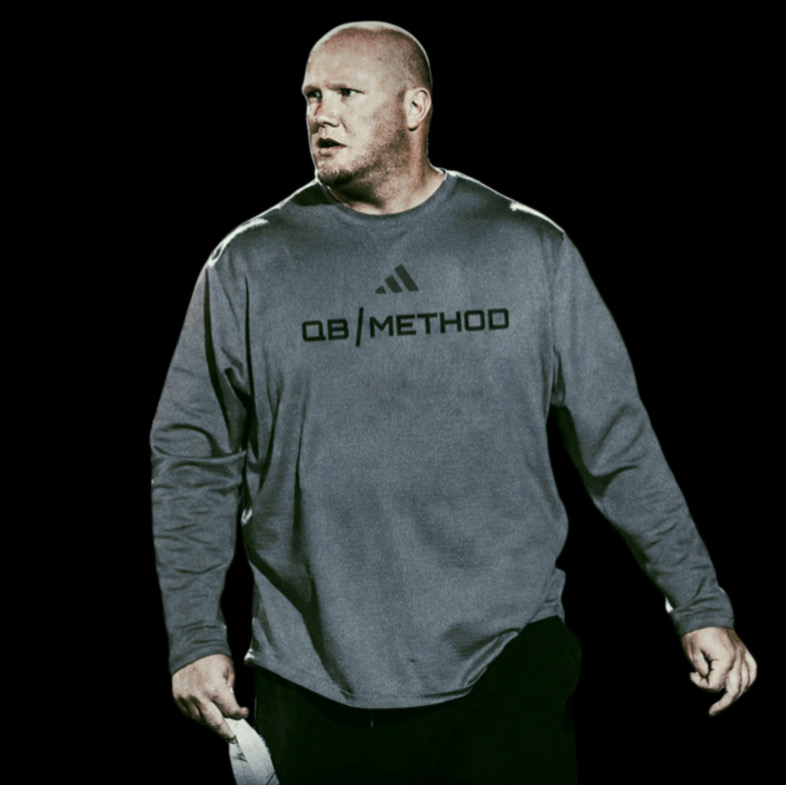
I’m Nate Longshore, founder of QB Method, a quarterback development company based in the Las Vegas area. I played quarterback at Cal and later spent time with the Miami Dolphins before moving into coaching and player development. My coaching career has included stops at the high school and college levels, including Santa Margarita, Oregon, and UNLV.
QB Method grew out of my desire to help quarterbacks understand the position beyond just throwing the football. I focus on helping players improve their mechanics, understand defensive structure, make better decisions, manage situations, and take more ownership of their development. I’ve also created several quarterback development resources, including Defensive Mastery, 67 QB Attributes That Coaches Evaluate, and the QB Tool Chest.
Today, most of my work is centered on helping quarterbacks and their families build a clearer, more structured development plan and understand what they should be working on next.