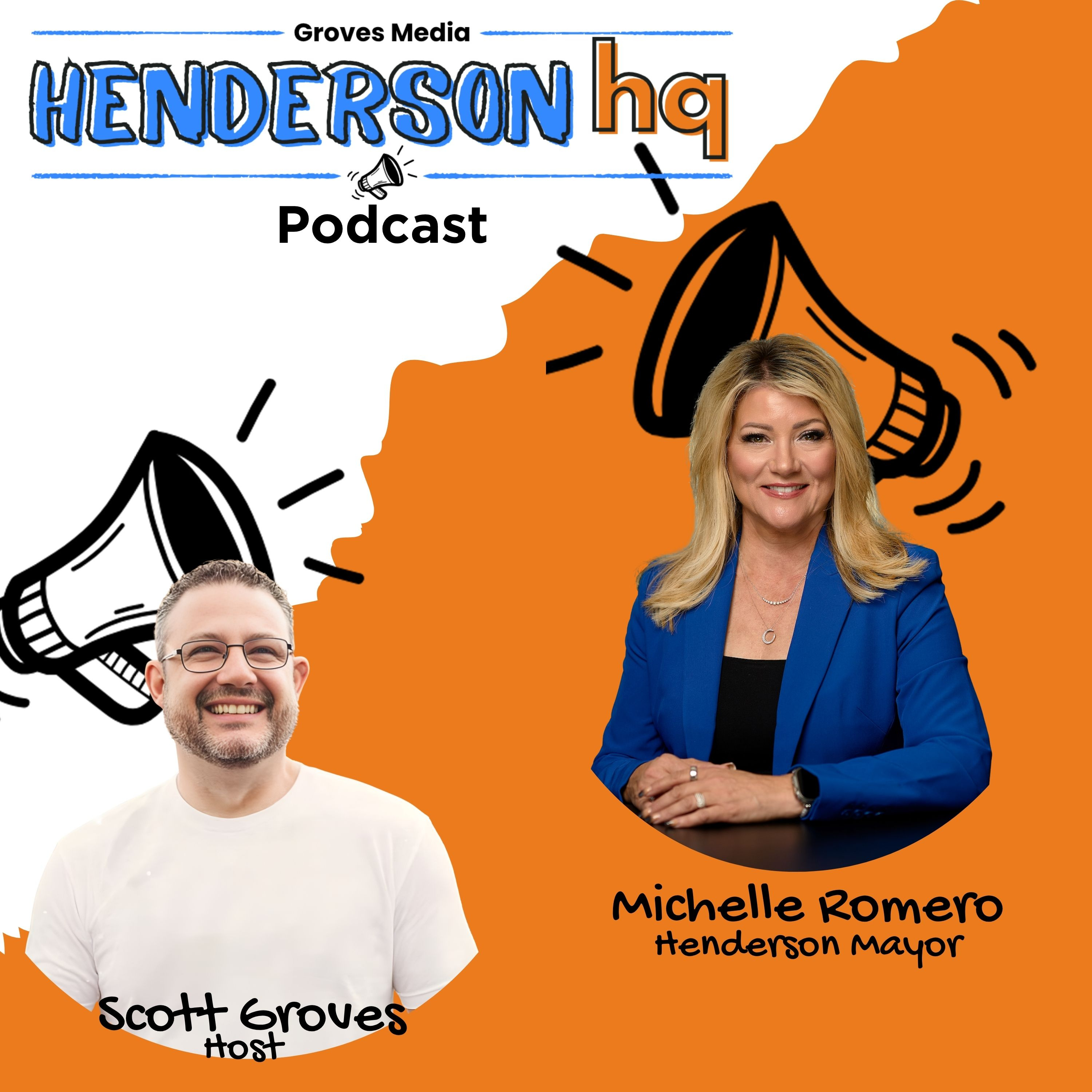
Ep42 Michelle Romero—What It Actually Takes to Run Henderson: The Deals, The Drama, and The 20-Year Plans Nobody Talks About


Learn more about Michelle Romero: https://votemichelleromero.com
Get Michael's book on finding your voice and living out loud: https://buyfindingyourvoicebook.com
Don't forget to SUBSCRIBE to the HendersonHQ Newsletter: https://hendersonhq.com/Subscribe
Check out our website for all our local stories & community updates: https://hendersonhq.com/
Follow our Instagram for deals and cash drops: https://www.instagram.com/TheHendersonHQ/
Interested in advertising in our newsletter to 25,000 local Henderson residents? Let's book a call: https://calendly.com/scottgrovesteam/catchingup
____________________________
Scott Groves sits down with Henderson Mayor Michelle Romero for an unfiltered conversation about how municipal government actually works when you're not paying attention.
In this episode, you'll learn how Henderson keeps property taxes 30% lower than neighboring cities while maintaining the highest quality of life rankings in Nevada... how a $32 million property purchase turned into a potential $75 million savings for taxpayers... and why that Boulder Highway construction project you're complaining about was actually approved 20 years ago.
Mayor Romero breaks down the reality of managing a 360,000-person city.
From why assistant city managers leave every few years...
To how Henderson schools would rank "upper middle in the nation" if separated from Clark County School District...
To the five strategic priorities that guide every dollar the city spends.
Scott pushes back on the tough questions: police chief turnover, city council drama, developer donations, and whether residents actually have a voice when big money is involved.
You'll discover how Henderson went from a Vegas bedroom community to having the Raiders, Aces, and Silver Knights call it home... why the city can't just "fix traffic" overnight... and what it actually takes to build parks, preschools, and sports complexes without bankrupting taxpayers.
Whether you're a longtime Henderson resident or just moved here...
This episode reveals how your city government actually functions behind the scenes.
And why Henderson has the lowest tax rate and highest bond rating in Nevada... while cities around the country are going broke.
Michelle Romero 0:00
We have five strategic priorities that we stick to: public safety, quality education, economic vitality, healthy, livable, sustainable community, and high-performing public service. That's how we prioritize our funding. That's how we prioritize our services, and that's how we best serve our city. And that is why Henderson is probably the most financially sound city in the state of Nevada.
Scott Groves 0:26
Welcome to Henderson HQ. This is the podcast where you get all the stories behind the businesses that make our community tick. Don't forget to subscribe to our weekly newsletter. Hey, ladies and gentlemen, it's Scott Rose with the Henderson HQ podcast, and don't forget to subscribe. Go to the website hendersonhq.com. Very excited to have our sitting mayor and running for re-election, Michelle Romero here, and we're going to talk about a bunch of stuff. I know there's all kinds of opinions about what's going on in the city. I will just tell you, I come from the massively corrupt city of Los Angeles. Moved here about five years ago, even though I've had a condo up here since I think 2005 or something. So very familiar with the city, seen it grow pretty crazy over the last 20 years. Been coming here since the 80s when my uncle moved up here. So even though I haven't been a resident for only five or six years, I've seen the crazy growth, and I know you're a lifelong resident. So excited to hear about what's going on with our city, what might change during the second term. Ask you some dramatic questions about what's going on with the city council and the the police department and everything, but why don't for people that like don't pay attention? It's always crazy to me. Everybody that knows everything about what's going on with the president and everything that's going on with national politics and the stuff that really affects us is what's going on locally, right? Like Trump has nothing to do with my traffic, has nothing to do with my love.
Michelle Romero 1:41
Everything that you do every single day is affected by your municipal government, and most people don't realize that.
Scott Groves 1:47
Yeah. So tell us about you. I mean, I don't know a lot about you personally, other than you've worked for the city in some capacity for 25 years and been a lifelong resident here. So tell us about you, your family, how you decided to take on this crazy role of being the mayor. Because I don't think I could stomach it.
Michelle Romero 2:00
So I am a native of Henderson. Went lived here my entire life except for a few years when my husband was in the military. He's an Army veteran.
Scott Groves 2:08
Nice to meet you. Do you happen to know what his MLS was?
Michelle Romero 2:11
He was 61st MP company.
Scott Groves 2:12
Oh, there we go.
Michelle Romero 2:13
Yes. So military police. We've been together since high school, so we've been together more than 40 years, and we have four sons and four daughters-in-law and 11 grand grandkids. I have nine grandsons, two granddaughters.
Scott Groves 2:27
Oh my goodness!
Speaker 1 2:28
Yeah,
Scott Groves 2:28
are they all still here in Croft? All
Michelle Romero 2:30
but all but one son is here, and he's only in Cedar City, so he's not far away, and we get to see them all the time. And he's got four kids that come, you know, with him, with he and his wife, and so we get to hang out with them.
Scott Groves 2:40
Okay, forget about Mayor for a minute. I have to ask you a parenting question because when we moved up here, my wife was like, "Is it going to be great raising teenage kids and young 20-year-olds in Vegas? And I'm like, "Well, I don't think we're raising degenerates. And people ask me all the time. They're like, "Oh, you live in Vegas? I'm like, "Well, no, I live in Henderson. And other than the fact that there's slot machines at the 711, you would never know it's any other suburb in America that it happens to be near Vegas. It's like it's a totally different world. So
Michelle Romero 3:07
yes, and that's by design.
Scott Groves 3:08
Okay, so what's the secret of like raising kids in Henderson and staying together for 40 years? Because I want that to be my life. We'll see how it goes. But tell me about raising
Michelle Romero 3:17
Mary, your best friend. Yes, as for one, you know, we truly we kind of raised each other. We we met in high school. Soon after graduation, he joined the military, and we got married and moved away. to To we were in Virginia second, but we were in Germany first. We were forced to rely on only each other. It was before cell phones, before anything, and we had to learn how to solve our own problems without bringing other people into it, and and we had to rely on each other, and it just built a bond that's just, I think, indestructible. But you have to work at it. I mean, no marriage is perfect. You always have to. You have to put the work in, and when you do, it's an amazing, beautiful thing that that lasts forever.
Scott Groves 4:03
Did you raise your kids here, or you were raised in the military? We
Michelle Romero 4:05
did. No, no, no, no. He was only in the military for six years. We came back here in 1991. I actually started working for the city in 90 in 91, and I worked for the city for 25 years before retiring, and then a couple of years later, I was elected to office. I was elected to be the Ward One Councilperson, which is your ward, and served there for three and a half years, and then ran for mayor and became mayor, and and that's that's where we are today. But the the keeping your kids busy, they our kids were in every sport known to man.
Scott Groves 4:39
Shout out Henderson Cowboys. My kids, my kids, one of the two quarterback heavy UT.
Michelle Romero 4:43
Mostly Henderson Little League, but but it kept them busy. It kept them really, really tied into the community. Kept us tied into the community, and it just gave them purpose. And it taught them how to work with others and to follow the rules and to stay in shape and. Work together, and you know it was a great thing for us.
Scott Groves 5:03
So most people do their 25 years in public service, and they're done, right? They they know where all the bodies are buried and how the sauces are made. The last thing they want to do is usually go back to public service. So thinking back to when you ran for city council for Ward One, what was that decision like? What kind of called you to do that because I can't wait to retire. I won't. I I'll do jujitsu three times a day. I'll be the best stay-at-home dad. Like if I could retire tomorrow, I would.
Michelle Romero 5:29
When I retired, it allowed. I retired right at the perfect time because it allowed me. My youngest son was in his last year of high school, so I got to be a mom full time. Got to go to all of his games, all of his celebrations, everything, and and I didn't know it at the time, but it was also the last year I had with my father, and so I was able to spend more time with him and be present in his life and do things with him that I would not have been able to do, and then he was gone, and I didn't have the opportunity again. So I was relatively young when I retired, and my parents had always instilled in me the importance of if you have the ability to do something, do it. And I, I love serving our community. I always had. I had a wonderful career working at the city. We were able to do Water Street was my one of my projects, and we were able to do great things in our community that made it better. And I wanted to keep doing that. I I I don't like being idle. I I have to be doing something all the time, and I'm good at solving problems. I'm good at bringing people together. I'm good at building relationships, and those were all things that kind of naturally led to the city council. I was fortunate enough that the person who was my ward one council person at the time, Jerry Schroeder, was termed out, and so she was getting ready to leave. And I just sat down with her and said, "I'm really thinking about this. What do you think? And she's like, you would be great. We'd worked together for many years, and she knew the passion I had for the city. She knew the dedication I had through my years of work, and she wholeheartedly supported the decision and helped me.
Scott Groves 7:13
That's awesome. Yeah. So one thing I don't think people understand about city politics because we live in. I'm going to write a book called The Amazon Generation. It's like you click a button, you get it now, right? There's literally because the Amazon Depot is right down the street. There is nothing in the world that I can't order and have at my front door in 24 hours. And I know a lot of people are complaining about the Boulder Highway project and when are we going to get this and where are you like a lot of stuff. I have to imagine, and please correct me if I'm wrong, on the city council's map of things that they want to do. I mean, these are five or 10 year out plans, approvals, funding, all that stuff. So, can you talk a little bit of the challenges of like dealing with problems that are created now for things that were maybe approved or funded 510, 1520, years ago? Like, I know living in Valencia, California, before we moved up here, there's a big housing project that everybody's mad at that has been on the docket since 2001 when I was working at Washington Mutual, which no longer exists, and they were as an investor, and they're just now 25 years later trying to deal with the problems of what was approved 25 years ago. So, can you talk a little bit about like people have frustrations now, and it's like how do you talk to them about like, hey, sorry, man, that was put on before my term, or funded by somebody else, or you know, it's been on a 10-year roadmap. Like I don't know what to tell you.
Michelle Romero 8:27
Well, Boulder Highway is a is a fantastic example of that. We started talking about Boulder Highway and the problems associated with Boulder Highway 20 years ago. We started having public meetings, and we had to deal with the RTC. It was an NDOT road, so it wasn't even an
Scott Groves 8:44
RTC
Michelle Romero 8:44
Regional Transportation Commission. Sorry,
Scott Groves 8:46
yeah, no problem.
Michelle Romero 8:47
And then NDOT obviously is Nevada Department of Transportation. At the time, it was a Nevada Department of Transportation owned road because it, when it was originally built back when I was young, it truly was a highway. It was really the only connection between Henderson and Vegas, going from Henderson to the Fremont area. Right, there weren't any interstates. We didn't have I 95. We didn't have I 11. We didn't have any of those things, and so it truly functioned as a highway. That is has not been the case for decades. Right, people hop on and hop off within about an hour, and it still had a fairly high rate of speed allowed, and and it was just functionally no longer appropriate for the types of uses that were were being.
Scott Groves 9:34
It's basically a freeway going through a residential area.
Michelle Romero 9:36
Correct. Yes, and so that was the reason it was the deadliest road in Nevada, and it was on NDOT's radar from 20 years ago. Knowing they had to do something besides the the the transportation problems, there were also infrastructure problems with flood control. So in the area of Boulder Highway and Sunset, anytime we'd have any. Kind of rain event of any kind, that entire area would flood out. The houses would flood. The roads would wipe out every single time. So, as part of this road construction project, 20,000 feet of flood control has all also been installed, and so it solved that problem. That problem has been fixed. It was extremely dark, and you couldn't really see at night, which was why so many people were killed crossing Boulder Highway. It was very difficult to see. So, 400 lights have been installed as part of the project. 17 intersections have been upgraded, on and on and on and on, to make it a safer roadway for all the users because there are pedestrians, there are people on bikes. They might not be, you know, tons and tons and tons, but you still have to design for them. We have to be aware of every user, and we have to address their needs. And so, whether you think that user is important or not, or the public does or not, we still have to plan for them. And then, as far as the bus portion of it, that falls under the jurisdiction of the regional transportation commission. So they get to decide on the final design for the busses. They get design. They they get decide where and how often the bus stops need to be. They decide all of that, and they have to pay for it. So the bus portion of Boulder Highway is RTC funded. The other portions of Boulder Highway for the road portions all federally funded, and then for some of the flood control, that was a combination of kind of state and federal funding for flood control.
Scott Groves 11:39
So of course, the million dollar question is going to be when is it going to be done
Michelle Romero 11:42
from day one. We announced it was a three year project that would be finished in August of 27.
Scott Groves 11:47
Okay, and it is
Michelle Romero 11:48
more than 70% complete by this point. All those things that I told you are already done. It's on budget and it's on time.
Scott Groves 11:58
When you think about Henderson, because I I remember exactly what you're saying. My my uncle, when I was coming up here in the 80s and 90s, and we're going out on their boat to Lake Mead, they lived off of Tropicana by the old golf course over there, and it it felt like forever to get to Lake Mead because you had to go all the way all the way up Boulder, all the way you know all the way around. And I just remember it feeling like forever, and there was nothing out there. You know, there was a few sketchy bars or hotels or whatever. In your time in Henderson, what's changed the most, and what do you think should never change?
Michelle Romero 12:27
When I was growing up, we had we were just a bedroom community. There really wasn't any commerce. There wasn't any kind of economic diversification. Very few shops and business type spaces. We really were largely a bedroom community for Las Vegas. That that's not sustainable. That's not a community. That's just a a suburb of of Las Vegas, and so that has that's the biggest change. Is we now have a beautifully diversified economy. We have all kinds of industry in our community. We have big business, small business headquarters. We have the Raiders and the Aces, you know, calling Henderson home. We have the Silver Knights. We have all these amazing, wonderful, world-class amenities. But we're still, at heart, a small town community, and that's what I wouldn't change is the fact that people still know their neighbors. They still get along. We still want places to gather. Overwhelmingly, people love our parks and they love going to games and you know being outdoors. And that is something that has very, very deliberately been designed to make sure that we still have places to be a community that we have gathering places, that we have the parks that we have, which is why we overwhelmingly, as a community, approved the parks initiative
Speaker 2 13:49
in
Speaker 3 13:50
June
Scott Groves 13:50
H or
Michelle Romero 13:52
question one. It would Henderson question one overwhelming support, which is rare, right? But our community recognize parks are a major part of why Henderson is such a great place to live, and we need to continue it. So
Scott Groves 14:07
it's why we picked Henderson, actually, because like the Whitney Ranch Rec Center, and you know the little slides they have there, and the swimming lessons, and then you go over here, and there's a rock climbing wall, and then you go over here, and there's 30 other parks. Like it really, it really matters.
Michelle Romero 14:20
To give you an idea of scope, Henderson has 77 parks. We have a park within a 10-minute walk of more than 80% of our residents. So it exceeded the original goal that we had. We wanted a park within a 10-minute walk of about 75% We're already past that goal, and we have several parks under design right now. Sometime in the next year, we're going to get an all abilities park for those who have, you know, any kind of challenges, whether it be physical or mental challenges. We'll have a rec center and a park for them to be able to have a space to gather, have a space to play in a safe environment that is adapted to their needs. Yeah, and so we really. We try to be thoughtful and deliberate about how we plan out our amenities and our infrastructure, and that's that's something that I love about Henderson. I would never want to change.
Scott Groves 15:12
Hey guys, just a quick ad from our sponsors here that make this podcast and our newsletter possible. Want to give a shout out to Ethereal Med Spa, a gym for your skin, so doesn't matter whether you're doing anything proactive, all the way up to spot removal, all the way up to beautification, right? Or vanity, ethereal med spa, they got you covered. Scott Wright over at Wright Auto Body, love them. So anything from a scratch and dent to a big insurance job, all the way up to a custom rebuild of a classic car, they got you covered. And shout out to my buddy Casey Halstead, owner of 10th Planet Jujitsu, which now has three locations. They just opened a new location on the west side, so they got our Henderson location, they got a Mid City location, and they've got a West Side location. So anywhere in the valley where you're looking to train Jujitsu, check out 10th planet, Las Vegas. Now back to the show. This question came from John Novak's Facebook group, Living in Henderson. A lot of confusion or speculation on what's happening with the Fiesta Henderson site. Can you tell us what's going on there? Like they kept the parking lot, tore down the casino. I just want to go play paintball there and like take over the whole parking lot. Like I won't do it illegally, but if you guys want to sponsor a paintball day in the parking garage, that seems like it'd be fun. What's the plan for that?
Michelle Romero 16:25
So, not too long ago, a few weeks ago, and it's probably been a month now, we announced that they we have formed a partnership, or we are planning to form a partnership with Agora Realty and Management, and they have proposed what to do there. So, backing up when when when Station Casinos was getting rid of that site, at first they were going to do a private sale, and they were you know they had all this interest, but then they came to us and said, you know we we've got interest, but they want to do a truck stop, they want to do things that are nice, but but don't really add anything special to our community, and so we wanted to control that. So, using redevelopment funds, which can only ever be used for purchasing property or making property improvements, it can't be used for people, public safety, equipment, anything like that. Those funds are restricted legally. We purchased the property for $32,000,000.30. of it was redevelopment funds. Two of it was city general funds, and so we did a survey of our public. More than 5000 people's responded back saying we want to see family-oriented activities there. Bring back some of the amenities we lost when the fiesta went away. Said great. So we prepared a request for a proposal, sent it out. The first time we got responders back, they staff narrowed it down to one group, and we began negotiating with them. And not not too long after we began negotiating, it became clear that what they thought they were going to be able to do, they they weren't going to be able to do it, and they changed the proposal significantly. And they were asking for a very significant public fund funding that we did not believe was warranted, and for what we were getting. You know, sometimes it is warranted, sometimes it's not. In this case, we did not believe it was warranted, so we talked to them and said, either you're going to have to go back to what you were originally proposing, or we're going to have to cut ties because you're not getting the the subsidy, and we're not accepting what you're now proposing. And so we ended up cutting ties with them. We didn't want to put public taxpayer funds towards something that we didn't feel was going to be worth it for the taxpayers. And so we went out again, and this time we had more than 30 responders. And once again, the the council's not involved in in vetting and and looking at everything, but staff did that and narrowed it down to Agora. And all the entire time, there was always going to be one portion of it that would be a field house. We just opened Henderson Sport and Social.
Scott Groves 19:02
Yes, I need it over there.
Michelle Romero 19:03
It is amazing.
Scott Groves 19:04
What is over there, by the way? Is it like soccer fields or indoor stuff?
Michelle Romero 19:07
Indoor multi-use fields and courts. So it could be indoor football, indoor soccer,
Speaker 4 19:13
cool
Michelle Romero 19:13
basketball, volleyball, you name it, indoors. But it also has an arcade, putt putt golf, crazy darts, laser tag, a restaurant. Is that
Scott Groves 19:25
open city or is that a partnership?
Michelle Romero 19:26
Partnership. It's it is a public private partnership. So always we were going to have something similar to that insight. There is a great need in the entire Southern Nevada for indoor sports space. Yes, sir. For any for any parent that has sat through a soccer game in the middle of summer, this is something that is greatly needed. But it's also needed because we are a mecca for youth sports tournaments, and they bring in a lot of revenue to our community, which is greatly needed. And so, having those indoor opportunities greatly expand our. Ability to host those tournaments. So,
Scott Groves 20:02
by the way, that's a real thing because I've reconnected with so many friends from LA that are like, "Hey, my daughter has a soccer showcase because she's getting recruited by colleges. We're going to be in Henderson of all places. Can you get together? Or people are coming up here for little league tournaments. We go to Heritage Park. I hate that my daughter is good at soccer because it means we're out in 117 degree weather every day, and it's just crazy the turnover on that field of out out of town tournaments, in town tournaments. It's like Henderson's really become like this little youth sports mecca, from what I can observe.
Michelle Romero 20:33
And so, always a small portion of that site was going to be the indoor field house. City was always planning that that we would have to be the one building that and and operating that. That would have been a $60 million build, and on top of that, the garage we kept it. Obviously, we asked them not to tear it down when they tore down the rest of Fiesta site because garages are extraordinarily expensive to build, knowing that it needed a significant amount of work to bring it back up to code. Right, but it was far less expensive to fix it than to rebuild it. That would have been about $9 million to fix that parking garage, and then there was also some some site work that still needed to be done that would also have been a couple of million dollars. All of that, the city would have had to pay for under this proposed agreement, which still has to go to council. It's it's not a it's not a done deal as proposed. Agora Realty would purchase the entire site for $30 million, which is 2 million less than was originally spent on it. But they will build the sports complex. They will do all the repairs to the parking garage, and they will do all the site work, saving the city more than close to $75 million
Scott Groves 21:52
to the deal.
Michelle Romero 21:52
Yes, any day that is a good deal. Any day puts it back on the tax rolls. It'll bring business. It'll bring jobs, and then it'll bring that sports tournament. We make, or the city brings in millions of dollars every year from sports tourism. So this will help add to that too. And the reason that's important is because the way Nevada's taxes work, if you are not growing as a city, you are losing revenue. So adjusted for inflation because of tax caps and because of depreciation, we're the only state in the nation that allows depreciation on houses. Cities across Nevada, not just Henderson, are making less in revenue today, adjusted for inflation, than they were in 2014
Scott Groves 22:39
from the state budget.
Michelle Romero 22:40
Yes, and so we there has to be outside the box thinking about where else can we generate revenue? Where else can we bring in funds that don't affect our taxpayers, that don't put a burden on them? Henderson has the lowest tax rate in the state by a mile. Our tax rate is 77 cents per $100 of assessed value. The closest next city in Southern Nevada is $1.09. North Las Vegas is $1.19. That is a huge difference in your tax bill for the quality of life and the and the value you get for living in Henderson. Plus, we have the highest bond rating of any city in the state. So we are very, very, very good at making good deals and making sure that they are good for our taxpayers.
Scott Groves 23:25
You know, I I want to preface with the police that I cannot imagine being a police officer. I have a lot of friends that are police officers, and the fact that our parks here have not turned into open drug markets like they are through most of the country, they're obviously doing a great job at what they do for safety. That being said, when I was playing with Claude about what what questions should I ask Michelle, it was talking about the turnover at the police department. I think it was saying we haven't had a police chief for more than two years since like 2017, and then there are some other people on leave, and then there's like some fights with the city managers. I don't know if that has to do with the police department, but why can't we seem to get it right on finding a long-term solution, a police chief, or is it just the way the city's set up that that will turn over every couple years? Or
Michelle Romero 24:11
first of all, just like you just said, just being an officer is difficult. Yeah, it is challenging, and you're under a microscope, and and you are always in the public eye, and it's typically when people are having the worst days of their lives.
Scott Groves 24:25
Yes,
Michelle Romero 24:26
a police chief is magnified 10 times that because not only do they have to do that, but they also have to be able to manage up and down their department. They have to be able to to communicate outside the city or outside to the public, inside up and down the chain to all departments, they have to be able to manage a budget. They have to be able to make executive decisions. Many of them have come up through the ranks of police officer, and they are excellent being a police officer, but it doesn't always translate. To becoming an executive, which is a police chief, is an executive position, and so it doesn't translate. It is a very difficult jump to make, and not everybody does it successfully. And unfortunately, it's not a position you can allow to not be successful. And so, if if somebody has been given the opportunity, and they have not been able to to make it work. Nobody ever gets released for no reason, right? Ever, it's always for a reason, and it and it might be this. What I said, you might have had a stellar career as a police officer, but making the jump didn't work out, and so the last thing our community needs-we have a community of 360,000-is somebody who can't manage the police department and can't manage all of the duties. They also have to communicate and work with our sister cities to make sure that we're coordinating. If there's a heaven forbid another mass casualty event, you want your police to be able to pick up immediately, coordinate with their sister communities, and be able to seamlessly respond to something that is extremely serious. The sheriff of of our Clark County endorsed me because he knew how I supported police and how I support not not just police, but public safety in general, emergency management. How I've prepared our city. We have an amazing emergency management team that is prepared for every type of emergency, not just the ones that would involve public safety, but also if there's an earthquake, if there's a data breach, if there is some a disruption in in gas coming to our city, things that people don't think about, we have to think about and be prepared for. And and Henderson most definitely is. And so we want to make sure that the people that are in those decision making positions are able to do them effectively and without problems communicating across the board or up and down.
Scott Groves 27:03
So when we think about the police chiefs that haven't worked out for the last nine years, is it more of an executive problem of less? Because I, by the
Michelle Romero 27:10
way, in some cases there, there, there have been some that just
Scott Groves 27:14
yeah weren't right.
Michelle Romero 27:15
We weren't right. Period. They've gone and gone on to do other things, and in every single case where there was any kind of lawsuit or anything, the city has won. The city has prevailed every single time. There has been that situation. Not not all of them have been that situation, but it's because we keep extraordinarily good records. We counsel. We provide training. We provide mentors. We provide all the things necessary, and sometimes it still doesn't work out.
Scott Groves 27:41
Got it. Is there any chance that we can move the city council meeting later in the day? This probably this has to be the number one thing I see people complain about on Facebook. Of like, I think you do the meetings at 4o'clock or something, and they're like, I mean, we live in a city where people have all kinds of crazy hours, so you're never going to make everybody happy. But I do see every city council meeting. I see somebody jump on some Facebook group and be like, why don't they do these meetings after 5o'clock? Nobody can be here.
Michelle Romero 28:04
A very recent political topic.
Scott Groves 28:07
Okay,
Michelle Romero 28:08
it used to be later, and guess why we changed them? Because
Scott Groves 28:11
people asked me
Michelle Romero 28:11
that where people were saying that's dinner time. That's when our kids are in sports. We can't make it at that time, and so we moved it to. I think it started. It previously started at six, and we moved it to four. I mean, there Clark County holds theirs at 10 o'clock in the morning. Las Vegas holds them in the afternoon.
Scott Groves 28:30
So we're never going to make anybody everybody happy,
Michelle Romero 28:32
right? And we make it as available as we possibly can. It's live broadcast. It's you know, it's available for most people, and we changed it for a reason, and it was because overwhelmingly people were saying that is too late. We can't we can't come at that time. That is so inconvenient for people with families, dinner time, the whole nine yards, and so that's why it was changed in the first place.
Scott Groves 28:56
Well, there we go. Now, now people know why.
Michelle Romero 28:58
Yes,
Scott Groves 28:58
you know it's funny. I I'm not going to use him by name because I don't want to. I don't want to be rude. But there was somebody in one of the very popular Facebook groups who is constantly posting two things. One, why has property values gotten so expensive? And I'm like, well, one, that's just the market. The mayor has nothing to do with that. Right. But at the same time, like this post will be like, well, property is too expensive, which is just a supply and demand problem, and then over here in like the same guy, next Facebook post, be like, "Why are we building so much in Henderson, and why does Cadence keep ever expanding? It's like, well, if you want properties to be cheaper, we have to build more properties, you know. And then his third post will be like, "Well, we're gonna run out of water. Why are we running more play? Why are we building more places? So, can you talk a little bit of like the housing that we approve here, and maybe what the long term plan is, because I understand people's concern about traffic or kind of losing that small town feel. But if you don't want your house to cost a million dollars for a starter home, as we see in California, you have to build more units of housing. So, can you talk about how the city council kind of thinks about like approving construction plans for housing?
Michelle Romero 29:59
Give you a comparison right here in the state of Nevada, in northern Nevada, the average price of housing is $670,000.
Scott Groves 30:08
Yeah, and Reno has gone crazy.
Michelle Romero 30:09
That's that's exactly where I'm talking about. Is because they have no supply, they don't have room to build out, and they don't have the land available, and their housing prices have skyrocketed as a result. In Southern Nevada, we still have limited land. There's not a lot of land left to build on, which is why there's a lands bill that has been trying to go through the federal government for quite some time. The state of Nevada, I believe, it's 87 of our state is managed by the federal government, and you are correct. You can't build on it. You can't expand on it. It is higher by by 10s of times than any other state in the nation, and so it makes. Do we
Scott Groves 30:55
need money from the federal government for that? We do. We don't get anything for that, do we? So, so some president, probably in the 30s or 40s, said this is going to be BLM land for whatever reason. We want the mining rights, or we want to do nuclear testing out in the middle of the desert in New Mexico and in Nevada, and so we're just going to own it all, and we get nothing for that as a state.
Michelle Romero 31:12
Correct, and so, so in Southern Nevada, especially that's the one I'm the most familiar with. There, there is a lands bill that's proposed for Henderson's portion of that lands bill, the BLM land that would be added is already in our boundaries. It's within the city of Henderson boundaries in West Henderson. There's no conservation concerns. There's no creep into you know into our wildlife areas. It is already in the city of Henderson, but it would free up about close to 1000 acres for development of some kind.
Scott Groves 31:48
It's a lot of houses.
Michelle Romero 31:48
It it could be a lot of houses. It could be employment centers. It could be a mix. There's a variety of things that that could happen there. When people say, "Oh, water, water, water, water has also become a topic that is kind of a hot button. It's a concern, no question. It is a a serious concern. Is it the concern that we have to stop building because we're going to run out of water? No. So, Southern Nevada Water Authority has a 50 year plan that they build in all the development that's happening, all the future of the development that could happen within the the current boundaries and the current land that is undeveloped at this time, and they are constantly modifying that plan to make sure that for the next 50 years at a time we have a substantial water supply. To give you an idea of what that looks like, in the last 10 to 15 years, Southern Nevada has grown by over 700,000 units, but we've reduced water consumption by 40% during that same time because of our conservation efforts. That being said, we're not going to conserve our way out of the drought. We have done all the conservation we can do, and I don't believe there'll be any other new conservation rules coming out because we've about Nevada as a whole has addressed those things. Where we need and where we are working as a state is with our our neighbor states, none of them do conservation anywhere near where we do. California has an abundance of water that that they can have access to through the ocean and through possible desalination and things like that that they have not been doing. So the state is partnering with them. Nevada is helping pay for some of those recycling facilities and those desalination facilities, and in exchange for that, California is leaving that that a certain amount of shares of water in Lake Mead for Nevada, and so that is helping. Much of the water is for agriculture, especially in California and Arizona, and it's not always the
Scott Groves 34:10
probably not the best use of water to transpill produce in the middle of the desert. But whatever, we're not going to solve that problem.
Michelle Romero 34:16
But Israel has a thriving agriculture economy, and they've reduced their water consumption by 70% because of technology. And California is starting to look into what changes they would need to do there as well. And so, and I believe Arizona is starting to look at it a little bit too. So that's where we're going to save the water. That's where we're going to be able to help Nevada more than anything else is by helping our neighbors get to where we are as far as conservation. That's what the governor's working on, and that's what he he is working, you know, pushing at the federal level and then working at the state level with our partners in California, which we don't. Say very often, but in the case of water, we are we are really we we got to make it work. And so the other thing is that Nevada has about eight years worth of water storage, and so we have various storage facilities and and infrastructure across the state that would supply us for eight years. If water absolutely stopped completely. We would still have eight years of water, and
Scott Groves 35:24
if that happens, we got way bigger.
Michelle Romero 35:25
Exactly. There is there, you know.
Scott Groves 35:28
So they building so building a new 500 homes south of north of Maidens is not gonna is not going to end the state,
Michelle Romero 35:35
right? And then on top of all that, we have the third straw. The third straw is the lowest straw going into Lake Mead. Even if we hit Deadpool and the Hoover Dam no longer functioned, Southern Nevada would still have access to water.
Scott Groves 35:51
By the way, I couldn't sleep one night, and I went down this crazy rabbit hole on YouTube watching videos about Nevada water and the California water and the federal water and everything. And apparently, we like years ago rewrote the laws or something where because we were the first Nevada and mostly Clark County to jump on this extreme water conservation program, like we kind of we kind of got first dibs on the bottom straw because we were the ones doing the most proactive work. Which kudos to Nevada
Michelle Romero 36:19
and
Scott Groves 36:20
Clark County,
Michelle Romero 36:20
extremely brilliant person at Southern Battle Water Authority. We still do, by the way. It's a different person now, but John Ansbinger's there now. But Pat Mulroy was there before. She was brilliant, and she was able to to make sure that we got that third straw, make sure that we were doing all the conservation. And then John has continued that work now, and is is trying to work with the the seven water states that we have to work with and fighting for Nevada.
Scott Groves 36:46
I love that. Another question from Claude, ironically, said Michelle's raised a lot more money than her opponents, much of which have come from developers, corporate donors, et cetera, et cetera, et cetera. Which makes sense because you're already the mayor. How do we reassure individual voters or individual people that want to come to the city council meetings, that small donors and residents will have as much equal access and ability for feedback as the people that donate a lot of money and are doing the big development programs. Like I'm very pragmatic about this. If I bring $2,000 of tax revenue to the city through my property taxes, and some developer brings $30 million in tax revenue. In my opinion, my opinion only. Scott Groves, not Michelle's. I think that person should have more say on what happens in the city. But that's a real concern for people, especially you know you you start working up to state government and federal government, corruption just seems abound. So how do you reassure voters like we're still listening to you, even though you personally have the ability to raise a bunch of money.
Michelle Romero 37:44
To me, the two aren't even related because there is never the assumption that most of the people I have, like I said, I have been working at the city for 32, almost 33 years. Over that time, I have built a multitude of strong relationships because they know how I operate. They know that I'm honest. They know that I, if I say I'm going to do something, I do it. They say they know that if I have a problem with something, I'm going to tell them up front. I don't make them wonder how I'm going to feel about something and and blindside them at a meeting. I tell them you have a problem here. You have to fix this problem, or this project isn't going to go anywhere. I mean, even just most recently, we've said no to a fertilizing plant, we've said no to a cold storage plant, we've said no to a gas station that that people did not want at Lake Las Vegas. Those didn't even make it to the planning commission stage because we reached out to the developer and said, "We we have problems with this, and unless you want to do some major fixing here, these aren't going to go forward. And so I don't have a problem. I don't. I don't ever want to surprise somebody. Developers put a lot of time and money into a project even before it even gets to a council meeting, in you know maps and in engineering design and shape, all those
Scott Groves 39:04
environmental, all that
Michelle Romero 39:04
right
Scott Groves 39:05
stuff. Yeah,
Michelle Romero 39:05
it's not fair to them to string them along. If you don't like that project, you need to just tell them up front, "Hey, you have a serious problem, or the neighbors have a serious problem with this. You are going to have to address it. Anytime anybody gets money for a campaign. The city, the the state of Nevada, Secretary of State has a website nvsos.gov, and all of the donations and expenditures for every single candidate has to be recorded on that website, and they are very thorough, and you have very stiff penalties if you aren't recording all the things. So every ounce, every dollar that I receive is recorded. You can see where it came from, and every dollar that I've spent, you can also see where it's gone. So not a
Scott Groves 39:56
single dollar has gone to Henderson HQ. By the way, just to be clear. We're doing the we're doing this interview because I reached out, not because you're paying me to do it.
Michelle Romero 40:03
Correct. So you will see on my it's called a C and E report. It's contributions and expenditures report, and you can see on mine exactly where my money is going. So the money has come in and it has been substantial because I've I've built relationships over time, but you can also see that it's gone to pay for education to the public about who I am, what I'm doing, what I've done, who my endorsements are. We have a city of 360,000 people, many of who don't even know who the mayor
Scott Groves 40:34
is,
Michelle Romero 40:34
right? And so it takes a lot. drives me bonkers. It drives me bonkers too. But you have to you have to educate them when it comes time to to vote. You at least hope they know, you know who you are and what you've done. But that takes money. If I didn't spend it on that, you will see time after time after time. I've given it back to nonprofits in our community because if I don't want it, you know. Either it's going to go to educating the public about what I've done, or it's going to go back to help our community. One or the other. You don't see payments to myself. You don't see payments to family members. You don't see payments to to anybody. All this other garbage that's out there that people make up. It if you are not being truthful on that, you are going to be in very serious trouble. So, it's very, very accurate. I don't even touch the money that comes in; it goes directly to an accountant who puts it into a king. I don't have a debit card. I don't have a credit card for that account. I can't access that money by design. I don't want to access that money. Every cent goes through her, and I say, "Is this an allowable expense? This is what it's for. And they make that determination, and that's for every candidate out there.
Scott Groves 41:50
I have to imagine it happens, though, right? Like somebody donates money, and they're like, "Hey, wink, wink, nod, nod. I'd like to get five minutes with you about that opinion I have on this because you know I donated a lot of money. Like I have to just imagine that happens in all levels of politics.
Michelle Romero 42:02
Never had that happen to me. I have not, and I. But I'm also super accessible. Anytime somebody wants to meet with me, whether it's a resident or a business or a developer, I set up a meeting with them. I get calls from residents, probably at least on a weekly basis, if not on a daily basis, I have people emailing me. I answer the emails myself. I have people calling me. People who know people. I lived here my whole life, sir. I know a lot of people.
Scott Groves 42:32
Somebody knows somebody. I went to high school with you.
Michelle Romero 42:33
That's exactly right. And they figure out how to get a hold of me, and I respond. And that's another reason why I have the support that I do because I do respond, and you know I I have people saying, she's you know she's sitting on her high horse over there not doing anything. That's not true. I am out talking to people. I'm responding to their concerns on a regular basis, and most of the time it's residents, not you know developers come when they have a project. Residents live here full time, and they're you know they there are constantly issues. So I'm usually focused on those.
Scott Groves 43:07
I don't want to get into like all the gory details and whatnot, but if you read the news, you know there's this city council member suing this city council member, or there's like lawsuits or legal stuff, and then we had a few community managers, city managers resign or whatnot. So, for the people that are looking at the preponderance of evidence of like there seems to be some dysfunction, can you talk to whatever you want to talk to about that? Of like, we're not getting along, but we can still function, or any of the drama that you want to talk about, because that's that's everybody's favorite topic. And I'm like, dude, I just want the parks to be clean, and I want there not to be crazy people at the parks when I go with my kids, and I like my taxes to stay low, and if they can build some indoor stadiums so that I don't have to be in 117 degree weather every time my daughter has a soccer game, this is about what I. This is the stuff I care about,
Michelle Romero 43:56
and that's the stuff most people care about. And again, once again, this stuff has been politicized. I have been in the city just as I said for more than 30 years. Our assistant city managers leave all the time because they are phenomenal. They are smart. They know their stuff, and they get recruited away on a regular basis. A multitude of our assistant city managers have gone on to become city managers in other jurisdictions. They've been gone on to become CEOs in other jurisdictions. They've run now nonprofits now. They do all of these great things. Never once has it ever even been anything in the public eye because the city continues moving, continues moving forward, goes seamlessly because we have trained people up to to take their place as soon as they go, the only reason this has been even an issue the last two times we had three city assistant city managers go fairly quickly. Two of them became CEOs, and one of them's a CEO of a private company in Las Vegas. Call it.
Scott Groves 44:58
They made a lot more money.
Michelle Romero 44:59
Yes. Yeah, the other
Scott Groves 45:00
one is
Michelle Romero 45:00
a CEO of a nonprofit, which is something she always wanted to do, and she has younger children, and and it helped work with that schedule much much better. The other one left for her own reasons, and that those are private to her, but never has it been a problem. Never has it been an issue. Nobody, and it just so happens these three were women. The previous two that left were men. Not one word was said, and it kind of ticks me off because why is it different? They're just as smart. They're just as powerful. They're just as you know, people would want them just as much. Right? Why did it become an issue? Because it was women. Well,
Scott Groves 45:42
there's got there's got to be some gossip around election time. That's the rule. It
Michelle Romero 45:45
that's exactly it. So the whole assistant city manager thing is a complete non-issue. They have gone year after year after year after year to great things, and most of them have stayed very close with the city and still communicate on a regular basis, and one of the ones that just left, I just talked to her two days ago, and we talk all the time. She's extraordinarily happy with where you know where she is. So, with the city council, we have one person that is embroiled in a multitude of legal issues, but all the things that you just talked about could not happen if there was dysfunction in leadership at the city. We don't let it distract us. We don't let it get us off our topic. All of the things that you just named are all huge wins for the city. Our our city just was another a gold medal, national gold medal finalist for our parks and recreation management. For I don't even know it happens year after year after year after year. We're one of only four cities in the nation to get that designation. Can't happen with that with crazy leadership. We got a gold medal for our budgeting. We get accolades all the time. Best place to work, best place to retire, safest city in America, highest quality of life. We do a national or a survey of our community from a national firm that that does it throughout the country. They rank quality of life issues, and they also rank how your city in each department is performing, you know, are people getting the bang for their buck for that particular service? City of Henderson ranked 40% higher than the next closest city in that national ranking, and we do it every year. That does not happen without sound leadership. So all this other garbage that's going around out there is a political distractions that people are trying to drum up to make sure that you know people aren't sure because a lot of people don't pay attention. But all you have to do is look around. We live in an amazing city with a high quality of life, and people complain about the traffic and the cones. That means people are working. It means roads are being fixed. It means traffic flow is improving. It means infrastructure is being built for the future that we're looking not just for now, but what's going to happen 10 years from now, and making sure that infrastructure is in place. All of those things are happening. All of these great things, one after another, after another, after another, and then we have this small group of people saying, "Well, what about this? And what about this? And what about this? Pointing to things that don't matter, or that that have been so grossly exaggerated that it's ridiculous and it's frustrating, frankly.
Scott Groves 48:43
I imagine you know you mentioned we're kind of throwing around these numbers like 30 million, 9 million, 2 million. I mean, they're big numbers, right? And we're we're kind of immune to it because then we talk about the federal government. It's like, oh, they're $35 trillion in debt. I can't even conceptualize what that number is. If people really want to look at like the health of the city, where can they go to look at the budget? Or maybe this is your press secretary's question. But where where can people go if they want to see lifehanderson.com?
Michelle Romero 49:07
It's all online.
Scott Groves 49:08
It's all budget
Michelle Romero 49:09
is online. Our budget is online. You can see, and a lot of people don't understand our budget. our Our city is about has a balanced budget. We're required by law to have a balanced budget, and we do every year. We are not the federal
Scott Groves 49:24
government. I wish we could do that all.
Michelle Romero 49:25
I know
Speaker 5 49:25
the chain.
Michelle Romero 49:26
I know. We do have a balanced budget. We also have a rainy day fund, and we have a stabilization fund. So if, if you know what really hit the fan in the economy nationally, Henderson is going to be just fine and be able to weather the storm because we have prepared and we are financially stable and conservative in how we spend our money. We always look at needs versus wants, and we prioritize things. We stick to a strategic plan so we're not all over the place. We know exactly what's important and what in what order. Those things should be addressed. We have five strategic priorities that we stick to: their public safety, quality education, economic vitality, healthy, livable, sustainable community, and high-performing public service. Every single thing we do falls under those categories. That's how we prioritize our funding. That's how we prioritize our services, and that's how we best serve our city, and that is why Henderson is probably the most financially sound city in the state of Nevada.
Scott Groves 50:30
You told me when we started that there was no questions off limits, which I appreciate about you. So I'm going to ask maybe one of the most loaded questions that I can: schools. Like Nevada does not have a good reputation for schools. I've talked about this podcast that my wife and I opened our own school mostly because of the needs of our children. But public schools in Nevada don't have a good reputation. It prevents a lot of like businesses and maybe higher end professionals from living or moving here. Does Henderson need to break away from Clark County School District? And look, I don't know anything about the inner workings of Clark County School District. I just know from reading and being in business, like things get so big they're almost unmanageable. So, how does Henderson work on making our schools better?
Michelle Romero 51:15
So, first of all, the state has to break up the school district if it was ever going to happen. The Henderson, any municipality has zero influence in that we we do not get to make that decision, and there hasn't been an appetite to do that at the state. Henderson spearheaded several years ago just that a ballot initiative at signature. We gathered signatures about breaking up the school district, 200,000 people signed that, but it got kicked out because they said, "Oh, not everybody signed under the district that they're actually living in. That's a whole. That's a whole other story.
Scott Groves 51:52
Right.
Michelle Romero 51:53
At the time, Clark County School District was under very different leadership. That has changed, and the the previous leadership just had a very different approach to everything. We won't get into that. The new leadership has taken on a totally different attitude under the leadership of Joan Ebert. She's a superintendent. First of all, she recognized that there were problems. Previous administrations wouldn't even.
Scott Groves 52:23
You just have to look at the rankings, and we know there's a problem.
Michelle Romero 52:26
And so, and they would not coordinate with the municipalities. We have before and after school programs that can greatly help what's going on in the public schools, and that was being completely ignored. It's no longer. We work in concert with Clark County School district once or twice a year we invite in our teachers and our principals, and we talk about what's happening in our schools. Where can we help? How can we coordinate? What's needed? City of Henderson takes 30% of its marijuana licensing funds. So these are Henderson specific funds from our business licensing, not the money at the state that nobody's sure where it goes. This is Henderson money. We take 30% of that and 18% of our redevelopment revenue. We put it in a restricted account, and it's for education. We have given in the last 10 years $15 million to our public schools for a variety of different programs, equipment, things that improve outcomes for kids. That's one way we've done it. We understand that if kids are ready to learn when they hit kindergarten, they are far more successful. So we opened our own preschool program. It's fully accredited. We have partnered with the College of Southern Nevada, who has a teaching program, and possibly Nevada State as well, and we we are using their teacher students to come in and get accredited through our program. They get teaching credits for you know they always have to have those before they can graduate. So we have partnered on that. We have 200 students that are actively enrolled in our preschool program, and we broke ground last year on a second facility. So we will be able to almost double that capacity, so that our most at-risk kids and our youngest kids have a leg up to start with, if they can get that education and they can understand both the students and the parents, what's going to be expected when they hit kindergarten, and that they're ready to learn, and they've kind of already gotten into that groove of understanding. Okay, when we get into school, we sit down and we're quiet, we listen.
Speaker 6 54:31
Right.
Michelle Romero 54:32
They do far better throughout life.
Scott Groves 54:35
By the way, I remember reading this report on like we've got everything backwards in funding in the United States. That and it was a pretty extensive report done by two different colleges, and I don't know why I decided to read 100-page report on preschool, probably because we were having kids, and it was like all of the money that we subsidize at the federal, state, government level for college. That's really great, and it's great headlines and everything. But if we redeployed that money to early education and Head Start. And preschool and kindergarten kids would actually have better outcomes because that's when you can catch them before they fall through the net.
Michelle Romero 55:06
That is
Scott Groves 55:06
really crazy. Sorry, I didn't cut you off there. So building preschool,
Michelle Romero 55:09
what we've done, and so we have targeted our you know three to four year old kids in that area. We also are one of only 17 states in the nation that are prenatal to three program, and so we are getting kids as soon as they're born, and making sure that they are progressing. You know, as they develop skills and everything like that, we are working to make sure people have the resources they need for the services they need to make sure the kids are where they need to be functionally, cognitively, all of those things, even before preschool. So that's happening right now. We became our own chart authority. We have two charter schools under our belt. We have a community education advisor academy. Kesher Academy. Yeah, and was and so Kesher's the first. It's already open. Nexus just got approved. That's our second one, and that'll be opening next school year. So we hit it from a multitude of different angles. We also partner with Workforce Connections, which is the regional body that helps disconnected youth get into career paths. They help adults as well who have either lost their job or have trouble getting into a job or need a second chance. They get them into employment career paths as well. So we partner with them and make sure that that if there are opportunities to put kids into programs, like they will pay for kids that are getting out of high school to go into EMT programs. They will provide the training for them. They'll pay for the training. That training is provided by the the school that does that. They have a guaranteed job once they're out of it. So at every level, we have partnered to make sure that our kids have the best outcomes possible. As a result, Henderson, if you took Henderson out of the Clark County School District, we rank upper middle in the nation for schools. We have more five-star schools than any other jurisdiction in Clark County, and all of I think we had 26 schools that increased their star rating the last time. So what we are doing is working, and we work with all the schools. We we we want all the schools. We want the micro schools. We want the home schools. We want anything that makes it better for parents to have their kid in an environment that that is best suited to their learning abilities, we want that available to them.
Scott Groves 57:44
How do we get the parents involved? Because like you guys can only do so much, the government can only do so much, the teachers can only do so much, right? And I remember a good friend of mine. He was a teacher down in LA, and I can't remember how they accidentally set up this A/B test, but they were starting a new magnet school. It was not like skill based where you had to apply to get in there. All you do from going to this school to this school was literally sign a waiver, and that one step of the parent being involved enough to say like, okay, well let's try this magnet school. Maybe it's better than this other public school over here. Just that the simple parent involvement of like, oh, I want to look at other options. This school outperformed this school by a magnitude, right? So how how do we do a Head Start program for the parents to realize they have to be involved in their kids' life?
Michelle Romero 58:30
That's actually one of the things that CCSD has really, really focused on. So they have teachers and administrators that go to the kids' homes and will sit down with the parent and say the reason it's important for your child to be in school is for this because a lot of times star rankings are very closely associated with chronic absenteeism. You have a lot of kids that aren't showing up for school. Your star ratings are going to go down, and kids don't go to school for a multitude of reasons. In some cases, they're in wealthy neighborhoods and they're going on vacation with their families. In other neighborhoods, the parents are working three jobs and they're staying home to watch the younger siblings. Right? It's a it's a variety of different reasons, and so CCSD has people that go out and try to understand what that reason is, and then help with that reason, or if it's a language barrier situation, they try to to to work with them with that to make sure that they understand what's being expected and what what is needed and what's happening in the school and how can they be involved and those kinds of things. So we do it to some extent in our before and after school programs. We can help them by sending flyers home with messaging, and we partner on things like that all the time. It is a, it's a, it's an always a problem that we will continue working on with them.
Scott Groves 59:51
I got two last questions, and I'll let you go. We'll keep this right about an hour. What's one thing you wish you could have got done in your first term that just didn't come to fruition? And then, if reelected, what's something you do differently in your second term?
Michelle Romero 1:00:05
We got a lot done the last four, a whole lot done. One of the things I not necessarily that it didn't get done, other than it's a massive issue that's very expensive. But we talked about what a great and robust sports activities we have, and an environment that we have, we have just as many kids that are in performing arts and theater and music and that kind of thing, and we don't have a facility for them. And that is something I would really like to see happen, but it is extraordinarily expensive, and so that also has to be a public-private partnership. It can't be the city by itself. Most of those facilities aren't sustainable; they rely on private funding. Your local
Scott Groves 1:00:52
playhouse, correct? It's insanely expensive to run,
Michelle Romero 1:00:55
right? And so that's something I would truly love to see in our community that I think would make our community better, and that I would like to work on over the next four years. We have lots of people who are interested, but we need we need more people with money that are interested that would be willing to help, and that's that takes time to put together.
Scott Groves 1:01:13
The lead singer of the Killers was originally from Henderson. Maybe you can get him to sponsor a grant for a music control we have or something. They've done pretty well.
Michelle Romero 1:01:20
Yeah, there's. I mean, there's a lot of people who live here who are part of the entertainment industry that have indicated they would be interested. But it's getting everybody together, finding them, you know, together in the same room at the same time, all of those things, and it it takes a while. And that's something that I would have liked to have already happened, but but would continue working on in the next four years, but so that kind of answers both questions at the same time. That's something I would really, really like to see happen in the future as well. I think all kids need their thing to be recognized.
Scott Groves 1:01:55
Well, this will come out early next week as early voting has already opened and people are mailing in their ballots. Anything I forgot to ask you, or any last pitch for voting for Michelle for mayor?
Michelle Romero 1:02:05
I would just say we are so incredibly blessed to live in the city of Henderson. We have a phenomenal community that is actually a community, and it's by design. It's something that takes very thoughtful leadership and forward thinking, and that's something I bring to the table. It's something I've been doing for a long time, and it's something I would very much love to continue doing. I love this community. I I raised my family here. I was raised here, and now my grandkids are being raised here, and I want to make sure that they are as proud of this city as I am, and we want to. We need to set that that table for them to be able to do that. So please vote. I would love to have your vote, and you can go to votemichelleromero.com to find out more about me as well.
Scott Groves 1:02:56
That's the way to end the podcast. Thank you.
Michelle Romero 1:02:58
Thank you.
Scott Groves 1:03:00
Hey, it's Scott Groves with the Henderson HQ podcast. I hope you got something out of that episode. If you enjoyed it, please don't forget to like, comment, and subscribe to the podcast. It really helps the show grow. And by the way, if you are a business owner or you know a business owner who has an interesting product, service, or just an interesting backstory, please, please get in touch with us. Email us at thehendersonhq@gmail.com. We would love to interview you because that's what this show is all about. It's about building community, supporting local, individually owned businesses, and just making Henderson a great place to live. And don't forget, go to hendersonhq.com and make sure you sign up for our newsletter. We send out a once a week newsletter, no spam, about the most interesting local businesses, hotspots, restaurants, community events. Thanks for watching the show. Really appreciate you.
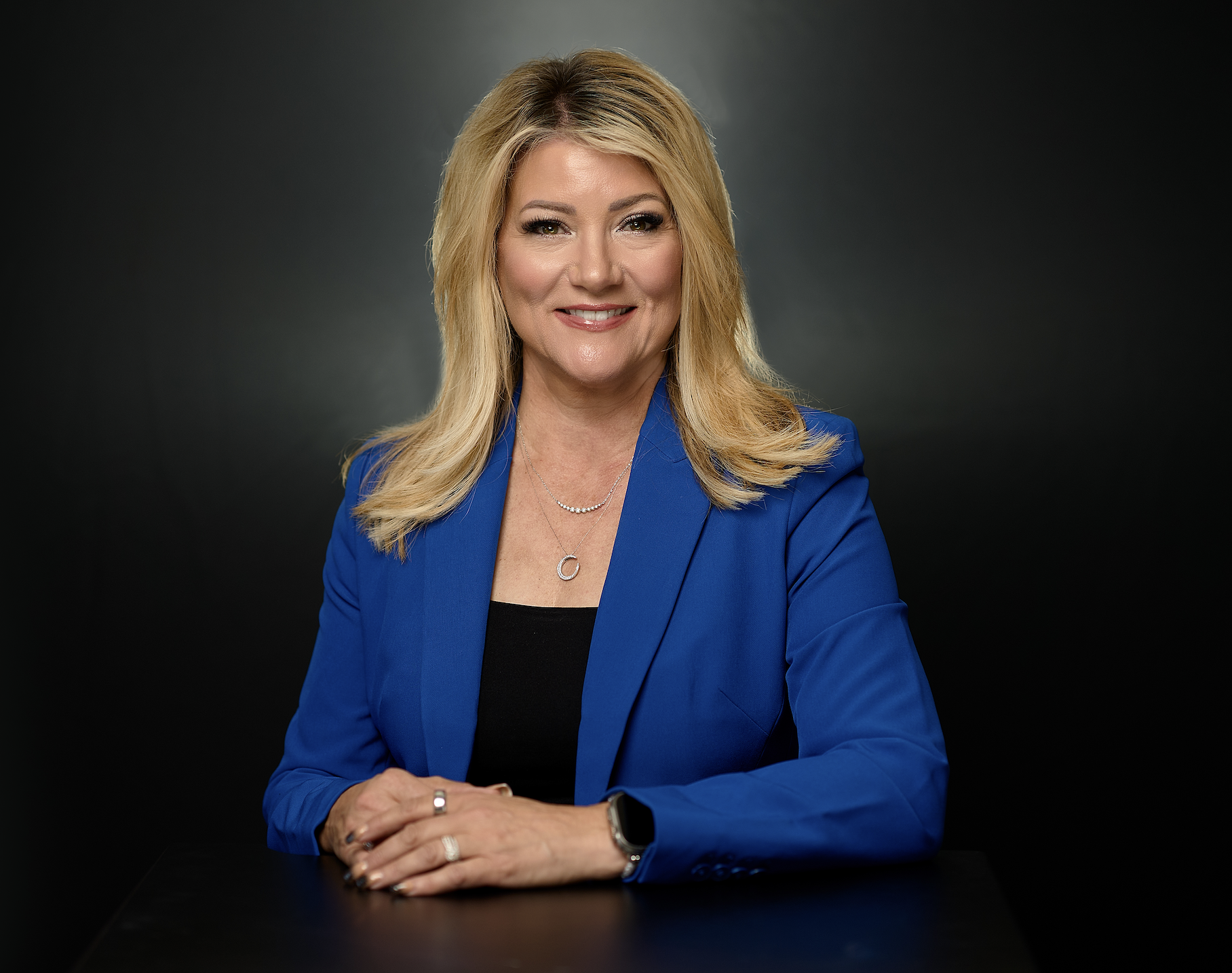
Henderson Mayor
Michelle Romero was elected Mayor of Henderson in June 2022 and took the Oath of Office on January 3, 2023. She was elected at-large to the Henderson City Council in April 2019, representing Ward I. Mayor Romero represents the City of Henderson on the board of directors for the Las Vegas Convention and Visitors Authority, Las Vegas Global Economic Alliance, and Civilian Military Council of Southern Nevada. She also serves as a chief local elected official overseeing the Board of Workforce Connections and is the Council representative to the Henderson Audit Committee. Last year she served as the chairwoman of the Nevada League of Cities.
Prior to her elected service, Mayor Romero served the City of Henderson for 25 years in several capacities, most recently as the Henderson Redevelopment Agency Manager.
She is endorsed by the Henderson, Vegas, Latin and Armed Forces Chambers of Commerce. The Henderson Professional Fire Fighters, several law enforcement agencies, and Clark County Sheriff Kevin McMahill. She is also endorsed by BORPAC, AAG, ABC, SNHBA, SNBTU and the Nevada Veterans caucus among a multitude of others.
She has been married to her husband Ben Romero for 40 years, and they have four sons and eleven grandchildren.