Ep22 Robert Banghart—From Tunnels to Hope: Building a Real Safety Net for Vegas's Homeless


Get to know Shine A Light and how you can help: https://www.shinealightlv.com/
Don't forget to SUBSCRIBE to the HendersonHQ Newsletter: https://hendersonhq.com/Subscribe
Check out our website for all our local stories & community updates: https://hendersonhq.com/
Follow our instagram for deals and cash drops: https://www.instagram.com/TheHendersonHQ/
Interested in advertising in our newsletter to 25,000 local Henderson Residents? Let's book a call: https://calendly.com/scottgrovesteam/catchingup
______________________________
Scott Groves sits down with Robert Banghart, Director of Community Engagement at Crossroads of Southern Nevada and Vice President of Shine a Light Foundation, for a raw conversation about what it actually takes to help people escape homelessness in Las Vegas.
Robert shares his personal journey from living homeless in the tunnels for five years to building one of the most effective homeless outreach programs in Nevada. In this episode, you'll learn how Shine a Light's 18-month continuity care model keeps people connected through every stage of recovery, why most safety net systems fail, and what it really takes to get someone from crisis to stability.
Scott and Robert break down the barriers that keep homeless individuals from accepting help, the role fentanyl plays in the overdose crisis, and why community problems need community solutions. Robert reveals how his organization achieved a 92% direct impact rate with donations, built partnerships across Vegas's fragmented support system, and created pathways that actually work.
Whether you're looking to understand homelessness better, want to get involved in your community, or run an organization trying to create real impact, this conversation will change how you think about crisis intervention and what it means to build a true safety net.
Robert Banghart 0:00
She encapsulated it so beautiful, she said, it's not a resource problem, it's a priority problem. If addressing the homeless issue was a priority, then we would all be forced into a room to work together and connect, right? Because that's the only way you're going to solve any problems. All of us together. Community problems need community solutions. Once that system is working together, then you can honestly assess on what the needs are. Open, this, open, that. Okay, great. But like, where do they go after you?
Scott Groves 0:28
Welcome to Henderson HQ, this is the podcast where you get all the stories behind the businesses that make our community tick. Don't forget to subscribe to our weekly newsletter. Hey, ladies and gentlemen, it's Scott groves with the Henderson HQ podcast and obviously our newsletter. Don't forget to subscribe to Henderson hq.com if you live in the area today, we're talking to my new friend Robert banghart, who was introduced by a previous episode Lance, who's running for judge here in the city. And he's like, man, you really got to talk to my friend Robert. He runs shine a light, which is a nonprofit here that does a ton of outreach to the homeless community, and especially when we're having flash flood warnings and we need to get people out of the tunnel system so that they are not carried away. Tragically, he's like, you just got to talk to Robert. He's one of the he's one of the best human beings I know in Vegas. And then, before we start talking, you were talking about the work that you guys are doing with overdose awareness and detox and and Narcan and all that stuff. So Robert, why don't you just start with you, like, tell us a little bit about you, and then tell us a little bit
Robert Banghart 1:31
about shine a light. Yeah, of course. First and foremost, vote for Lance hendron. There you go. Thanks. That's my plug. He's an amazing human being. Yeah. My name is Robert Bangert. I am the director of community engagement at crossroads of Southern Nevada. It's the largest indigent detox and Treatment Center in the state of Nevada. I am also the Vice President and board member for the shine a light foundation, so local nonprofit where we go into the tunnels, build relationships through outreach, with our with our friends that are living underground, but also parks. I mean, anything you can think of, we're out there. And just offer a way out through peer like a peer led model, where we've been, where you've been. I was homeless for many years, as was many of the people involved in our foundation. And so then, once they accept the help, then we have a program called continuity case management, which is the unbroken chain of case management, where we walk them through the next 18 months, right? And we'll get into that a little bit later. And I'm also a board member of Narcan at night, which is just this past September, was the largest overdose awareness outreach event in the state of Nevada. You know, when I think of the homeless
Scott Groves 2:35
problem, I moved up here about five years ago, when I think about the homeless problem in LA, they have the highest percentage of of homeless individuals in the country, and it's, it's epidemic. Doesn't even like, do it right, do it justice. And then I moved up here to Vegas, and you don't see as many homeless individuals, but what I then come to find out from talking to Lance, and just our brief conversation, was like, well, we don't see them as much because they're they're underground. They're living in these tunnel systems, and they're building makeshift shanties and stuff like that. So do we have any reliable numbers on how big the homelessness problem is in Vegas?
Robert Banghart 3:11
I mean, I don't think we do. That's just the truth. I think the way to count it is, how could you count it? Is better way to say it, because there's what is it first and foremost? What does it mean to you to be homeless? Right? Like I ask that question all the time, any room I go into, just to kind of get an understanding where people are at and for me, it's like, your name's not on the lease. If you're living with a buddy, you could come home at any time and just decide you don't want me there anymore, right? So that we could argue that a little bit, but you get understand the point, right? That it's much bigger than what we think it is. It's not just the guy in the corner with the tent. It's not just, you know, the people that are in the shelters. It's, it's a massive problem that is not really understood. You know, I think underground, we feel comfortable with, like, about 12 to 1500 people live underground. But outside of that, I mean, it's almost impossible to count. They do a point in time count where they try to get, you know their best estimate they as they can. But you're dealing with a transient population. You're dealing with, there's a lot of factors to say that you could walk around this city and get an accurate count of what the exact number is, is impossible.
Scott Groves 4:15
Yeah, and the homelessness problem is not something that I have a lot of optics on in in my mind, the the cynical part of my mind goes to like, well, if you're homeless, there's probably a lot of compensating factors, right? Mental Health, drug addiction, bad luck, whatnot. You know, I'm, I'm lucky enough to come from a big enough family and friend group that there were times where I was in financial hardship, especially coming out of 2008 where i i lived on a couch at my uncle's house, right? Because I was like, in rebuild mode. I didn't have money to pay rent, and luckily, big enough network, I always had a place to go, right? I didn't have any of those compounding effects, luckily, of drug abuse or mental health problems, but like, what, what tends to when you're talking to these people, the ones that want to get help, what puts them on the. Cascading path to end up being homeless, because I think that's something a lot of people don't understand, like, what are some common, common variables that that you see,
Robert Banghart 5:09
again, a very complicated question, right? And I
Speaker 1 5:11
only ask hard questions.
Robert Banghart 5:12
I can see that. So I always say the same thing. I started out with some facts. You can Google this right now, six out of 10 Americans live one critical incident away from being homeless. Okay? So if I asked you right now, if I took away your your net, right, your family, your friends, it says just Scott, you're about to be homeless. Scott, where do you go? What would you say?
Scott Groves 5:34
Take it away by safety net? Oh, I have no idea. I mean, I've got, luckily, I'm in a position where I've got dozens of friends and family member that we
Robert Banghart 5:40
could right, but that's we could go typically, everybody's answer, right? We didn't grow up watching movies on how to be homeless. We didn't watch movies about what it was like to be homeless, right? We watched movies about being that football player, the jiu jitsu champion, or whatever it was, right, right? The narrative was never there. I walk out of my office today and I see five billboards, right? I got strip club, a weed dispensary, a lawyer, a diamonds, a casino, but I just told you that 60% of the country lives one critical incident away from being homeless. Another 10 to 15 are homeless. That's 75% of our country. But, like, we're not honest with the truth, right? Like, where do we go? What do we do? And then, even if you did know where to start, that system doesn't work together, right? Together, right? That system wasn't designed together. So there's just, like, this really false narrative on what's going on, you know? And the second part of your question, it's a myriad of things. Yeah, substance use disorder is 100% one of those main things. But then it's usually mental health and this and that. Like, there's not usually just this clear cut answer, right. Like, right. Maybe, you know, maybe your wife leaves now. You got some depression, some mental health. Maybe you turn to drugs and alcohol to cope. Maybe you got a little bit of mental health. It spirals right? You start to circle down that toilet bowl into the into homelessness. So not usually, is it just this one off. It's usually much, because every human being is not just this or just that. We're very complicated, and I think our problems are very much the same way.
Scott Groves 7:06
Yeah, you talk about the critical incident, this came very much into focus with me when we had kids, because I was like, Oh, I'm not only the primary breadwinner in our family. If my wife's gonna stay home, I'm the only breadwinner in my family. So if I do something stupid. And, you know, break my neck in Jiu Jitsu, and now I'm a quadriplegic, or I get run over by a bus or something. My wife is immediately moving back to LA and destitute. And, you know, wife and kids are living with their family. Luckily, she has family, if she didn't have that, and all of them were back in Mexico. Like, what happens? Like, where? Where is the safety net? And then all of a sudden I got really serious about life insurance when a head kick? Yeah, but I can only imagine you're already living paycheck to paycheck. You have something catastrophic, medical, job loss, whatever it's I completely agree with you that 60% of Americans are some number of paychecks, one, two, maybe three away from like not being able to afford rent. And that's a that is a real stat that I have seen, for anybody that might be rolling their eyes, that's like, that's a that's a very real thing. So where do you start? Right? Because you mentioned this 18 month program, and this bugs me about most institutions, whether it's prisons or pharmacy or homelessness or whatnot. Very few people tend to have a plan. You know, I was talking to somebody recently who got out of prison, and he's like, again, luckily, I have a safety net, but they give you basically the clothes on the back and the stuff you checked in with $50 and a bus ticket that's worth up to 200 bucks. And they're like, good luck. And I'm like, Oh, now No wonder we have so much recidivism, because you have no, no job plan, no training, no, like, no safety net after you get out of prison. If he didn't have a safety net, what's he gonna turn to? He's gonna go right back to crime, because that's the only way he knows how to earn money quickly, like, how to survive. Yeah, they don't give you enough money for, like, a single night at a hotel, right? So can you talk a little bit about what you guys are doing to, like, come up with a plan that keeps these people, hopefully off the streets and out of the tunnels for
Robert Banghart 9:07
good so shine, what we did was we built a true continuum of care. But the continuum of care is the community. So inherently, what happens is a lot of people, they'll open a new facility, they'll open a new this, right? They're always planting their flag and opening something new, which, you know, I have no argument with. We wanted to do something different. So with our own experience of how the safety net failed us, right? We don't believe there is really a safety net. That's the truth. And so we said, we're going to build one, particularly in the substance use disorder track, right? That's obviously close to our hearts. We started to walk around the city and build relationships with people and say, Listen, we're going to we would like to refer our participants to your facility at this stage of the game or this stage of the game, but we would like you to allow us to also, case manage them with you together. So instead of building a new building, we said, Okay, let's look. Get this from outside based on our experience, and let's connect these pieces to build pathways that people can go from crisis to long term stability. So really, our program is the services that are available right now, and us going out and identifying them, building relationships with them. And what it does is it allows for like, you know, I'm a visual learner. I always say this, right? Like if I gave you and I both the same canvas, the same paint brush, the same colors, we both paint different pictures. That's the point, not the problem, right? The problem is they try to make us all paint the same picture and fit in the same box. You have different life experiences than I do, different thoughts, different whatever it is, right? Let's embrace that, instead of dehumanizing it, right? And it allows us to, hey, it's not working out over here. Okay, let's slide you over here. It gave us so many options, right? So we could take them through detox, into residential, into housing, with treatment, into sober living, and at each stage, if there was a real problem, and knowing recovery that the path will not be perfect, right? It's not you're done. Get out. It's like, okay, it didn't work here. Let's slide you over here. Let's slide you here. Let's keep you connected, right? So we became the glue that connected all the pieces together, right? That allowed somebody to falter and stay connected, to succeed and go on and live beautiful lives, right? And that's the point of a safety net, is to catch everybody to the best of our ability, right? Because I always tell this story. It's my favorite story, right? I gotta. I got a participant who's one of my favorites, and Matt, he had a very similar experience to me, a lot of trauma, he was attacked, right? He had some mental health, and he comes in. So our program is called iPad. It's instant placement with access treatment and housing. Instant placement means you call within an hour, we can pick you up. That's our goal. Pick you up, get you connected. Now we're not a housing first model. We deal with substance use disorder, so we're going to get you into detox, treatment surrounded where there's like some oversight, connection to clinical treatment, therapy, peer support, anything you can imagine. Matt goes into detox, the triangle engages. I always use the visual examples. Again, the triangle is the participant is one point. Our case manager is one point, and the facility that they're at, their case manager or representative is the next point. So there's always a triangle working. So when Matt calls me from detox and says, hey, the food stinks here. You got to get me out of here, I can say, Matt, I love you, buddy, but that's not your problem today. I know I was there. I know the food isn't great. It's not it's not Red Lobster, but like we're trying to save your life. But because I have that lived experience, we can walk in through that moment, but also, if he calls me with a real problem, I can drive right to the facility and say, what's going on, or and everybody. It's cell phone numbers. It's not emails and waiting for responses. So and in that space, we're also together as a team, cultivating what the plan will be. So I'm not sitting in detox going I don't know what's going to happen next. I know I'm going to treatment here. I'm doing this right, and because, luckily, a lot of our volunteers now work within that safety net, there's just like, layers and layers and layers of support. So Matt goes into housing with treatment. He completes. He had a lot of moments right where his head was telling him no this or that some of his mental health was was cropping up, but they walked him through all that. And then he goes into sober living, where we pay for the first three months. But fast forward, two months after he went into sober living, he's been in seven different sober livings. He never punched anybody, never got high. He was just a big guy, socially awkward. Didn't know his cues. Had some mental health. They would call us. Like, listen, the guys are uncomfortable. Can you get him out of here? Cool, but our working agreements is, you have to give us 24 hours, unless they, you know, punch somebody or get high, right? Like, so six times we transitioned them. Fast forward, the seventh house. Something clicked now. Fast forward, three and a half years later, two and a half years later, Matt's got a little over four years sober. Just got his manual CDL. He came back into town to get that successful. I went. He was at my birthday party on Sunday. Like, I know where he's at, but Matt in the system as his design is homeless right now?
Scott Groves 14:03
Yeah, I was just gonna say that having to transition, and have you guys as the backup to help him transition to the right places, until it did start to track for him 100% after that first, maybe second place he's done, he's back out on the streets and like he falls out of the system of safety nets, right? If it's not for you guys, 100% Hey guys, just a quick ad from our sponsors here that make this podcast and our newsletter possible. Want to give a shout out to ethereal Med Spa, a gym for your skin. So doesn't matter whether you're doing anything proactive, all the way up to spot removal, all the way up to beautification, right or vanity. Ethereal Med Spa, they got you covered. Scott right over at right auto body. Love them. So anything from a scratch in dent to a big insurance job all the way up to a custom rebuild of a classic car, they got you covered. And shout out to my buddy, Casey Halstead, owner of 10th Planet Jiu Jitsu, which. Now has three locations. They just opened new location on the west side. So they got our Henderson location. They got a mid city location, and they've got a West Side location. So anywhere in the valley where you're looking to train jiu jitsu, check out 10th Planet, Las Vegas. Now back to the show again. The cynical part of my mind, I'm like, oh, with whatever system it is, I think, and I believe that there is enough support, there's enough charity, there's enough government funded assets, wherever the case may be, but people just don't know how to access them. So do you feel, and we'll just use Vegas as a microcosm for this larger problem in the country. Do you think that there is enough current facilities and support and that there is enough programs, or do we need massive more funding for those programs? Or is it really just people don't know how to access them, right? If you, if you're a battered woman and you're leaving in a frenzy and you're trying to find a place like the difference between you finding that place and ending up homeless is probably an introduction, right? Or somebody like you as a case manager. So do the facilities and the and the systems and the programs exist and they're just not getting utilized to their fullest because people don't know where to get them? Or do we need a massive amount of additional government funding, grants, charity and whatnot to like, to close the gap? What's the bigger problem? I guess, is
Robert Banghart 16:16
what I'm asking? Well, that was like 37 questions. I know, I'm the worst. No, I I heard some recently that rocked my world, right? And I've kind of said something similar, but not she encapsulated it so beautiful. She said, It's not a it's not a resource problem, it's a priority problem, right? Because if addressing the homeless issue was a priority, then we would all be forced into a room to work together and connect, right? Because that's the only way you're going to solve any problem. Is all of us together, right? Everybody working together. Community problems need community solutions, right? So I think that once that system is working together, then you can honestly assess on what the needs are. Right. Now, nobody knows, right? Open this, open that. Okay, great. But like, you're one piece. What else? What do they do after you? Where do they go after you? Right? Like some people will maybe go through that treatment center and be completely fine on their own, because they have that safety and have good to land on, but what about the other 95% that don't where do they go? Maybe they stumble. There's nobody there to support them, and then they're back, right? So for me, I think that it's definitely we need to be more connected, right? And what I've always said is that there's no real oversight. Nobody knows what you know your treatment center is doing or what this guy unless somebody complains, right? I'm not talking about like there's inspections, all that stuff, but like nobody on a governmental level is watching to say, Hey, you guys are supposed to be working together. What's going on, or, Hey, this is supposed to happen, or what? There's none of that. They're all operating kind of independently, right? I think really, what we were able to do is to cut that last little bit of red tape, so we became a referral source. So if you own a coffee shop, and I'm gonna every Monday, I'm in there with 20 guys, and we're spending $300 and you're that Monday morning waitress, you've got that table set up, you know what's coming, right? It kind of became that. And believe me, a lot of the lot, if not all, the people that we work with are amazing human beings. Are all trying to do great work, but the system was designed in scarcity, that scarcity mindset, right? That is if we were in competition, but we're all overwhelmed with the amount of people in need, right? If every single person in Las Vegas that was homeless asked for help today, we couldn't help them. So yeah, the resources are needed, but it really doesn't matter until we're all working together. Yeah. I mean, to make it effective, it'd be like the cook in the back, in the in the waitress up front and the lady ringing up the check weren't all working together. It doesn't make any sense. How does your business make any money? Right? Very much. The same thing with humans. It doesn't crisis intervention is great, but you need 18 months to two years of support, right? Imagine yourself going through a crisis, and I show up and I say, Hey, Scott, hope you're doing well, good, checking you one time. You feel good. But then I leave and you don't hear from me again for two years. That's not really support, right? Within that umbrella, also we were able to share data, which made each of the pieces better, because now they know where their participants are 18 months down the road, their recidivism numbers, you know, I mean, like all that stuff. So how do we cultivate a community of people working together, the safety net, a true safety net that is actually working together and sharing, and we're sharing donations back and forth. Who's got this and got this sounding board or what's going on? You know? I mean, West care might call me, tell me, they got furniture. Hey, I might call them, tell them I got hygiene. It's every week. It's like that, back and forth. Our team right now is at the shade tree serving lunch and how. Helping them with their inventory. We were there Thursday to watch one of their employees when, like, a national advocacy award. Like, we're present, you know, we're present, we're there. We're not just putting it on our website. And thanks. I'll see you later, right? Like, or we're on site, and then on my way out, I'm grabbing a couple diapers to give to somebody else that I know that needs them from shade tree. That's what we all do, right, back and forth. That's a safety net, because there's no competition, right?
Scott Groves 20:28
You know, it's crazy. I coach sales people for a living. That's what I do. And I'll end up going upstream and coaching businesses sometimes, and just like you're talking about in this in this program with all these resources, it's crazy. How many problems boil down to just lack of communication, right? I can go into almost any team or sales person or company and be like, yeah, we've got all these problems. The number one problem is probably a lack of communication. And so it sounds like the gap that you guys are filling at shine a light is like, how do we get these people communicating with each other, sharing resources and knowing like, hey, this guy's not a fit for resource A, but he might, he might change his life with resource B. So how are you doing that? Right? Because these places don't have a mandate to talk to you. It's not like you're a government employee. Come in there and to inspect them. How have you won these places over to be like, I'm not a competitor, I'm not looking for anything. I'm just looking to be a resource, a referral source. Like, how have you personally and your organization won these people over to start opening their books and opening the lines of communication? Like, what's worked for you?
Robert Banghart 21:30
I mean, first and foremost, it's the example that we set right. Who are we? What are we doing? Or do we keep our word? Do we do what we say we're going to do? Are we the ones showing up with donations for them too, you know? I mean, like, and it's just building relationships, that's all it is. Because understanding that, that that the city has been living in scarcity mindset and competition, right? You have to understand that, right? So when you walk in, I'm not in competition with you. It boils down to to our entire way of move, right? Like moving we, we host a lot of events. I said, Listen, let's go highlight our community partners. So Wes care. Was doing a trunk or treat already. We were doing a trunk or treat. I said, Let's just make one big one, highlight them, right? And boom, that's what we do. And we just move around at our different partners to highlight them right, things like that. And I think that also they want to help people. Like it wasn't such a hard sell, believe me, you know, I mean, I think there was some issues, like you talked about, like you have national companies, statewide companies, local companies, nonprofits. They answered this. They answered there was a lot of things going on, but at the end of the day, we want to help people right. And I think that over time, they saw the authenticity of it. They saw that we wanted to help right, and then also who we became within the community, individually and as a team, right, laid the groundwork for it. I want
Scott Groves 22:50
to go to the participants themselves. You know, I can only imagine whatever trauma has come up. Doesn't matter whether it's physical, mental, drug, accident, you know, I just can't imagine the despair that comes with moving from this life to a homeless life. I know me, I can, I can get into a downward spiral of mental health pretty quickly. This sounds so trivial compared to what you deal with, but I had a back injury and, like, couldn't work out for like, a month, and I was a asshole. I was like, not kind to my family, and that was just something as simple as, like, not being able to work out, right? So I can only imagine if, if our family had a catastrophe that that had us on the path to going homeless, like the amount of despair that I would feel, it would be, it would be crushing. It would be absolutely soul crushing. So when you first meet some of these participants, and they're, they're in the tunnel system, they're, they're living in a park or whatnot, how do you guys connect with them to let them know there is a light at the tunnel? Like, do you find a lot of your participants are hopeful and they're looking for help, or do you kind of have to coach them out of this moment of despair to know that there is like light at the end of the tunnel? Because if I ended up like that, I got to tell you, I would, I would probably just stay there and not want your help and just want to die, or want to numb myself with whatever substance I get my hands on. Right? So how do you, how do you get somebody from where they're at to where they're going?
Robert Banghart 24:16
I think where we've seen it works the best is just kindness. It's really that simple, you know? I mean, and obviously, once you open the door to the conversation, they know we're there to hand out basic supplies. We don't hand out anything that makes it easier to be homeless long term, right? But a water on a hot day, a pair of socks, right? It opens the door to a conversation. And that's what I'm trying to do. I'm trying to have a conversation. I'm trying to get to know them, same way. I'm trying to know you right now, basic conversations and in that space, you start to share like, yeah, I was out here too. Yeah, I know you were out here, right? Gets gets them thinking, you never know when they're going to be ready. That's completely out of our control, but we want to connect and let them know somebody cares about them, that they're seen, they're heard, right? And. That we've been where they've been, and we know a way out. Get to plant that seed and let that faster for a little while, right? And then when the time comes, they trust us enough to ask us for help. I always share this story, right? Like we all have a gas station, right? That gas station is close to our house. We're just comfortable with, right? I went to my gas station for like, six months straight, and there's a guy out front, and he'd always ask me for money. I don't typically hand out money. I'm not opposed to it, but I don't typically do it. But I always had a conversation with him. I always asked him how he was doing, and I always offered to take him inside, get him a drink, get him something to eat. For six months, I got every answer under the book. He didn't mean everything from, you know, get out of here, leave me alone, to, oh, no, thank you. You know. I mean all good. He's in crisis. I'm not right. And of course, the day that I'm running late, he says, I'm ready. So alright, let's go. And when we walked through the front doors, it was like we walked into another like, I don't know what it was, just like, it was insane. He it was the most beautiful interaction I've had with the human being in a long time, laughing, joking. My stomach was sore from how much we were laughing. He poked me at one point. That's how intimate it was. Get to the register. We're like tired from laughing, right? I bag up all his stuff. I give it to him. I see him walking towards the door, okay, I don't have any expectation of him in that moment, right? I go to finish the transaction. I see him stop at the door. I see him holding the door, and I know that feeling I've been there, you know? I mean, he doesn't know how to close out the interaction. He doesn't know like he was, like an overwhelming feeling of normalcy in his life, in that moment, right, like that, he belonged and right? And then he starts screaming and runs out the door. I get it. You know, the guy behind the register who I kind of know, he starts laughing. He's like, why'd you do that? And I saw white I was so angry, like, internally, right? And I said, you tell me why this guy's been sitting outside your store for six months straight, and the first time someone's decent to him, he doesn't even know how to close out the interaction. You want that guy to ask for help? I said, The problem is, and this is prevalent in a lot of areas of the worlds, it's not us and them. It's not it's just us that's a human being with family, friends, whatever it is, experiencing crisis, we need to close that gap. So for that guy right there who no one's nice to ever you're asking him to be Evil Knievel and jump across the Grand Canyon to accept help. That's what it feels like, right? But imagine if he had had 100 interactions like the one he had with me. He feels a lot closer right, a lot closer to normalcy, a lot closer to being a part of and then when the time comes, it's just another step. And he believes right, unfortunately, what we've done in our city and a lot of areas, I shouldn't I love Las Vegas. I just they're not the enemy. They're in crisis. Who cares why they're there? Right? Like that's we're we're looking for reasons to justify why we're unwilling to do something about it, right? The truth is, that's somebody's mother, somebody's brother. What would you want to happen if that was your mom, that was your brother, your cousin, whatever, right? Like people go through things. We all go through things like they're having a human experience, just like us, you know, and they deserve to be treated like humans, regardless of their reaction. I when I have a headache, am I the nicest person in the world? You hurt your back and you said you were rude to your fan. Rather, it's like we're all guilty of that. And those aren't real crisis, a headaches, a headache, go away right. Like now, imagine your entire world has collapsed. You've lost your family. You're addicted all these things, like, I have zero expectations of their behavior or actions. Yeah, it's on me to be a good example. It's on me to connect with them and on us as an organization, and we do that in an infinite amount of ways. Try to make people feel seen and heard because they are worth it.
Scott Groves 28:51
Yeah, that really to me. It brings clarity to me, because I remember reading some report or something from LA when I was living there, where it's like, if you're in LA, and if you're willing to be helped, and if you're willing to go down the path to get sober, the average homeless person in LA is homeless for about 48 hours, if all these things are in place, right? Like, there's there's centers, there's shelters, there's whatnot. So to me, I was always like, well, it helps only 48 minutes, 48 hours away. Like, why didn't we have such a problem? This is ridiculous. It must be all them.
Robert Banghart 29:26
It must. And you just said it, but if you ended up in the tunnel, you would probably exactly there and
Scott Groves 29:31
die exactly because, like, you just said, they're not ready to take that step because of how much everything has collapsed. So it's like, great. Like, the solution can be right there, if I'm not willing to reach for it because of what's going on in my head. Doesn't matter how many solutions are there, also changing my frame on how I look at things. For some reason, coaching attracts a lot of people that are sober because they saw in their life that they could get help here with a sobriety program or coaching or AA, and they're like, oh, maybe that would work for my business too. So I've. Had to know a lot of people that are sober anywhere from seven months to 27 years, and talking to one of my friends who goes into the jail system in LA and does AA meetings, and he's just, he's a saint of a guy. He's been sober for about a decade, and he really gives back to the community. He's like, me, Hey, man. He's like, for a lot of people, drug addiction, alcohol, it's a disease. He's like, you wouldn't be mad at somebody for having cancer or you want to be mad at somebody for having shingles. It's, it's pretty much the same thing, like being angry at these people because of this disease where, for this moment in time, they can't control themselves. It's, it's a waste of your energy, and it's no good for them either, right? And what he would say is, he would say, you can't help any of these people until they're ready to get help. So you mentioned being kind and starting a conversation. When do you see people be willing to jump that Grand Canyon, like evil? Can evil like, what? What happens with your guys's relationship or with them, or what? What have you found triggers people to like, Okay, I am ready to get help and make that leap right? Because, like you said, you have no expectations. You can't help them till they want to be helped. Yeah. What have you seen like helps them get over the mountain?
Robert Banghart 31:09
I mean, there's an infinite amount of reasons, right? Something happens internally where they just get tired of it, right? And hopefully, our efforts in connecting with them has helped to close that gap, right? They're walking their path, and hopefully they get to a place where, you know, could be anything, right? It's hot, it's cold, a bad day, you know, an argument, anything. There's literally we could sit here for the rest of the day talking about, okay, but the call comes, right, and then we're there. We have to get them right there, because it's fleeting. Illness is fleeting, and you're, you're asking them, essentially, to leave everything they know right, even though now we look at and go, that's only a mattress and a sleeping bag and whatever it is, right? But it's, it's their world. And I think people forget that. Like I my world had become so small when I was homeless, that it was like a backpack and a bike, and that was it. That was it like, literally, that was my entire world. I didn't care about anything else in the world, you know. And didn't use a phone for five years, didn't sleep on a bed for five years, didn't eat three hot meals in a day for five years, didn't shower for five years. I mean, literally, every single thing that I do today I hadn't done for five years. I can't live my life today without Google Calendar. I'm lost my world. It becomes so small. So you're asking that to leave their world. Come with us. Hopefully we're going to help them out the way we said, Right? Hopefully. And that takes time to build that trust, right? And the worst thing is, if, what? If you come with us, it doesn't work out, then you got to start all over again, and you got to come back out here and start the whole grind. It's like, there's a lot happening, you know what I mean? And thankfully for us, we've been at it for a long time now, and we've gotten a lot of people out where they've come back and said, yeah, they're it's for real. And like, we look for little ways to build that authenticity outside of just building the relationship is like, I remember one day I walked up on a tunnel, and there was a guy in there. He had broken his leg, and the bandages were falling apart, and I said, let me take you back to the hospital. Let's get this fixed up. I'll bring you back. I'm not going to kidnap you, right? And I did those kind of actions carry weight, because they know these guys aren't here for anything else other than to help us, you know what I mean. And they are us, right? So we're just stacking layers of authenticity on top of it to hopefully help. But again, I was never going to come in. I knew exactly where to go. I had been sober before, and I was like, you like, I'm just going to stay down here and die, you know what I mean. So it's a very tricky narrative, like I couldn't get you to do something I didn't want you to do right now, today, right? Let alone, you know what I mean, so and my life is great, right?
Speaker 1 33:49
By all measurable, by all, by everything measurable, my life is great.
Robert Banghart 33:53
Well, think about this. If I came to you right now says, Scott, look love the property, love the house, love your story. Looks like everything's going great. Here's the deal. Leave everything you know right now. Come with me, and I'm going to show you how to live a life that's 20 times better than the one you're living. You coming no no chance. So why is it any different for them out there? Just because I perceive it differently doesn't mean it's not the same, right? That's their world. That's the what they're used to. We're humans. We live in a space where what we're used to, right? Like, to me now, looking at him, like, Oh, my God, it's chaos. There was a time when I was completely that was just normal to me. I'd know it. I'd walk around with a big AX. And, I mean, Insanity, right? Like, but it becomes normal. You don't just fall into that. You slip slowly into it, you know, I mean, 1000 paper cuts gets you to a place where that's your normal. Now I'm telling you go to detox. You're going to withdraw from from whatever it is you're using, which is a painful process. Then we're going to rebuild your entire life from scratch. And if, if you leave, you got to come back out here and start all over you. It. So it is a leap of faith, right? That you're gonna that we're for real, because we are right. But like, you don't know that at the time, right? Right?
Speaker 1 35:08
Anybody, for all, they know you're undercover cop who's there to
Robert Banghart 35:11
take them to jail? Yeah. I mean, they, I think they know we're not that. But like, right? It's a, it's just a big leap, is essentially what it is. And that's after, you know, building relationship, them coming to the office for clothes, them coming to the office for water and socks, and us giving them a cigarette and joking around with them and getting to know their name and blah, blah, you know. I mean, like, it's still hard. Yeah, I think, how hard is it to go back to the gym after you haven't gone to the gym for a while? Yeah? I mean, now take that to 1000 1000 times.
Scott Groves 35:39
Yeah. What? What would you like to see? Obviously, we'll put up all the links and everything for people that want to donate to the organization, which I'm going to when we're done here, but let's just talk about the very basic human interactions. And, you know, obviously there's safety concerns and all kinds of stuff like that, but person watching this podcast comes across somebody homeless wait outside the gas station asking for money. What would you like to see from society, as far as, like, Hey man, you don't need to be their best friend. You don't need to put yourself at risk just in case there is drug use or whatever going on. But like, what would you like to see from society in those interactions that will bring you closer in your interactions to getting them off the streets?
Robert Banghart 36:18
I would say the truth is always internal, right? Like, how do you want to be treated on your worst moment? Right? I believe this, right? I can't ask for things if I'm not willing to give them. Right, if I want to be treated kindly on a bad day, or if I want to be forgiven, I have to be willing to forgive. Right? It's very much the same space with that. Like, I think a lot of people talk about how they want to change, you know, fix the city, or fix this, and it's like, okay, what are you going to do? Right? Like, it's not anybody's individual responsibility to fix all the problems. Connection is key. Good morning. Look them in the eye. Good morning. I don't have any money on me right now, but I just want to say hi, simple, right? Let them feel seen and heard, but do that with a way that you understand that they're in crisis. I wouldn't, I wouldn't walk into to a surgery. You know, the guy's got his, you know, his heart's out of his chest, and judge him for the way he's reacting. Why is it any different with this? Right? Because it's addiction and mental health. We have these stigmas and these judgments on it, because, you know, if I have cancer, I'm not going to arm you, crawl into my parents bedroom and steal their jewelry to get my next fix. It looks very different. I understand that. But like, these are sick human beings that need our help, you know, and bridging that gap, i i always use the analogy like the Boy Scouts or the Girl Scouts with all their badges, right? Like, if I was to tell you how many people were kind to me that got me to a space where I was finally willing to accept help, we probably fill this room. You know what I mean? And that's the point. How do we do that? How do we connect? How do we make them feel a part of you know? I mean, it's simple acts of kindness. Carry the day always. I mean, if you can't afford something, then say hi. You can't give them a water then Good morning. You know, compliment or shoot. I don't know, you know what I mean. Like, look for some way to make them feel seen and heard, like, I can remember, like, the experiences I had on the streets where certain people would go out of their way just to say hi. In that moment, maybe I didn't receive it as much as I should have, you know, I mean, but later on, I'd be like, Huh, you know what? I mean, there's something, a lot of stuff that happens internally. I don't know we could even process we're in crisis to the same degree, but later on, we're able to reflect. We look back and we go, oh, you know? And it's hard because we're not all working together. That's the truth, you know? I mean, we're just not all working together. And there's a lot of strong opinions on it and all these things, but like, at the end of the day, we got to roll our sleeves up and fix this, because it's not going anywhere, and no one's coming to save us, right, right? This is a Las Vegas problem that Las Vegas needs to address. Las Vegas needs to work together, right? You're not going to fix it, I'm not going to fix it, but the two of us together, we could probably paint that wall a lot faster than I could by myself, right? That's the point, right? Like, get involved, look for things that you can do
Scott Groves 39:04
to help out. If you could wave a magic wand and fix something at the system level, right? And you already kind of alluded to it with communication and sharing resources. If you, if you just wave a magic wand, would it be a, would it be a database? Would it be, you know, like you said, somebody overseeing the system, either at the nonprofit or governmental level, like, if you could, if you could have your way, and fix one major problem with this kind of dysfunctional system? What would it be?
Robert Banghart 39:34
Off the top of my head, I think I would make sure that all funding was tied to cohesion, that if you receive monies, you have to be willing to work with everybody, and then to be able to report that that who you're working with and what's going on. Because I think a lot of times what happens is like somebody might go somewhere, but then you don't know where they are later on. How do we check on them? How do we find out, you know, if he lost his phone, we don't have his number anymore. How do we find that person? Them to know they're still doing well, right? And that was kind of a big piece of our continuity case manager and we we joke a lot on our graduations are like, that's amazing. Congratulations. I'll see you tomorrow. Like, we want to build that trust within them that they're just going to be a part of it in whatever capacity, you know, works for them, right? Everybody's different. But there's a reason why I know where Matt is today. You know, it's not because I'm doing anything particularly great. It's because the organization is connecting and creating this tribe mentality of like you're a part of something. You're not alone, right? Like, I, I walked into the office, I don't know, maybe, like, six months ago, and there's a guy in the office, and I recognized him, but I didn't really remember his name. We started chatting, and he had been through a treatment center that I worked with before. He wasn't even a participant of ours. I apologize. He was a participant. Graduated. He decided not to stay connected with us. Okay, no problem, right? We're here if you need us. Fast forward, two years later. Here he is, and I'm like, you know, catching up with them. What's going on his life? He goes, Man, I lost my job. I go, let me get this straight. So two years of not talking to us, you lost your job, you came here. He goes, I knew you guys would help me. That's it. That's a safety net. Because now also he's educated right on what to do if something happens, right? There's your real safety, because he doesn't have family, he doesn't have any of that stuff, you know? And that's the point, because I think about this a lot, like, if that was my brother, my sister, whoever, somebody close to me, like, how would I want them treated? Right? And I think that's at the core of what we do, right?
Scott Groves 41:36
I have so many questions. I could go a million different directions. But you know, when you talk about this 18 month continuity path, and you guys basically being the third, the third leg on the stool to make sure they stay engaged. Can you talk about, and I'm sure it's different for everybody, what kind of like a traditional path might look like, because, like you mentioned, for a lot of these people, it starts with detox, but at the end of the day, you can't support them forever. So I'm sure it, you know, ends with some type of job training or job placement. Can you kind of walk through you get a new participant today? What might the next 18
Robert Banghart 42:09
months look like? Sure. So we have four phases in our program, all of them are non punitive. You know, your first phase would be your introductory phase, or getting you connected, seeing what your needs are. And it's really important to say this, everybody's phase one is different, because everybody is different, and that's okay, right? And you'll go through detox, possibly residential treatment, inpatient, depending on the clinical assessment, Where's where's residential, residential would be. I went through residential when I first came in. It's like, can't leave clinically driven, right? You're still case managed ID birth, social, doctors, appointments, all of that. But you're kind of under more intense care. Got it. It allowed me to take on the world slower, right? I didn't have to go out and get a job or worry about I couldn't. I wasn't in that space. And then from there, you go into housing with treatment, which is your typical treatment center, right? We house, you feed you, you do clinical treatment, PHP, IOP, all that, also, case, manage the entire way birth, social, driver's license, whatever it is, you know, and then from there, into server living where we pay for the first three months. So as the phases escalate along, you are job. Training is a part of it. Employment is a part of it, right? Connecting you with the community is a part of it, right? So the goal is, after three months, your self pay in sober living,
Scott Groves 43:27
after how long? Three months? Three months your self pay, meaning there's insurance resources, or they get a job,
Robert Banghart 43:33
or what? No, you've gone through detox, residential housing with treatment, that's five months, right there. Now you're in sober living, that's three months. So in housing, with treatment, you can get a job. So you're working, looking for a job back here with their case manager, our case manager, we're both trying to figure out where we can place you. And we got a lot of great connections for, you know, your beginner jobs, right? And then once you're going to sober living. Now we're paying for three months, so you've gotten six, seven months without having to worry about paying rent. We're getting you, going to get you that get well, job to get you, get your feet moving. And it's flexibility, right? We can put in for a grant, a request for an extension, right? Obviously, everybody's different. Some people come off earlier, dependent. So that's the goal. And then at the end, independently housed. We probably got 150 people in independent housing right now, but independent housing is, we deem it right. Like, I lived in sober living for three years. I just liked it. I had my own studio. I didn't really need the structure, but I kind of like being in the community mindset. It was cool. You know, everybody's very different. And what
Scott Groves 44:35
kind of jobs like? Where are you reaching out to companies that need entry level jobs that are willing to take, you know, a chance on somebody that's previously been homeless or had a myriad of other issues. Like, where are you making those connections with potential employers?
Robert Banghart 44:49
I think it's our team is very good examples within the community, first and foremost, and all the things that they're doing so they're connecting with people like, you know, Goodwill is a great partner of ours. We've got. Our participants all over the city, working with goodwill. They've always been very good to us. And then it's like call center jobs. I mean, anything you could think of, literally, like, if I was coming here to do a presentation at your job, I would be talking to you. Hey, do you guys have any entry level you know? I mean, right? We're always on the hustle for those because, you know, they switch and move. We have a great net of people within. So we're in tons of group chats. Hey guys, anybody know anybody hiring? Anybody looking for this? And then we're at every job fair there is. So, you know,
Scott Groves 45:29
you mentioned something about when they're back in stage two or stage three, you're just trying to do the basics, right? Get them a social security card, get them an ID. I have, effectively, speaking, an infinite number of resources, internet. I have a wife that will do my paperwork. I have an assistant. It was a nightmare, yeah, for me to get my real ID, because I had to get a, you know, request, a copy of my birth certificate from Glendale, California. And then I also wanted to have my little veteran identifier. So then I had to find a way to chase down with the VA my DD, 214, which then you can only get on internet by registering over here, like for me, and I do pretty well to get a Real ID was a nightmare. I can only imagine. You're in crisis. You're in crisis. You have no cell phone, you have no internet. Like, just, just the simple task of getting Id probably feels completely insurmountable to somebody who's coming into a program off the streets. So, like, what other kind of stuff do you do? Like that, to set them up for a, quote, unquote, you know, normal life or availability,
Robert Banghart 46:24
get a job. The vital documents for us is relatively easy. Everyone's going to have a hard case. We have a lot of good partnerships. We do financial literacy. We have a great partnership with like employee and be where we have people that are maybe prison, maybe, you know, don't have the skill set yet where we can connect them to jobs. Nobody in our program is unemployed unless they choose to be. You know, I mean, like, it's very easy to get them in. I think the point is to get them in, get them moving, and then the fire starts blowing right? What are you interested in? Right? We're meeting with them weekly in the beginning, obviously, and it's, what are you passionate about? What do you want to do? The get well, Job is great. You know, we want to get some money in your pocket. You know you want some cigarettes, or gonna be able to pay your rent. What is it that you want to do with the rest of your life? In our women's program, we have one of our pillars is called wings, women inspiring new growth and strength. And we have a partnership with Debbie Isaacs with unshakable. She does women led career development. She does very much the same thing, right? Think about being a mom, you know, kids and all that you want. You don't want to work at 711 forever, and there's nothing wrong with that. But like, you want to know that you have a chance to really provide and take vacation all the things, right, right? She helps with all that, and she does an amazing series called I Am. It's like how to not date a jerk, how to dress for an interview, right? Like all the simple things, and then we do dad zinc, also, same thing for the fathers he's he's also a resource for employment, where he helps fathers coming in with the legal system, child support, all the different things they face, how to be a dad, you know? And we lean on the community. That's the truth, right? There's a ton of workforce development out there that are willing to work with you, if you're willing to go out there
Scott Groves 48:04
and chase them down, yeah, you know, just because this segment of the population is near and dear to my heart, I would feel silly if I didn't ask what percentage of the people that you're working with are, are veterans. Because, you know, I'll tell a story of somebody I had on a previous iteration of this podcast. He was a veteran. And, you know, by all outside optics, life was pretty good. Things were together, but he was a special forces guy that saw some horrific stuff. And he's like, until I got therapy every time I walked by a gun, which is problematic because he taught firearms training. He's like, my first instinct was just put it in my mouth and blow my head off. He's like, he's like, that would that was my default setting. He's like, I never did it. I never felt like I was a risk to my family. But like, suicidal ideation was like, my baseline. And he goes, God forbid I had either gotten addicted or in a bad relationship or whatever. He's like, I very much could have done gone down the path of being a homeless veteran because of where my mental headspace was, until about, you know, eight years later, he finally decided to get treatment and and therapy and whatnot. So do you see a big cross section of the homeless being veterans? I don't
Robert Banghart 49:13
know about a big cross section. We have a great partnership with us vets and my friend Jimmy pew. Pew, he's he works specifically for us vets and does outreach with us. And then also, once they come in, a lot of times, what happens is, they don't identify as vets right away, but once they're in and they meet with the case manager, then we find out, and then we're able to connect them as many resources we possibly can as they should be. You know, yeah, because vets
Scott Groves 49:37
do have a fair amount of resources, some of them might even be eligible for whatever medical or, yeah, all kinds of stuff.
Robert Banghart 49:42
So it's also a tricky game. How's it with the, with that, with the seems to be a harder process, right? The VA and all that has you're, you're already shaking your head, yeah. I mean, it's
Scott Groves 49:54
already know where you're going with this. We need this form in triplicate, sent to four different departments, exactly. Cetera, et cetera.
Robert Banghart 50:01
Yeah, that's rough, right? All worth it? Yeah, the vets should have every resource available to them at all times, but we have great partnerships. We really do, that's the key. So it's like we we stay focused on what we do in a general way, and then fill in the parts with our partners, because they are better at it. I don't want to be a veteran specific program. That's not really my wheelhouse, but let me go to the guys that really know what they're doing and bring them in with us. They can learn from us and how we do this. We can learn from them. That's the key, right? That would make each other better, that iron sharpens iron. I love that.
Scott Groves 50:34
Can you talk a little bit about the the narc ion and the drug awareness and the overdose awareness work that you guys are doing, because, you know, I don't have as much optics up here in Vegas as I did in LA when I was helping some organizations, but fentanyl obviously just brutal. It's just not my world. I've had the benefit of not being addicted to anything except for nicotine. I currently have a nicotine pouch in my mouth right now because I can't get off of these damn things. But can you talk a little bit about the drug awareness, the overdose awareness, that you guys are doing, and what, what does that look like to go talk to a population of homeless about what, what could happen?
Robert Banghart 51:12
So Narcan tonight is zone, is his own nonprofit. We filed this year. We about two, three years ago, we got a call out from a national organization based locally that a day of service. They're a recovery style organization. They're great friends of ours. We said, Okay, we're gonna do Narcan at night. And we started out the first year was like, I think we had 70 people. Next year we had like 150 and then this year passed, we had 574 so it's growing to match. It was really a call out to the opioid epidemic and the fact that our overdose stats are not going down in Las Vegas and Nevada in general. And we wanted to do something to raise awareness and connect people to it. And, you know, it was just an outreach event where we're walking around the city talking to business owners and anybody and everybody. We've got some stationaries, but it's trying to cover all the hot spots as best we can. Right later. Stadium, you know, we're down by the center, we're over by West care, we're Fremont downtown, obviously, a massive area, and then it's just about education. I think it's inherently what I see is the problem is not that people don't care. They don't even know they're supposed to care. They don't even know that. The problem is what it is, right? You see something on the news. That's one thing. It's another thing. When you know somebody in your family overdoses, I get three or four calls a week from different places that somebody passed away, you know, and like, education is key, keeping it at the forefront and letting people know that it's here because it's something we should all have in the car, something, right, somewhere, because you never know when it's going to happen, right? Knowing the amount of fentanyl that we have in this country and the way that it's affecting this generation of wiping out so many people to say that we don't, it's crazy. You know, I always argue this like drugs have been around forever, literally forever, right? We have yet to propose one solution to stop drugs. How long are we going to keep fighting that battle? Right? It's just an optics thing. Oh, look at me. I'm tough on crime. And it's like, yeah, it's not going anywhere, right? If it can get into the prisons, it can get in anywhere. Yeah, the classic line is like
Scott Groves 53:21
we had a 30 year war on drug and we lost 100%
Robert Banghart 53:24
the narrative needs to change. It needs to be education. We need to understand that it's here and it's not going anywhere. I'm not saying stop fighting, you know, the drugs that are coming in and all that. I'm saying add the piece in the back end, knowing that, like your solution ain't working, right? I mean, it's insane to think the the amount of overdoses that we've had in Nevada in the past, you know, decade, 20 years, to think that these systems still work. If that was any other line of work, we'd all be out of work. But for some reason, we keep accepting these same solutions of the not in my backyard. Oh, no, we don't have that problem. It's ignorance, right? Because the truth is, you all have it. Somebody you know is affected by this, whether they're willing to admit it or not, they are right. 70% of overdoses happen at home alone. That means while your kids watch, you're watching TV downstairs, while you're in the, you know, in the car, in the tunnel behind the park, right? Whoever in the bathroom. That's where they happen, you know. And to imagine, and I hate to be this person, but imagine you're at home and somebody you love and care about is dying of an overdose in the bathroom, but because you're too Oh, will never happen to me, and too prideful you don't have it, yeah. What are you going to do?
Scott Groves 54:41
So you guys are supplying Narcan as kids, fentanyl
Robert Banghart 54:45
test strips, xylazine test strips I was in, obviously been pretty prevalent in Nevada as well. So what is that's just the next wave of drug, xylazine I was in.
Speaker 1 54:54
So it's like fentanyl plus,
Robert Banghart 54:56
yeah, it's like the next step, not there's an. Other one out now that's hitting that purple fentanyl. So, I mean, it's not going anywhere.
Scott Groves 55:04
Yeah, I have a friend who's a comedian in Austin, and we'll just say that the Austin comedian crowd partakes in a lot of stuff. And the problem out there was so bad, the comedy club started having fentanyl strips for testing kits in the green rooms, because they're like, Well, we know you're going to do it, so we want to make sure that you're not oding on stage in front of, you know, a crowd of a crowd of our patrons. And it's like, you know, if it's that prevalent in the comedy circle, where all these people are housed, and they all, they've all got a life right there, they have time to do something like comedy. I can only imagine how bad it is on the street.
Robert Banghart 55:41
So 50 times more powerful than heroin.
Speaker 1 55:44
Fentanyl is 50 times more powerful
Robert Banghart 55:46
than heroin. A literal pencil head could kill you. Oh, and it's in everything now, you know. So I think the awareness piece is like the acceptance of like it's here, you know, we accepted that we were running out of water, right? And we put all these restrictions on it. We accepted that we wanted paved roads, we had orange cones all over the place, right? But we don't accept the fact that our kids are dying from this wave of overdoses, and our solution is tougher punishment. Like they're sick, they don't need punishment. That's the last thing they need, right? And I'm not saying that people who do things shouldn't be punished, right? I'm just saying that you think about if I'm addict and I get arrested tomorrow, I am receiving no treatment while in jail. I'm just being stored and then I'm released to the streets. What's going to happen? Right? There's no reform in prisons and jails, right? I shouldn't say none hope for prisoners in the prisons. I understand, but the holistic approach needs to be that these people are all getting out. 95 96% of people in prison are getting out. How do we prepare them to get out, as opposed to just open the door and kick them out and say, good luck, right? The insanity that we wouldn't have massive recidivism. It's like ignorant. Of course we do again. The system is not set for success, so we don't want them to succeed, because that's not a priority. But prisons is the number one business in America. We literally have more people incarcerated right now than Stalin and what's the Mao Zedong whatever, in China? Yeah, combined. Right now, I need to hear stuff like that to understand the truth of what's really going on, right? Like they don't want us to recover, they don't want us to to succeed. And not because they won't tell us they want that, but because their actions don't say that. Yeah, right, and that's all that really matters. You could be dead silent to me, but you always show up to support me. That's how I know you want me to win. Your words not match with action.
Scott Groves 57:49
How can people help? Do you guys need more money, more volunteers, more supplies? I'm sure it's all of it. But you know somebody that might be watching this, or somebody that wants to advocate for like your organization? How do you like to people to best get
Robert Banghart 58:02
involved and help? I mean, we're a nonprofit, and just to be clear, 92 cents of every dollar donated to us goes to our participants in programming, third party audit, 92 cents.
Scott Groves 58:14
So by the way, I just I have to bring this up because it's one of my biggest pet peeves, if you donate to a nonprofit, and you don't look them up on some type of website to see what type of percentage, I think, by law, only, like, 25 or 30% of funding has to go to the actual end goal. So I've looked some of these nonprofits up before that I'm thinking of donating to and like, some god awful amount, well over 50% goes to marketing and salaries. And it's like, oh, so this is just kind of like a Ponzi scheme of you guys paying yourself. And I'm sure they do some good work on the back end, but when I hear about a nonprofit where, like, 92% is actually going to the participants, and not salary marketing, some type of kickback to your own third party company or whatever, that's an amazingly high stat. Like you guys are. You guys are crushing it. So it's
Robert Banghart 59:00
personal in us. This is us. And, I mean, I graduated from this program, you know, so we understand, and this is our legacy to the city, right? Like an amends to the city for everything that we did. We want to create this thing that long after we're gone, it's still here, helping people, right? Like to think that I could ever or, you know, Paul myself, Jeff like,
Speaker 1 59:25
So, how can people help?
Robert Banghart 59:26
Money? Obviously, yeah, money. Obviously, we're a nonprofit. I'm always asking for money. But, I mean, you know, for me, what I always think about is like, if you could donate $20 a month, like you don't think it makes a difference, but 200 people donating $20 a month is a lot, right? And it's those little things that make a difference. And then also supplies. We're always looking for supplies, socks, water, wipes, granola bars. You know, come volunteer your time. You know, we got a kit building on Wednesdays at 415 that we call our entry level gig because. It's literally anybody can show up, kids, Grandma, it's very friendly, right? Build the kids for the weekend, right? But it's impactful part. Without it, we wouldn't have outreach. When do you do that? And where is that? Wednesday's at 415 at 2330 Highland Drive.
Scott Groves 1:00:13
And is that a business, or do you guys own office? Our office? Okay, 2330 Highland Drive. How far is that from here? I'm not
Robert Banghart 1:00:23
it's like Saharan 15. Okay, cool,
Scott Groves 1:00:25
cool, pretty close. So you guys do a supply building every Wednesday at 415 come in, give back to the community. Bring some supplies, socks, granola bars, water and wipes, yeah, okay. And obviously money, yeah. And then I know Lance does a lot of volunteer work with you guys. And as we mentioned, what, what kind of additional volunteers are you looking for? Right? Because, like, I have, I have no optics into this world. I don't know how I would have a conversation with somebody.
Robert Banghart 1:00:53
You know, that's the problem. You're wrong. Okay, we've had that conversation today. You welcomed me, yeah, very friendly. I got to know you a little bit, that's all I'm doing out there. You know, I'm going out announcing that we're there. As soon as we announce that we're there, they know us. We built that relationship, and they come out with a joke. And we have paper routes, we call them, right? Everybody has their own paper route, and I'm a lead in my paper route. And everybody in my paper route knows me. They know I like to joke around. They know I like to talk a little you know what? I mean, like, so they'll come out, oh, it's Rob, oh, my God, you know me. Or they'll come out with their fists up. Today's a demo to kick your butt, you know? I mean, like joking, because that's the relationship, you know? I mean, that's the key. But like, kindness is a universal conversation language. They may see something in you that they don't see in me. You might remind them of somebody that was good to them, or a brother or cause. Who knows, I have no idea, your energy. Who knows, right? It's just about being friendly and connecting. Hey, how you doing? I have
Scott Groves 1:01:52
divisive energy. 50% of people love me, 50% of people really hate me.
Robert Banghart 1:01:56
So, right? We'll put you with somebody else so you can bounce back and Okay, okay. I personally have been doing this for seven and a half years. There's plenty of times when I walk up to somebody, start talking to them, and then somebody else walks up and they just connect with them better. Okay? I just keep going. I don't even say anything. I just kind of drift away. It's not about me. That person is feeling something in that moment. That's what we're here for. Let's keep going.
Scott Groves 1:02:20
That's amazing. Give, give everybody the website where they can participate, where they can help.
Robert Banghart 1:02:24
So website is shine a light, lv.com, and you can fill out a little form to volunteer gets emailed to us directly.
Scott Groves 1:02:33
Well, hey, I appreciate you being on here and one sharing your story to helping me reframe in my mind, the problem like this is why conversations are important like this. I'll send everybody what your way. We'll make sure we put you in the newsletter and whatnot, and hopefully, hopefully drum
Robert Banghart 1:02:48
up some help for you. I appreciate you. Thanks for being here, Robert.
Scott Groves 1:02:54
Hey, it's Scott groves with the Henderson HQ podcast. I hope you got something out of that episode. If you enjoyed it, please don't forget to like, comment and subscribe to the podcast. It really helps the show grow. And by the way, if you are a business owner, or you know a business owner who has an interesting product, service or just an interesting backstory, please, please get in touch with us. Email us at the Henderson hq@gmail.com we would love to interview you, because that's what this show is all about. It's about building community, supporting local, individually owned businesses, and just making Henderson a great place to live. And don't forget, go to Henderson hq.com and make sure you sign up for our newsletter. We send out a once a week newsletter, no spam, about the most interesting local businesses, hot spots, restaurants, community events. Thanks for watching the show. Really appreciate you. You.
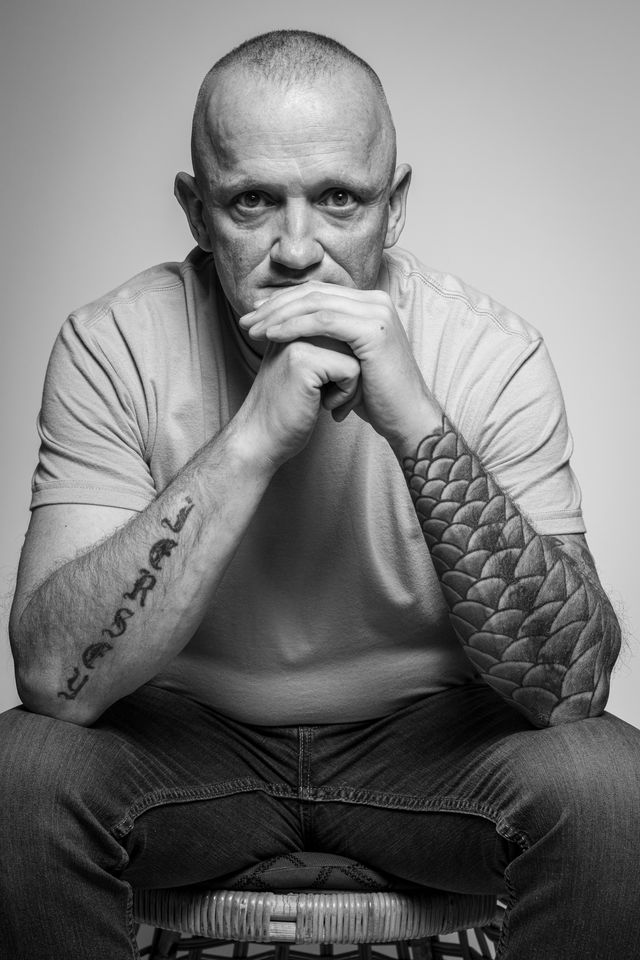
Vice President of Community and Governmental Affairs
Robert Banghart is a dedicated individual with a remarkable career in Nevada's healthcare sector. As the Director of Community Engagement at Crossroads of Southern Nevada, the largest indigent detox and substance use disorder treatment center in the state, he plays a pivotal role in helping those in need.
Beyond his role at Crossroads, Robert also serves as the VP of Community and Governmental Affairs at the Shine A Light Foundation, an organization focused on providing a continuity of support and resources to those battling addiction and homelessness. His commitment to the cause extends further as he sits on the Advisory Board at St. Jude's and sits on the Executive Board of the Shine A Light Foundation.
Robert's passion for community leadership is evident, as demonstrated by his 2023 graduation from Leadership Las Vegas. This program allows him to further develop his leadership skills and contribute to the betterment of his community.
What makes Robert's journey even more inspiring is his own personal triumph. Having been in long-term recovery since 2018, he embodies the hope and possibility of overcoming challenges and turning one's life around.
With his dedication, experience, and compassion, Robert Banghart continues to make a significant impact in the field of addiction recovery, community outreach, connection and advocacy.