Ep19 Jason Guerpo—Breaking Down Movement: Building a Sustainable Dance Business While Keeping Kids Healthy


Learn more about breakdancing as a tool for human development and visit BTR BREAKIN: https://btrbreakin.com
Don't forget to SUBSCRIBE to the HendersonHQ Newsletter: https://hendersonhq.com/Subscribe
Check out our website for all our local stories & community updates: https://hendersonhq.com/
Follow our instagram for deals and cash drops: https://www.instagram.com/TheHendersonHQ/
Interested in advertising in our newsletter to 25,000 local Henderson Residents? Let's book a call: https://calendly.com/scottgrovesteam/catchingup
______________________________
Scott Groves sits down with Jason Guerpo, owner of BTR Breakin, to explore how one dancer is revolutionizing an entire art form.
Jason shares his 31-year journey from breaking on the streets of Hawaii to building a business that prioritizes functional movement patterns over flashy tricks.
Scott digs into the nitty-gritty of turning passion into profit, discovering how Jason identified a massive gap in traditional breaking instruction and filled it with biomechanics-based training systems.
Viewers will learn how to structure any athletic activity for long-term sustainability, why most sports inadvertently wreck kids' bodies, and what parents should look for in their children's posture and movement patterns.
Jason breaks down his Key Movement System, explains how Functional Patterns transformed his approach to teaching, and reveals the business strategy behind partnering with schools across Henderson.
This conversation delivers actionable insights on building a values-driven business, spotting movement dysfunctions before they become chronic pain, and creating training systems that serve people for decades instead of destroying them.
Whether you're a parent concerned about your kid's athletic development, an entrepreneur trying to scale a passion project, or just curious about the science of human movement, this episode gives you the blueprint.
Jason Guerpo 0:00
I started to teach breaking because I was watching on Instagram how people were teaching it. I'm like, first off, how they're instructing is totally off. I know form. I know this. Let me study movement literacy. Let me study biomechanics, and create a tiered system that can help with the sustainability in this. This needs to sustain. I want every kid to go through the filter of breaking, aka original movement.
Scott Groves 0:27
Welcome to Henderson HQ, this is the podcast where you get all the stories behind the businesses that make our community tick. Don't forget to subscribe to our weekly newsletter. Hey, Henderson HQ, it's Scott groves here today, we interview my friend Jason, who owns a company called BTR break in, like, no G, like the original 1980s way that they called break dancing breaking and man, we talked all about functional patterns, which is the way that kids can stay healthy and safe, whether they're doing break dancing, Jiu Jitsu, football, whatever. We talked about his love for break dancing, we talked about making a living in Vegas as a professional dancer, and basically talked about all things interesting in your physical body and getting into a long healthy lifestyle as a child. So check it out. All right. Hey there, ladies and gentlemen. Scott groves, with the Henderson HQ podcast, we are talking to my friend who I actually met about a year ago at Jiu Jitsu, Jason guerpo. He owns a company called BTR break in athletic arts, and it's break dancing and a bunch of other stuff and functional movement patterns. They're here, right at the edge of Henderson and a great spot, like physically in person, and then they're in a bunch of schools. So looking forward to talking to Jason about this, because I cannot dance unless I have about seven drinks, and even then, I can't still dance, but I think I can dance. So, you know, I'll start the story off, because when we met, you were bringing your kids into Jiu Jitsu. They didn't have a ton of experience, but they were, like, really good. I could tell that they were, like, physically comfortable with their body. And I was like, Hey, your kids are pretty good, man, do are you training somewhere else? They're like, well, kind of like I own this, this break dancing school, basically, and we do physical patterns, and we do motion patterns and all this stuff. So for them to do jujitsu is not an awkward movement for them. So can you talk about your background, how you built the company? I'm guessing you can, like, spin on your head and do back flips and stuff like that. Or tell us about you and your business, how it started?
Jason Guerpo 2:19
Jason, yeah, absolutely, I could do all those things for sure. First off, I love breaking being that we're close to Valentine's Day, and I definitely want to start it off with that. It's given me expression, identity, growing up, and also a lifestyle as an adult. I'm 40 now, and I've been doing it for 31 years. So what I realized over time is it's not exactly built for as a sustainable system, especially for kids, and that's what we're doing, right?
Scott Groves 2:47
I mean, break dancing is not sustainable. Why does it break down the joints? Does it hurt people? Is it not fun after a certain age? Like, why? Why is it not sustainable?
Jason Guerpo 2:56
I mean, just like martial arts and any other sport, there's a ton of variability to it. There's a ton of it's dependent on the environment you're in which, you know what I mean, it's not like strict and fixed, right? So with that, like, anything could happen, and then you're adding force, you know, with all that. But yeah, so again, that's what we're doing right now, is we're evolving the system so it's the same art, but better structure, better structure to it. I started in 1994 just to kind of go back to that, my personal experience with it. I was nine years old, did sports, kind of in and out of it, tried to go to college for a little bit. My Financial Aid didn't go through. And I was like, What do I know? I know break in, and then pretty much, you know, from then all the way until now, I've been a professional dancer. So that's what brought me here from Hawaii. I've been here since oh eight, professionally dancing.
Scott Groves 3:49
So, so what does that mean when I'm because, like, when I'm thinking of break dancing, I'm thinking of, like, 80s, like street battle, like, super corny, like movies, right? Like the two, the two, like crews from the wrong side of the tracks, like battling, like this is what I'm thinking of, right? But when you say like professional dancer, I mean, I don't mean to be disrespectful. Do you mean like performing on Fremont Street for tips, or do you mean like being in, like, Hollywood, Las Vegas style show productions because they're looking for more acrobatic stuff. Like this is so foreign to me. I when you say like professional dancer. I don't even know what that means.
Jason Guerpo 4:23
I wish I was actually cut from that cloth doing tips on the you know, working for tips on the streets. Okay, they don't pay taxes. Oh. So, to answer your question, what it means to be a professional dancer is to sustain a living doing it. How I did that was through competitive breaking. And Vegas is the city of entertainment. It's a dynamic city. So there was a ton of ways that I was able to make a living doing that. I did nightly shows in the strip. I did probably street hit a couple times, just because we had friends in town, right? A lot of convention work. So gig work, with that
Scott Groves 4:57
for convention work, when I think breakdown. See, I don't think convention work. Can you explain
Jason Guerpo 5:02
that to me? This is also known as the convention capital of the world, right? The metrics I got maybe 10 years ago, I'm sure it's different now, is we have about, I think, 22,000 conventions annually here in Las Vegas. So with that, everyone, like Home Depot, all these big corporations and beyond, globally, they're dumping money for, you know, these conventions, right, to the network to market. And a part of the big budget is to get entertainment to activate what they're doing. So in their actual marketing booths, like, we'll go there, and then we'll, we'll blow it up. We'll track people there, things like that.
Scott Groves 5:34
So break dancing is one of those things that will get a lot of eyeballs on a booth. Or it'll just, like, get the audience excited. It's like, you're like, the hype man, breaking
Jason Guerpo 5:43
is the most magnetic and dynamic movement you can do as a human. And I'll say that confidently and with bias for sure, fair. But think about this. Who else and what other like art form, can you produce as much force in such little space, besides the breaking, and I'm talking about spinning, right? The fancy term is vortex force production, but the amount of total body integration and energy that goes in, like this, how do you how are you not drawn to it? And then, you know, it's funny, you brought up the movies of the 80s. Like, that's when I started, like, going on blockbuster, we seen people doing it? Or, like, what are they doing? And then, like, we heard what it's called, we got a hold of some tapes at Blockbuster, all those, those movies in the in the 80s, the early 80s, they did portray it in kind of a funny way, right? But I think what attracted people, what attracted me, is, like, all my my uncles, my dad. They were big Bruce Lee fans. And you know, it was a culture in the 70s which was martial arts flicks, specifically Bruce Lee movies, the music and everything that was going going on in New York in the 70s. That's what influenced it. But what attracted me was kind of that part of it. Growing up in Hawaii, we fight it's a part of the culture, um, and, you know, I seen it, and I was like, wow, I don't have to fight, and I can get that energy out, and I can actually best somebody, and I could, uh, cut a little deeper into them as a human, which is their psyche. What we're essentially doing is we're submitting somebody without even touching them. And going back to kind of the Bruce Lee reference, like, I don't know if you've seen way of the dragon, I've seen all of them. Okay, so you remember that? You remember the boat scene in the beginning, yeah, right. The the arrogant guy is like, let's fight, you know, trying to punk Bruce Lee on the boat. Bruce Lee's like, you want to fight. See that island right there. Let's go to that island. And, you know, he lets him get on the boat first, and he lets him go. And he says, you know, The Art of Fighting is to not fight. To not fight. Now. I know jiu jitsu background are all about that you really that is the ultimate like form. I believe of confidence, a highly useful skill to have is self defense. Will you use it in your lifetime? I hopefully not. I believe not. And you know what, I'm when I encounter fighters, a lot of them are like, No, I don't want to fight in the streets. Bro. Like, yeah, stage, I could kill somebody. And, like, it's dangerous. Yeah, exactly.
Scott Groves 8:08
And, and for the record, I have attempted to dance at a lot more weddings than I have gotten in street fights, so I probably should have stuck with, like, breaking or salsa dancing or something. Yeah.
Jason Guerpo 8:17
I mean, you want to get into breaking because of the sensation. Let's put that on the side for now, because I want to dig a little deeper into that. Okay, into that. Okay, answer your question. Dancing in itself is expression. So if you go to a wedding, and you can be in a social setting, and you can just cut loose, yeah, and you can't dance at a place like that and not smile, right? That's the secret, right there. And then, you know what? There's people that get into breaking with like, Oh, I gotta I gotta be clean. I gotta be I gotta have this choreography down, so to speak. And not it's not true expression and they don't have as much fun as people just like goofing off. That's really it. Now, where it gets really powerful is when you can combine the two and access what's called freestyle. So that's what you're doing at weddings. You're just freestyling you like you might have, you might have had a reference of something, the Macarena or, you know, whatever, and you're cutting the rug. You know, I I envy that because, you know, I'm on that, like, the mastery level side of it. I can confidently say that, but when I see people, I'm like, oh, man, I'll break form, and I'll just, like, whatever. It's just fun, you know, moving your body in different ways.
Scott Groves 9:23
But so my my kids and I have watched some of these amazing kids on YouTube doing like, these competitions, and that's kind of the only thing you said that I wasn't totally surprised with, is like, there's breaking competitions, because I've seen them on YouTube, and just hundreds of people around a circle and judges and the whole nine yards. And it's really interesting to me, because, like, moving your body in dance must just be like a natural state of human being, or else, kids this little there's no way they could have been that good at it, right? I just like, I think, like, there must be something like me. I get self conscious. I feel weird dancing. That's why I have to have a few drinks. But kids usually. They aren't as self conscious. And you see some of these, like, 910, 11 year olds that just they look like they have mastery. And I'm like, oh, that must just be part of the like human condition of, like, dancing and moving your body. So I know you work with a ton of kids. You guys are in a bunch of schools, which I want to get to. A couple of the kids from our school, coincidentally, joined, joined your studio. Can you talk about why this resonates so much with kids?
Jason Guerpo 10:25
So what I understand, and you know, going back to confidence, confidence is basically not being afraid to fail. You know, at what age do we? We lose like true, raw, unfiltered confidence is what you're talking about. And what I understand about the human development kind of process is, up until about the age seven, what you see and like you believe is true. So, you know, we see superheroes. We believe we're super heroes. Up until that age, I've seen it with all of my nephews, you know, my own daughter, like they see something, and they think they'll try and like, wrestle you, and they think they can, like, smash you, like Hulk, right? And if you can nurture them at that age. And I think breaking martial arts too and other things as well. But breaking is one of the things, because of the creative component to it and the freestyle component. It resonates with kids in that sense, and again, nurturing it beyond seven and into, you know, the pre teens and teens and even adulthood like myself, super important. Again, confidence is a deal breaker in life.
Scott Groves 11:35
If you can, if you can find those kids in that age right, like, where they're not scared, they're maybe they're overly confident, right? And then you can start to hone them. Like, what's kind of like, if parents are watching this, a perfect age to get their kids into some type of dance, is it like, 3579, 12. Like, where do you where do you like, see kids of like, Oh man, I've got something here I can work with.
Jason Guerpo 11:58
I'd say eight to nine. Eight to nine is a sweet spot. We get a lot of, uh, parents of three year olds coming in like, Oh, my, my kid is just so that's the other thing. Kids like, they're closer to being on all fours than they are to being bipedal or on two feet like that. So for them, naturally, they're on the ground, and if they see one snippet of it, and, you know, even just imitating an animal they see that inspires them, like they're on all fours, trying to move around in dynamic ways. Our biggest demographic that we see that when they come it's like it clicks them, like I'm here, they just fall in love with it. They catch the bug, is what we call it. But it's about like eight to 9789, I think it's a sweet spot. Tell us
Scott Groves 12:38
a little bit about how you're marketing for that, because I know that you've got some like, joint ventures or affiliates with a bunch of schools, which I was excited to hear from you, because I know you have your main studio location, and, like, I know you've got beginner to pros, but you know it feels like a pro environment when you walk in there, but I know that you guys are going into the schools to kind of create more of a beginner, functional movement patterns breaking. Can you talk a little bit about that expansion of, like, all right, kid, we're not just teaching you how to spin on your head. That's not the end goal. Like, when I talk to you at Jiu Jitsu, I could tell you were so passionate about, like, teaching kids functional movement patterns, because you're like, doesn't matter the sport, it's going to help them. I hope they stick with breaking I hope they fall in love with dancing. But if nothing else, like, we're teaching the foundation for, like, how to move your body safely, which I thought was brilliant, because, you know, Gabriel is doing Jiu Jitsu, and he wants to play football, and Alina is playing soccer, and you can see how, at their age, those skill sets map over to different endeavors. So that's a very long question, yeah, but ask talk to me about the functional movement patterns and, like, what you guys are doing with the schools.
Jason Guerpo 13:38
So what we have on our wall is structure, first style, forever. So that's kind of the way we're evolving the system. Again, it's the same art form, but better organization and better structure to the approach. It wasn't built for longevity. So this is kind of the missing key to it. So, and this can apply to Jiu Jitsu, it can apply to sports, how to not only move our body, but position our body, how to hold how to stand in our body, how to stand tall. All these things. And an important thing to understand for parents and anybody kind of interested and that already has their kids and things, is force amplifies error. So if you're not noticing certain things and misalignments, distortions and dysfunctions, everybody's born with it, and we use this incredible system, and I'm highly influenced by them. They're called Functional Patterns. It was created by, or is created by, a guy named nauti Aguilar. He has an incredible team. They're actually based here in Henderson. They run project function. I recommend everybody look them up. I teach the intro of what they're doing, and I integrate, yeah, their their system into what we're doing as well. We have our own, yeah, I came across them from formulating and studying biomechanics. So we have our own a. A special way we organize principles of biomechanics that translates into breaking. But from creating that and studying deeper into it, I came across functional patterns. What they teach is exercise that basically builds competence in standing, walking, running and throwing so the basic things and a we're not doing it properly. We don't know about a lot of these asymmetries and imbalances and dysfunctions in our body before getting into it. And then, you know, when we become adults and we got to sit down and sorry that we stopped doing
Scott Groves 15:36
the deaths the rest of our life. Along those lines, my buddy Ryan, who, you know, his wife, Val, I was having, like, almost debilitating shoulder and neck pain, like, to the point where, you know, I would move a mouse at work, and I would be doing this number all day just trying to, like, work the kinks out. And I went and talked to Ryan, because I was damn close to getting surgery, and I didn't have these functional patterns trainings as a kid. And so he's like, think about it, Scott. He's like, Yeah, you have a standing desk, but most of the day you're like this, hunched over a computer, and then at night, you're hunched over a phone, and then you happen to pick the only sport jiu jitsu where the whole goal is to have a hunched over back and keep your knees close to your elbows.
Jason Guerpo 16:13
Ranking is similar. It's very anterior dominant like this. We had to be ready to hit the ground, and then we're producing force like this, right?
Scott Groves 16:20
So, so he told me, he's like, Give me six months before you consider surgery. And you know, we were doing all this band work to basically structure and strengthen the posterior of my body and and all the pain has gone away because now I'm like, I'm more, you know, physically erect, standing at my desk and like, just like, I don't think we've even worked together for almost a year and a half, we've done almost no bench press or anterior he's like, you're getting all of that with jujitsu. He's like, You got to lift weights for the posterior, or you're just going to be a hunched over 60 year old and just that little change two two days a week with him for 45 minutes. It's like, it's changed my life. No more pain in my shoulder and whatnot. So I love what you're saying is like, oh, maybe that old school 1980s braking system was not great for the for the body, but this idea of, like, structure, first style forever. Can you talk a little bit more about that, about like, how you're working with the kids, about their structure so they can do this long term and be 40 years old? Like, I can't believe you're 40 years old. I for the for those of you guys not watching on the camera, this guy does not look four years old, so that they can be, you know, healthy and still breaking like you are, yeah.
Jason Guerpo 17:25
So we start with their posture. We look at their posture, we look at the alignment, we look for asymmetries, imbalances. From there, we activate their true core. I can't give away too much. You know that they have their proprietary from our patterns, does, but the core, there's a lot of interpretations of what the core is, and there's a lot that's missing from core in a practical sense that applies to how we operate as humans, which is standing, walking, running and throwing, and there's things so with Kids, in particular, if you look at their rib cages, right? So, and this kind of ties into what you're talking about. You see certain kids around the world that are flying, what functional patterns did was they studied peak movers in history. So you know specifically, Usain Bolt, Barry Sanders, Floyd Mayweather, athletes that move with high economy efficiency, and just studs, you know, in their respective fields, and what they're doing, and some of the things that they identified is, like, the importance of the rib cage, the shape of it. How does that interact with the rest of your anatomy? Like, from the center out, the positioning of your spine, and they operate under Anatomy Trains. Here's another person and system to look up for anybody that's interested in optimizing biology in general. So not only the way they move their energy and all of that. It's so Anatomy Trains from Thomas Myers. So functional patterns actually they they're influenced by them as well. They train the fascial lines and the fascial meridians, which all it says is our body is an integrated system. So if we're looking at just your shoulder as opposed to the entire posterior chain, right? We're missing out on it. So if you got surgery in the shoulder, what would that really fix?
Scott Groves 19:26
Yeah, yeah. Because when I started wearing the writing, he's like, do we got to strengthen the glutes, we got to strengthen this the lower back, because it all works together, right? And everybody's had this experience where it's like, you think your shoulder's hurting, and then you like, kind of crack your hip, or you, like, you stand up and something changes in the lower part of your body, and you're like, Oh, that's weird. My shoulder pain went away. Well. It's like, yeah, because you were out of alignment from the hips and the spine and everything else.
Jason Guerpo 19:50
So much nuance to it and how it's connected. So good way to get kind of smarter with it is the you. I wouldn't recommend studying. I mean, yeah, if you're into it, I recommend everybody study into it. Man, the fascial lines understanding how your body connects. So the brilliance in what functional pattern is doing, what they're doing is they can they're looking at your posture, and they're looking for not only the way you're stacking, they're not only looking for imbalances, but they're looking for how tension is being distributed, static and dynamic, so standing and in movement, and that's not easy to do. One of the points that they pointed out, like within the medical system and in rehab in general, is who's using gait to analyze this function that is a more comprehensive way of understanding dysfunction in your body, in the entire system. Again, like instead of an isolated area the entire system, so they're looking at movement. And again, there's so much nuance to it. There's a the principles they operate under is super, super sound. I've been using it with myself. Again, I've been breaking for 31 years now. So I'll show you some before and after pictures, and if you want to share that on this. So you guys can kind of see it's really so I can, I can talk night and day about the philosophy with it. Again, it's super holistic. But check out FP evidence. So FP stands for Functional Patterns. FP, evidence, it has 1000s of case studies, and not only from the founder himself. What's incredible about it is the founder, nauti, developed a system and trained other hundreds of people to replicate the results. So what he's producing, and not many people are, is what's called practice based evidence, as opposed to evidence based practice, because evidence is skewed in a ton of ways, right? It's skewed by following the money trail most times. Like, okay, this one that is okay.
Scott Groves 21:56
Funny how that works out. Yeah, you get a bunch of doctors say smoking is healthy in the 1960s if you pay enough money, right?
Jason Guerpo 22:01
And then drilling into your brain to release tension, let's drill into a skull. That's so funny all these things, but it's really that's that, right? There is kind of the mic drop, yeah. And I see a ton of people in the fitness and, you know, industry going after him. He's like, Okay, check this out right here. Like we have actual evidence, right? And, you know, there's kickback from everybody. Everyone's protecting their differential advantage.
Scott Groves 22:25
Hey, thanks for taking a break from the podcast. Real quick, we just want to talk about two companies that make this podcast happen. One, Scott Wright, over at Wright auto body, so whether or not you've got a little ding in your car, you had a major accident, and you need insurance adjuster to come out and see what it's going to cost to fix your car, or you're remodeling a classic from the wheels up. Scott Wright, over at Wright, that auto body can take care of you. Also, big shout out to ethereal spa, a gym for your skin. They're helping us out. Make this podcast happen. Make the Henderson HQ newsletter happen, and pretty much anything having to do with the health and fitness of your skin, whether that's for beautification with Botox and stuff like that, or whether it's just like taking care of pre cancer spots and really treating your skin the way that it should with as much as it gets beat up here in the sun of Las Vegas, check them out for all things skin health and beauty. Thanks again to Scott Wright over at right bed auto body, and the team over at ethereal Med Spa. Because I have to imagine, in breaking, like, after you get through the initial kind of, like, postures and whatnot, like, this is a high impact sport, right? I mean, you're, I've seen some of the stuff on your, uh, Instagram that you do, and I'm, like, if I was to try that right now, I would blow up my shoulder or my back or something, because I'm, you know, carrying a little bit extra weight. I'm not thin, thin and fit like you are. So, like, is, is there a lot of, you know, stress and in this vortex that you were talking about, like, is there a lot of stress on the body, or are you guys doing something that I just don't understand at a technical level, where it's like, no, man, there's just, like, more flow and momentum. It's not as much tweaking on the joints as, say, maybe Jiu Jitsu or boxing or Judo or something like that.
Jason Guerpo 24:07
So again, force amplifies error. So if you're getting into in the beginning phases, if you're not smart and if you're not getting it quick, breaking was built from the Phenom, just people that you know genetically are resilient in their body. Yeah, if you're not learning stuff really quickly, or if you're not educated on how to create space in your joints through integration, it could be very dysfunctional, and we're seeing it. A lot of the people that are educating today in breaking multiple knee surgeries, bald spot on their head, right here, right I've been head spinning for over I can probably say this right here. So this right here, dude,
Scott Groves 24:47
this is really pissing me off, that you spin on your head and you have a full head of hair, and I look like Donald Trump back here. I gotta start doing the comb over or something.
Jason Guerpo 24:55
There's a genetic component, you know. Good thing you have Intel. Agents, and there's other things that make us valuable as humans. Besides, you know, things as a perfect hairline, yeah, since a full head of hair, but, you know, saying it to say, like, there are a lot of people unknowingly teaching outdated methods, and they're not, like, acknowledging, like, hey, maybe it's not functional that I'm showing kids how to develop chronic lower back pain, right? You don't know what that is until you have it, you know, like, back pain, okay? Like, what? When you have it, you're like, oh my gosh, uh, knee surgeries. We're an extremely in, an extremely compressed, you know, squatted on the ground. Our feet is touching the ground, and we're our knees or flex all the way like that. So, and with no space in it, we're adding torsional forces like this, shearing forces. So, I mean, meniscus is and all the ligaments that run through is just getting wrecked, and they're still teaching things like that. And I'm like, that's one of the the biggest dysfunctions, is that. And it's like, like, what we're seeing with martial arts, the lack of posterior chain tension to balance out the front tension in the body. And, you know, just from learning Functional Patterns, it's just, I can't, like, not do this now, like looking at people's anatomy just on a day to day basis, and I'm like, okay, and I look at breakers like the glutes are gone. I'm not sure if you notice that with a lot of jiu jitsu people, but, but pay attention to those kind of things. And especially with your kids. What you want to look for with your kids is, are there scapulas poking out? Now, with that, it's kind of hard, because kids, it takes, especially, like boys, it's hard for and, well, girls, I'm sorry. Girls, it's hard for their rib cages to broaden that's that's kind of a genetic trait of excellent force production is having a broadened rib cage. That means your scapula has a place to hold on to your rib cage, and then also the muscles within your rib cage connects all throughout your core and into your upper body look for scapula and like protrusions in the spine and the scapula. Everything, good or bad. That's that's not good,
Scott Groves 27:08
not good. That's not good because that means the anterior is getting too strong and kind of pushing things back. Or something's, something's off, off kilter.
Jason Guerpo 27:15
They're just not developed yet. Okay, so, so their body structure isn't developed yet to be doing certain things rotationally. If you're rolling on your back and your bone is poking out, that's one of the things certain kids, when you see these kids, what you're talking about. So most times, they have a genetic and is it okay for me to get into this? Yeah, great guy.
Scott Groves 27:34
This fall. I'm fascinating this because Gabriel just started tackled football, like, two weeks ago, and I'm freaked out because, like, I didn't play football. And I'm like, Oh man, I'm worried about the head trauma and the this. And luckily, as a very good coach who's like, teaching proper form and back straight and head up and hands forward and stuff, but it's like, this is all very top of mind for me right now. As kids that are doing between jiu jitsu and soccer and football, it's like they're doing like, 30 hours a week of of, like, pretty intense activity. And I'm like, I'm starting to get that parental worry of, like, Oh, are they doing too much, too soon? How are they developing so, like, this is all very top of mind for me. So even if you guys aren't enjoying it, sorry, I'm getting
Jason Guerpo 28:12
an education here. No worries. So I mean, I think it's important for all parents if they care about the longevity and health, long term health, health of their kids. What we know is structure affects behavior. It influences behavior big time. If you're in chronic pain, if, if you're not confident in your structure, like, how are you approaching life? And that affects everything else, your access to higher order things like creativity. That's another thing too, that that is lacking. I believe in America, but, yeah. So look for the scapula winging. Look for the collapse kind of rib cage like this. So we cue things like that. We teach how to create expansion and maximize space in the joints before moving even in compressed positions. That's one of the things that we're taking from, you know, functional patterns and adding it to our specific art form. Because, yeah, I mean, breaking we're on our shoulders, um, we're producing force with our upper body more than our legs, which our biology. Over millennia, it didn't evolve to do that. So our entire, uh, system, like it, you know, it's something new to the system, and what's the result of that? Again, chronic pain, injury, a short, they lose confidence. And again, that's, that's a deal breaker, right there.
Scott Groves 29:34
But no, I think everything you're saying because it's like, I don't know, we're 20 minutes into the interview, and it's like, we haven't really even talked about breaking or dancing yet, which, which. And this is the important thing for me, means that if my kids were going to do something that I would interpret as high risk beyond their head, you're the person I would want teaching them that, right? Because, like, if you're already going through, I mean, we haven't got to any moves, or your pricing, or your classes or anything like that, because I don't know what you have to say. Because, yeah, great. It's on the website. I don't really care. But, like, the. Fact that you care about this stuff first, it's like, you're the type of coach I want to entrust with the health of my children, which is why we're here talking, you know, I just want to say, like, as a parent, I really respect that, because it's like, man, you're thinking of all the stuff before you're like, All right, guys, let's try to stand on your hands, because every time Gabriel, like, does a handstand or a backflip at Jiu Jitsu, I'm just like, Jesus, man. Please don't fall in your neck, please don't fall in your head, please don't fall on your shoulder. Like, tonight's not the night for an ER visit. So I appreciate everything you're saying. It like how you're setting them up for, like, long term success. So talk about a little bit about your school, like, what's the youngest kid, what's the oldest kid, and then what's kind of, like the range of, Oh, yeah. This is, this is fun. This is just something I do for physical movement, versus, like, no, no. This is what I think I want to do as a living to do as a living so do you have that spectrum of kids at your studio?
Jason Guerpo 30:46
We don't encourage people to view it like, Okay, let's do this to make money. Right? For me, it's more like develop the skill of original movement. That's the greatest thing you can get from breaking it's not winning a trophy. It's not learning how to fly. We're not trying to build the most skilled 12 year old. We're trying to build the 2530 4550 year old that can move really well. A lot of movement specialists, like very renowned movement specialists, they say the future of movement is original movement, because, you know, we're all built differently. And again, like we get to a certain point in what we're doing, martial arts, and anything with the artistic kind of component to it, I think, has capacity for original movement. And you know, just because you're a jiu jitsu head, just to speak your language, like it's multi dimensional athleticism, that means there's limitless space to kind of express physical positions and movement and patterns and things like that. The biggest thing that people can get from breaking is having that art form to learn innovation and that that translating into life, into relationships, into enterprise and things business
Scott Groves 31:59
that's right, like, yes, we're seeing this AI takeover where knowledge is way less important than being able to create, be creative and ask good questions. Like, I much rather have an employee now that can ask good questions and like, think outside the box than just be like a data junkie, because data is free now, you know, if I rather have an employee that can express themselves and then ask chat GPT for the right technical answer, versus like, Oh, I just have a lot of knowledge. It's like, well, no offense, but knowledge or data is, or, I would say data has, is becoming kind of worthless. Knowledge and creativity is going to be the most valuable thing in the future. I think,
Jason Guerpo 32:34
well, what is, what is the process for you? Because, because I know you're intelligent man as well, I already know this about you, just how I read you what is the process of asking a good question? You got to think. You got to think about what you're asking, and then you got to it's like, what is it called, like, meta thinking. You got to think about your thinking, right? So I the first time I got checked on that. I got checked, you know, throughout my life, in different business ventures and, you know, working for people as well. But recently, I got checked at a certification course for Functional Patterns. Actually, we're doing this, this corrective exercise. And one of the instructors was coming around. I was like, hey, what do you think? Like, I think I cued this pretty good. He's all like, What do you mean? Ask better questions. And she walked away. I was like, at first, I was like, and I'm from the islands. I was like, it rubbed me a little bit the wrong way. But I'm like, hey, you know what? Like, if I'm to really be honest with myself, I could probably ask a better question, right? And it, you know,
Scott Groves 33:30
that was, like a level one question that was a Scott groves dancing question, that was not a Jason dancing question, yeah, yeah.
Jason Guerpo 33:37
So, you know, it's one of the hardest things to do is Inc, so when people get into something like breaking it does come from, from the 80s, from from scarcity, from short term survival kind of thinking, but again, like it was powerful, because it did create this art form, but the future demands sustainability with this. So that's what we're actually doing. We're helping people think we're giving them the tools of movement intelligence, movement literacy, so they can actually like function autonomously, meaning they don't need to continue to go to a school to learn. Here's the tools right here. Here's the culture and the art form, and this is a lifestyle right here. You can be creative, you can be physically healthy, you can be smart, you can regulate your mind and your emotions, and ultimately, be original. I think that's the most powerful thing about breaking now, I think I went down that that road, because that's my when I got into break it in 94 there were no competitions. It wasn't like, oh, I can be in a movie. I didn't when I seen it. I didn't want to be in a movie. I didn't want to try and make a living and, you know, buy a house off of breaking I was like, I was already jumping off trees, jumping off cliffs in the islands, like, looking for stuff to do. I was fortunate. And then, I'm sure, you know, the 90s as well, you had to figure things out in boredom. We I mean, there's no tick tock YouTube. We had the benefit of boredom in the 90s. 90s. Right now, no one has that benefit of boredom. And, you know, there's, there's, there's good things about it as well. There's good progress and evolution socially and, you know, individually as well. Like you said, having access to information, you know, hopefully it's going in the right direction for me, if a kid wants to do that, I I've done that song and dance. I was a part of a crew here in town, and we were the first American Crew in 20 years to make it to the finals in the most historic and biggest competition in breaking history. This is in 2011 when we did it. And, you know, we're battling people that have what's called Super crews. So countries will get like, you know, eight of the best crews individuals from each of their crew and create a super crew. But, you know, we were just a, just like a family crew here. But you know, it was a good testament to showing, like, what a family energy can do, and a true, like brotherhood and Bond could bring to, you know, going against the all star squad after that, like half the crew quit. They're like, Okay, we did the song and dance. We didn't win. The stadium we did it in was 16,000 it was in France when we stepped up. They're like, all right, USA. Oh, people in France don't like America. That's what I that's when I learned that. I was like, Okay, I'm out of my bubble. Here's kind of the world really.
Scott Groves 36:19
I'm Hawaiian. I'm like, American adjacent, yeah,
Jason Guerpo 36:23
and that's that's true, my way of thinking is definitely different in Hawaii, like we're more about I see people like protesting the illegal occupation. You know, my my stepfather, who raised me, he's a Native Hawaiian, so I kind of grew up on that side of understanding what's happening in the world. But yeah, wait, going back
Scott Groves 36:42
to that 16,000 person arena, and you said the the winner, what did they split? Oh, sorry, yeah. So these guys are like a lifetime of work, putting their body on the line, and I guess the 10 people split, like 15 grand or something.
Jason Guerpo 36:54
It's like seven. K7, Oh, they got like 600 bucks each. That doesn't even pay for the plane ticket to France. We got 3k well, they get we get flown out. That's cool. You know, we get put on the stage, and it's just historic. So everybody wants to do it as a breaker. I dreamt of doing it. And when we won the qualifier, it was against a super crew here. So crews from all around Florida, New York, California, Seattle, like Texas, all in one crew. And you know, us from Vegas, a family crew, boom. When I won that, that was the first time I experienced euphoria, or just like a natural high. The feeling of it was like nothing else. This might be a dark thought, but I was like, man, if this is it like, if I die right now, I'm so fulfilled and happy. It was literally that feeling when I when we won that. So anyway, after that, we're like, Okay, we have 3k we got a couple of traveling opportunities. We went to Italy. After that, we went to Panama, a couple of other places. That's but even that, we didn't get money from that. So, you know, we're traveling. You said after that, half the people just stopped because they were, like, thought, because, like, what do we do? Yeah, where do you go from here? Some of them got into nightly shows. But even nightly shows here to be transparent, like, I've done that bit too. You're making, like, I don't know, anywhere from as an entry level. You're making 30k a year, up into 100k maybe 120 Max, and two nights, two shows a night, five to seven nights a week. They're just wrecking their bodies. Man, right now, some of them, they're, you know, they're, they bought a house, you know, they're doing their thing, but they're in their 40s, just bodies, just toasted, spinal fusion, like, that's, for me, that's not okay, man, that breaking is is more brilliant than that, and I truly believe breaking is the future, but it needs to evolve. And, you know, that's what we're doing anyway. So yeah, after that. And so I'm bouncing around a little bit after we did that, you know, everybody, they're trying to, okay, what do we do now? And some of them, you know, I have a family. We have families. It's like, okay, like, the girlfriends are like, what's going on? Like, oh, it's like, what's okay? Like, what are you doing? Like, we were paying the bills, like, what's going on? So they had to jump into different things. Fast forward to 2018, they announced the Olympics. So some people dropped out from then. You know, 567, years transpired. I stuck with it. I always use breaking as the Self Mastery practice that allowed me again to get the differential advantage through thinking differently, thinking outside of the box, and being innovative in anything that I did. And that's what I have with BTR right now.
Scott Groves 39:32
So can we just talk real quick about the Olympics? So yes, that did. That was not a good look. Yeah? Rick on the girl with the green I had a really one like this. I mean, God bless her. Like I'm not. I have no opinion about her, personally, but professionally in a sport the way she represented. I just don't think that was a good look for the sport that you've spent your entire life doing right?
Jason Guerpo 39:57
I was watching it live. Of course, I had a. Aaron hit me up. Like, right as as she as she went on after her first round, the parent called me and was like, Hey, um, are you watching the Olympics? I was like, Yeah, I'm watching it. Hey, do you see this girl in the green right now? It's like, yeah, yeah. You know, I've never heard of her. I've never seen her in my life. Did the parent
Scott Groves 40:15
want to move their kid to Australia immediately? It's like, my 12 year old can beat this girl in breaking like, we're moved to Australia. We're going to the race
Jason Guerpo 40:21
here, within the matter of, yeah, the whole thing about that was how she handled it. At the end, for her, she's going through the process, which was the IOC, the International Olympic Committee allocated $4 million to the wdsf, which is a World Dance Federation, which is a ballroom based organization that managed, and basically was in charge of everything that had to do with breaking in the Olympics. And there was some funny stuff with that man. Like, yeah, they can't trace where a lot of the money went. Like, it was just funny everything about it. So, you know, there are a lot of people that knew breaking from the beginning that stayed consistent all throughout, that are educators in the college system here, you know, UCLA and various colleges here, that they started in the beginning of it and they were hearing the way it was going. They're like, okay, no, this is not going to be good for the breaking scene. They dipped out quick. So what happened was other people that just wanted to eat. There was a guy from Taiwan. There's, you know, people from Europe, from Asia. Asia has a respectable and deeply rooted connection to the culture in the scene. So not to talk bad about any of them, but we should have people that actually understand the social climate, the political climate, the cultural climate, of the birth of it. There's depth to it, in that sense, in their argument, you know the wdsf and all these newer people coming in, it's like, but hey, you guys are dysfunctional. You guys hold toxic bias and things like that. There's truth to that as well. But I think that is better than having people come in from the outside, because what we see is what happened with this lady named Ray Gunn. So talk
Scott Groves 42:12
a little bit about the business side, right? Because, like, some people watching might have the same passion for something in their life that you obviously have for this, right? Like, I mean, it bleeds through the camera, I'm sure to people listening, like, how passionate and serious you are about this, but there's a big difference between being passionate about something and turning it into a real business that's profitable. So can you talk a little bit about the evolution of, like, opening the studio, partnering with the schools, like, more of the business side of it? Because I think, I think there's a lot of people that I talk to that have something right, whether it's board games or whatever, that they're as passionate about as you are. With breaking, they have no clue how to turn it into a business.
Jason Guerpo 42:50
I've had three businesses leading leading up to BTR breaking. I tried other things when I had my daughter. I was like, I was doing the professional dancing bit. I was like, Oh, this is not, not cutting it. I don't see, like, long term sustainability in it. I don't see future for my family in it. So got into entrepreneurship and different ventures. I did a entertainment production company that was my first LLC, a commercial cleaning company. I just had a buddy that was was doing it. I did a plumbing company because I had another buddy that was making a lot doing really good from from those two things. And they brought me in, you know, with a salary. And I was like, doing good with that. I was still breaking all throughout all of that. Again, it's, it's my practice of self mastery. I started to teach breaking because I'm like, Okay, I was watching on Instagram, how people were teaching it. And I'm like, first off, how they're instructing is totally off from how they're demonstrating in this instructional video. And I was like, because I can see all the details, I know what form looks like with breaking. And real quick, what form looks like in breaking is it there needs to be a geometric, structural esthetic to it, the way it looks. I know form. I know this. Let me study movement literacy. Let me study biomechanics, and create a tiered system that can help with the sustainability in this. This needs to sustain. This process of original movement needs to sustain. This isn't my official mission or vision, or nothing like that, but I want every kid to go through the filter of breaking, aka original movement, as they grow up. They don't got to stick with breaking, or nothing like that, for someone to stick with breaking. And I don't know if I answered this and but they got to love the music. The music is the main thing, and the music is the key to original movement. That's that's the cool thing about it. If you like rock music, if you like funk music, soul music, if you like music from the 70s and stuff like that, drum breaks, music with the revolution spirit, then this music is for you and this art form is for you as well. If you don't like it, and I rec. Been looking into it anyway, because all of pop music is Bruno Mars.
Scott Groves 45:03
Like, you really feel like an evangelist for change. And I don't say that in, like, a creepy, religious way. I mean, just like, like, yeah, like, like, you're just, I can, I can feel when the words are coming out of your mouth, it's like, I know there's so much here, but I know it's also tied to this stigma, you know, kind of like 10th Planet where we go, I take my kids there. The stigma amongst the adults is, it's a bunch of pot heads and blah, blah, blah, a bunch of losers. It's like, I've met a lot of great business people there, right? So there's people trying to change that stigma. Is great, and is this people that smoke pot? Yeah, as well. True statement. I know a few rogue if he's doing okay, is he is? Yeah, he's doing okay. What would you tell parents who are thinking about getting their kids into it? I feel like my kid needs some more athletic outlet or whatnot. Like, like, what? What is like, your entry level program there to just try it out? Like, I'm not committing for a year. I don't, I don't think my kid's gonna be a professional break dancer. But like, Yeah, I like what I'm hearing about, the functional patterns and the movement and the movement and the structure and the style and stuff like that. What do you tell people to get started?
Jason Guerpo 46:06
Yeah, come to our intro class. We again, we we run elements of functional pattern, kind of infusion in the drills that we do. We also run what's called the KMS, is something that me and two of my colleagues, one of one of them is my brother, and he's a co founder of my company. He's a doctor in Sports Performance and Physical Therapy. And there's another colleague out here that's a sports performance doctor as well. They helped me understand the depths of it, but I created what's called the KMS, the key movement system. And again, this is what we're doing, and we're actually triple downing on this in our home school, the concrete school yard movement literacy, there's four central positions that your body orients itself in space and also governs and manages gravity, AKA your body weight. It's facing down, facing up, inverted and upright. What I'm learning from functional patterns is upright really needs a lot of attention here, as a whole, globally, we need, we need a lot of attention here. But we have a training system that builds a body, literally from the most basic way to anchor your core, connect to the ground, connect to the force, the ground, reaction force that's coming up, and then posture align and stack everything in between. So what we triple down on is the input phase of movement before the output before movement. How to how to structure, create tension and connection in your body before that. So I recommend, yeah, our intro class, we do that in the key movement system, and then we have fun. You know, we gamify a lot of it. I have a daughter, and I love being a father. It's one of the greatest things for me. And to be transparent, I was a raging pothead in my 20s. I'm 40 now. When I had my daughter, about a year into it, I stopped smoking. I was like, okay, hold on, like I was recognizing all these things. And I'm like, you know, there's something better. And I always wanted my daughter to view me as a savage. And I think there's a if we talk about true strength, yeah, we can. We can look at the physical body. We can see physical feats of what true what strength is. But for me, true strength is what you can do without, like Can, can you manage your stress without coping mechanisms? That's true strength. And I was as I was realizing that I stopped smoking marijuana, I cut caffeine out after, you know, following Functional Patterns protocols, that was another crutch. That was, I was, oh, that's a big crutch for me. Hey. I mean, it is anybody.
Scott Groves 48:36
No, I don't feel judged. I just know that it's a crutch moderation. And, you know, there's tools, like, I don't do that either.
Jason Guerpo 48:43
Well, it's something to consider. You know, there's a lot of information out there. Again, it's for people that, uh, with long term survival strategy in mind. Yeah, it's about optimizing your biology and creating a system that's autonomous and endogenous. So autonomous, like, I don't need things outside of me to function, to have energy, to think clearly, and then, yeah, endogenous, you can actually create these things in you, like we have cannabinoids in us. I would recommend getting started in our youth group. We offer a free week trial. We just opened our brick and mortar. It's on the corner of Silverwater ranch and Eastern in the target Plaza
Scott Groves 49:25
right here. What's the website? So we can refer people over there. BTR, break in.com. BTR, break in. No, no.
Jason Guerpo 49:31
G, no. G, break in. So you did ask about that earlier? Yeah, break in was the original term for break in. So break in after that, when it went into Hollywood, they're like, Hey, we got to communicate this clearly. It's a dance. Let's call it break dancing. And then come the Olympics. Like, hold on. Like we re we need to reintroduce this to the to the world as something that's structured, as a structured sport. We're going to call it breaking now finally, with the G evolution of a lot of sports. Yeah. Yeah, but I mean, there's you can, you can track the evolution of the art just from that right there, the semantics of it.
Scott Groves 50:06
When you're talking about THC, caffeine, whatever people have as a crutch. And I tend to be a little bit more judgmental than I suspect that you are. I've got a I got a friend that has a great way of framing all of this kind of stuff, plus kind of just like life. And he's like, Man, I don't judge people that drink. I don't. I'm not an alcoholic. I also choose not to drink because I just put everything to a frame of like, is this serving me? And it's like, am I having this alcohol as a crutch? Or is it, is it serving me? Is going to the gym getting a little addictive because I'm trying to avoid my family, or is it serving me? And then I'm addicted to the stress in your body, the pain in your body, 100% that's where I think I get the caffeine and the stress. And so what I'm thinking as you're walking through all this is like, would kms, you know, key movement systems, would functional patterns would, would this serve me? It's like, yeah, absolutely. Whether it's I just want to be able to walk without a walker at 80, or I want to do Jiu Jitsu to I'm 60, like, what you're describing is the foundation for how you guys teach, breaking it that is something that will serve me or serve my kids, or serve society, right, because then they just become better, more creative, more successful adults. And I want to give you the last word on something that I forgot to ask you, or something that you want to highlight about the school, but I just wanted to bring that in that I I think we connected in that very short conversation we had a year ago because I remembered who you were. Of like, oh, what this guy doing is, like, it's really serving children the community, like, future health of these people that he's working with. I just, I wanted to say that about you, because that rate resonated with me in the half hour we talked when your kids were there, what did I forget to ask you about your about your studio people use no to get started.
Jason Guerpo 51:42
Yeah, yeah. Again. BTR breaking.com as soon as you go on, it says, Try, try a class out. Come and try it out. Come and meet me. Come and see, see what our kids are doing currently. Check out our invite. Check out our technology. That's another thing we didn't talk talk about a little bit as a biomechanist, which is basically movement, movement scientists. Yeah, we have training technology that's making it really cool again. We develop spatial awareness with our technology, body positioning. We build the structure before anything nice. So come in and see how we're doing that, how we use music, how we interact with the kids, how we get kids to step out of their shell, and things like that. And that in itself, for me, to be honest, I teach four to five classes a day. I teach, I actually teach adult intro to functional patterns 9am Monday through Friday. So I do that, and then I teach in the schools, and then I come back to the studio in the evening, and I teach three classes. And I'm able to do that with because of Functional Patterns protocols, it allows me to erase any mistakes I do within again, the the improvisational nature of breaking, yeah, come and check, check all that out. Seeing the kids, and it's awesome when I see the parents reaction when they see the kids get the breakthrough. There's nothing like that, and that's what charges me up, right there. Oh man, come and check out the energy. There's no energy like breaking I'm going to be biased right now. I'm going to speak my piece about that. It's the most magnetic and electrifying movement on Earth. Come and check it out.
Scott Groves 53:13
That's the way to end a podcast. Man, thanks. Hey, it's Scott groves with the Henderson HQ podcast. I hope you got something out of that episode. If you enjoyed it, please don't forget to like comment and subscribe to the podcast. It really helps the show grow. And by the way, if you are a business owner, or you know, a business owner who has an interesting product service or just an interesting backstory, please, please get in touch with us. Email us at the Henderson hq@gmail.com we would love to interview you, because that's what this show is all about. It's about building community, supporting local, individually owned businesses, and just making Henderson a great place to live. And don't forget, go to Henderson hq.com and make sure you sign up for our newsletter. We send out a once a week newsletter, no spam, about the most interesting local businesses, hot spots, restaurants, community events. Thanks for watching the show. Really appreciate you. You.
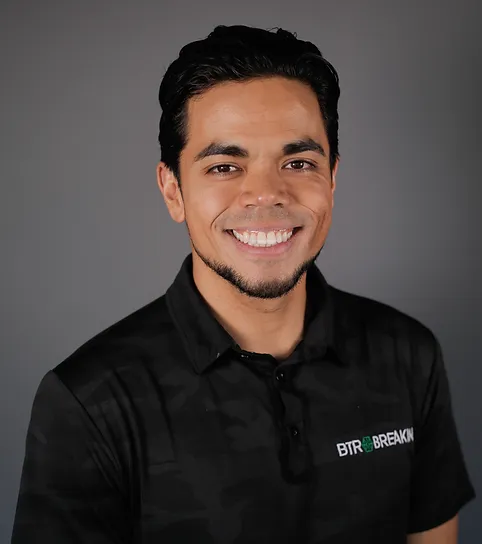
CEO
Jason “Jasoul” Guerpo is a professional breaker, biomechanics specialist, and founder of BTR Breakin Athletic Arts, a movement education company redefining how breaking is trained and sustained.
Originally from Big Island, Hawaii, Jason began his journey in breaking in 1995 at age 10. What started as street expression evolved into a lifelong study of structure, locomotion, and human performance. Now based in Las Vegas, Nevada, he has transformed his competitive experience into a comprehensive training system that merges breaking with biomechanics, fascia science, and long-term athletic sustainability.
As a certified Human Biomechanic Specialist and creator of the patent-pending GRID sensory training mat, Jason has pioneered a structured pathway for youth and adult athletes that prioritizes intelligent movement before intensity. His work reframes breaking from a short-term performance art into a long-term lifestyle practice rooted in integrity, resilience, and self-mastery.
Through BTR, Jason leads after-school programs, youth leagues, homeschool PE initiatives, performance training, instructor certification, and national competitive pathways. His mission is to eliminate dysfunction while maximizing function — building artists who move with intelligence, originality, and purpose.
Structure First. Style Forever.
⸻
Career Highlights
• World Breaking Champion – Runner-Up
• 2x USA National Breaking Champion
• Hawaii State BBOY Champion
• 3x Footwork Champion
• International Breaking Judge
• Performer on …Read More